
 ChatGPT
Introduction: Modern AI tools promise to supercharge productivity, automating tasks and generating content at an unprecedented scale. Yet many business professionals are noticing a curious problem: an overabundance of low-quality, AI-generated work that adds noise and overhead instead of value. This phenomenon—often called “AI work slop”—has become intertwined with a modern productivity paradox. Companies appear busier and more automated than ever, but true effectiveness and value creation can stagnate or even decline. Why are we drowning in output while struggling to improve outcomes? This article explores what AI work slop means, how it relates to the productivity paradox, the management challenges it creates, and strategies to ensure AI genuinely boosts productivity rather than burying us in busywork.
What Is “AI Work Slop”?
“AI work slop” refers to AI-generated work that appears polished and plentiful but lacks real substance or valuewindowscentral.com. In corporate settings, this could be the flood of auto-generated reports, summaries, code, or content that looks like productive output but actually creates more work for others. For example, an employee might use an AI tool to draft numerous documents or responses in record time; however, colleagues then spend hours interpreting, correcting, or refining this AI-produced material. The term captures the idea of sloppy seconds in workflow – work that must be redone or cleaned up. A recent survey of over 1,000 workers found that 41% had encountered AI-generated “slop” from co-workers in the past month, with each incident requiring nearly two hours of cleanup (at an estimated cost of $186 per employee monthly)windowscentral.com. In other words, AI work slop is productivity in appearance only – a high volume of output that belies the inefficiencies and extra labor it actually triggers.
This concept isn’t entirely new or exclusive to AI. Even before advanced AI, employees could generate “work slop” – think of long email chains, unnecessary slide decks, or reports full of fluff – that gave the impression of diligence but added little value. The difference now is scale: AI enables anyone to create such low-quality output faster and in greater quantities than ever. Without checks and purposeful use, AI can become a slop amplifier, inundating workflows with content and tasks that someone eventually needs to sift through, verify, or redo.
The Productivity Paradox in the Age of AI
The productivity paradox is a term economists coined to describe the puzzling observation that big leaps in technology don’t always translate into visible productivity gains. A classic example comes from the 1980s computer revolution – as Robert Solow quipped, “You can see the computer age everywhere but in the productivity statistics.” Researchers later found that introducing powerful new tech often requires complementary changes (in processes, skills, and business models) before it pays off. In fact, productivity can initially stall or even dip – a phenomenon sometimes called the productivity J-curvemckinsey.com. In the early phase, businesses invest in new tools like AI, but without the right organizational adaptation, they may see little to no improvement (or even losses) in efficiencymckinsey.com. Only after workflows, training, and strategies catch up does the second part of the J-curve kick in, yielding significant gains.
Generative AI in 2024–2025 embodies a new productivity paradox. On paper, these AI systems are incredibly powerful – capable of drafting documents, writing code, answering queries, and producing content in seconds. Companies eagerly adopted AI, expecting immediate efficiency windfalls. Superficially, there’s more “productivity” than ever: more emails sent, more lines of code generated, more reports published. However, many organizations find that actual effectiveness or value creation isn’t rising in tandem. For instance, a survey by Upwork found 77% of workers felt AI tools actually increased their workload and decreased productivityremote.com. How is that possible? The reality is that AI often introduces new tasks instead of eliminating old onesremote.com. Employees must review AI-generated content for errors, learn complex new AI interfaces, and continuously update their skills to work with evolving toolsremote.com. In short, the time saved by AI in doing Task A may be offset by the new time required for Task B (checking AI’s work, re-doing outputs correctly, etc.).
This paradox is evident in knowledge work. AI can generate five versions of a marketing plan in an instant – but someone still needs to read, verify, and combine them into something usable. An AI code assistant might spit out hundreds of lines of code, yet engineers then spend extra hours debugging or adjusting that code to fit the product. It creates an illusion of speed and volume, while the substance (a quality final product) sees little improvement. Businesses appear busier without being more effective, which is the hallmark of the productivity paradox.
When More Output Doesn’t Mean More Value
One way to understand this dynamic is to distinguish between output quantity and outcome quality. AI dramatically boosts the former – the number of emails, documents, lines of code, or content pieces can skyrocket. But unless that output is high-quality and needed, it doesn’t improve real outcomes. In fact, drowning in output can hurt outcomes by consuming employees’ time and attention.
Consider internal communications and documentation. With AI, a single meeting might spawn an auto-generated transcript, a summary, action item lists, and even a slide deck – whereas before, there might have been just a brief set of notes. At first glance, this looks like thorough productivity. In practice, employees now must read a lengthy AI-written summary (that might miss nuances or include errors) and cross-check it with the transcript to ensure nothing critical was misinterpretedremote.com. The extra output becomes extra input everyone has to process. As one analysis put it, these AI tools “introduce new layers of work rather than eliminating it,” often leaving people to re-read full transcripts or heavily edit AI-written draftsremote.comremote.com. Indeed, a Slack Future Forum survey found 47% of knowledge workers feel AI tools actually increase the time they spend revising content, rather than reducing itremote.com. This is a perfect illustration of more volume, less real efficiency: the AI produces a lot, but humans spend more time finalizing things, not less.
Another example is decision-making data. AI can auto-generate analytics and reports on every conceivable metric. But executives faced with overwhelming dashboards and slide decks might struggle to find the truly actionable insights amid the noise. In worst cases, important signals get lost in a sea of AI-generated charts. Teams may feel pressure to present AI-augmented reports filled with data (to show they’re utilizing the tools), while actual strategic decisions or creative problem-solving languish. The organization looks data-rich and productive, but the business impact isn’t improving – a productivity paradox of busywork.
Why does this happen? One culprit is the misuse of metrics. Many firms inadvertently encourage “vanity metrics” – measurements that look impressive but don’t correlate with meaningful results. For AI, vanity metrics might include the number of AI models deployed, the volume of AI-generated content produced, or the hours of automation runthegutenberg.com. These can inflate dashboards and give a false sense of progress (“We published 100 AI-written articles this quarter!”) but do not reflect genuine business outcomesthegutenberg.com. As a report by The Gutenberg blog notes, such surface-level stats mask whether AI is truly moving the needle for the businessthegutenberg.com. Chasing raw output volume can misdirect resources – teams focus on pumping out quantity over quality, and real indicators like profit, customer satisfaction, or innovation sufferthegutenberg.comthegutenberg.com. It’s telling that nearly half of brands (47%) surveyed in 2024 started shifting away from these vanity metrics, realizing that impressive-looking AI stats weren’t translating to tangible gainsthegutenberg.com.
In essence, the presence of AI can create an illusion of productivity. Businesses might boast of automation initiatives and content production at scale, but if effectiveness stagnates or declines (e.g. sales don’t improve, decisions aren’t better, employees aren’t truly freed for higher-value work), then it’s a case of volume without value. This is why many observers draw a parallel to earlier tech revolutions: simply layering AI on old ways of working, without deeper organizational change, **“is not enough” to improve productivitymckinsey.com. It can even make things worse initially, as companies grapple with how to integrate the tech properly.
Management Challenges Caused by AI Overuse
The overuse or misapplication of AI in the workplace brings several concrete challenges for managers. These go beyond just wasted effort – they impact employee well-being, decision quality, and the overall efficiency of the organization. Below are some of the major management headaches that arise from too much AI-generated “slop” and an unhealthy focus on quantity over quality:
Information Overload and Noise
One immediate challenge is information overload. AI makes it trivially easy to create more text, more reports, more analyses – more of everything. The result is often a glut of information that managers and teams must wade through daily. Inboxes fill up with AI-composed emails and updates; project management tools overflow with auto-generated comments or verbose summaries; meetings spawn lengthy AI transcripts and reports. Instead of clarifying work, this flood of content can obscure priorities and slow down decision-making. Employees spend precious time filtering signal from noise.
For example, AI meeting assistants that generate minutes and action lists can ironically make meetings harder to follow up on: if the summary misses context or misinterprets decisions, people have to go back to the raw transcript anywayremote.com. Likewise, an AI system might flag dozens of “insights” in a dataset, but managers must sort out which (if any) are truly meaningful. The cognitive load on employees increases when they’re bombarded by auto-generated content. As one technologist noted, the frictionless ease of generating more output can lead to never-ending iterations and confusion. “It’s so easy to get the next iteration… [AI] encourages never stopping. But it doesn’t help you make decisions – it confuses you more,” warned designer Sanchit Sawaria in discussing AI toolsitsnicethat.com. In corporate terms, the noise-to-signal ratio worsens. Critical information can get drowned out by a deluge of AI-created chatter, making it challenging for teams to maintain focus on what truly matters.
Managers now face the task of implementing information hygiene: ensuring that AI contributions (summaries, reports, notifications) are used sparingly and effectively, rather than indiscriminately. Without such discipline, AI can transform a lean information flow into a bloated one, where everyone feels they are drinking from a firehose of “data” and content. This overload not only reduces efficiency but can also erode the quality of decisions (as people might overlook important facts or spend less time on deep analysis, overwhelmed by superficial AI outputs).
Erosion of Human Critical Thinking
Another concern is the potential reduction in human critical thinking and creativity when AI is overused. The convenience of AI recommendations and auto-generated answers can lead employees to rely on them without sufficient scrutiny. Over time, this “cognitive offloading” may dull the very skills that knowledge workers are valued for: critical analysis, problem-solving, and original thinking.
Emerging research supports these worries. In an MIT Media Lab experiment, college students asked to write essays with the help of ChatGPT produced work that was strikingly uniform and unoriginal – two independent teachers described the AI-laced essays as “soulless”time.com. Brainwave measurements during the task showed lower engagement and cognitive activity in the AI-using group, suggesting they were thinking less deeply about the contenttime.com. By the third essay, many students defaulted to letting the AI do almost all the work, further reducing their active involvementtime.com. The researchers warned that while using the AI felt efficient to the students, “you basically didn’t integrate any of it into your memory or reasoning”, and little learning took placetime.com.
Translate this into the workplace: if employees are habitually deferring to AI outputs – be it for writing proposals, analyzing data, or generating ideas – they might exercise less judgment and original thought. Critical thinking can atrophy, especially if management implicitly signals that churning out AI-assisted output is preferred to taking time for thoughtful analysis. A recent study (by Microsoft and academic partners) similarly found that the more humans rely on AI tools, the less they tend to use their own problem-solving abilitiesreddit.comforbes.com. In a business context, that could mean fewer fresh ideas and a workforce that becomes passive executors of AI suggestions rather than proactive, creative thinkers.
There’s also a risk of complacency. If an AI tool routinely drafts answers or flags issues, people may stop double-checking or learning the details themselves. “Overreliance on these LLMs can have unintended psychological and cognitive consequences… the ability to be resilient and access information could weaken,” warns psychiatrist Zishan Khan regarding young users of AItime.com. In companies, this translates to employees not developing deep expertise or losing the healthy skepticism needed to catch AI’s mistakes (like the infamous AI “hallucinations” of false facts). In the long run, an organization could see a decline in innovation and sound decision-making, as humans provide less of the critical insight and the AI, which is trained on generic past data, cannot truly innovate or judge novel situations.
Chasing Vanity Metrics and Vanity Automation
From a management perspective, AI overuse can also lead to misaligned incentives and inefficiencies due to what we can call vanity automation. This happens when companies deploy AI for the sake of saying they did, or when managers push teams to increase AI-generated output as a visible metric of “digital transformation success,” rather than because it adds value.
For example, imagine a content marketing team tasked with doubling blog post output because an AI writing tool is available. They achieve the numeric goal easily – say, 100 posts a month instead of 50 – but traffic or customer engagement doesn’t improve (in fact, it may decline as readers tune out low-value, generic content). The team was chasing a vanity metric (number of posts) that didn’t align with a real goal (engaged customers or qualified leads). Unfortunately, AI’s ability to produce volume can tempt leaders into focusing on these superficial metrics. As one analysis noted, “Vanity metrics are numbers that look impressive at first glance but do not reflect genuine business outcomes.”thegutenberg.com They create a false sense of accomplishment. In AI initiatives, common vanity metrics include how many models have been deployed or how many AI-generated outputs are created, which “focus on quantity, not effectiveness or value,” and ignore whether those models or outputs actually improved anything meaningfulthegutenberg.com.
Chasing vanity metrics can have several damaging effectsthegutenberg.com. It misallocates resources – teams spend time tweaking things to boost the numbers (like generating even more content or tweaking AI accuracy by trivial degrees) instead of working on higher-impact tasksthegutenberg.com. It makes it hard to prove ROI, because the metrics don’t link to business value – executives may grow skeptical of AI when they see lots of “activity” but little bottom-line improvementthegutenberg.com. And it can erode trust in data/AI efforts, as stakeholders realize the reports are full of vanity stats that don’t guide decisionsthegutenberg.com. Managers might also find that employees, pressured to meet AI-boosted targets, start gaming the system – for instance, letting an AI system run longer or produce more just to hit a quota, even if the outputs aren’t useful.
A related pitfall is “automation for automation’s sake.” Not every process needs AI, and not every task should be automated. But in the excitement of AI, some companies integrate it into every corner of work, sometimes inappropriately. The result can be convoluted processes (where a simple human decision is now done by an AI with multiple review loops), or maintaining automation that saves minutes while costing hours in maintenance. Managers then struggle with systems that are more complex and fragile than before. The key is to remember that AI is a means to an end, not an end in itself – without clear value, automating a task or generating output via AI can just add friction.
An illustration contrasting vanity metrics (e.g., likes, number of AI outputs) with true performance metrics (e.g., revenue impact, customer retention). It highlights the importance of focusing on meaningful results over superficial numbersthegutenberg.comthegutenberg.com. In AI initiatives, chasing impressive-looking stats can mislead managers and mask stagnating true productivity.
Employee Burnout and “Busywork” Proliferation
Paradoxically, one of the biggest promises of AI is reduced drudgery and less stress on employees, but unrestrained AI use can cause the opposite: burnout and disengagement. When AI generates more work slop and extra oversight tasks, employees may feel like they’re spinning their wheels, constantly “cleaning up” after machines or toggling between countless tools. This perpetual busywork with little sense of accomplishment is a recipe for burnout.
In fact, 61% of workers believe AI at work will increase burnout, according to a survey highlighted by AI Businessremote.com. There are several reasons this might happen. First, the constant context-switching and vigilance required to supervise AI outputs can be mentally exhausting. An employee might begin their day hoping to focus on a creative project, but instead they must review an AI-produced report, correct the errors, train a finicky AI workflow, and attend a demo of yet another new AI tool. As Gartner’s Emily Rose McRae put it, the AI “hype bubble” is huge and many companies have unrealistic expectationsremote.comremote.com. Those expectations can translate into pressure on employees: leadership might mistakenly expect that integrating AI will allow a team of five to do the work of ten, or that they can cut staff by a large percentage. (In one case, a company’s board expected a 20% staff reduction from AI adoption, a target far beyond what current technology can achieveremote.com.) This gap between hype and reality lands on workers, who feel they must scramble to meet impractical efficiency goals or manage an ever-growing stack of AI-driven tasks.
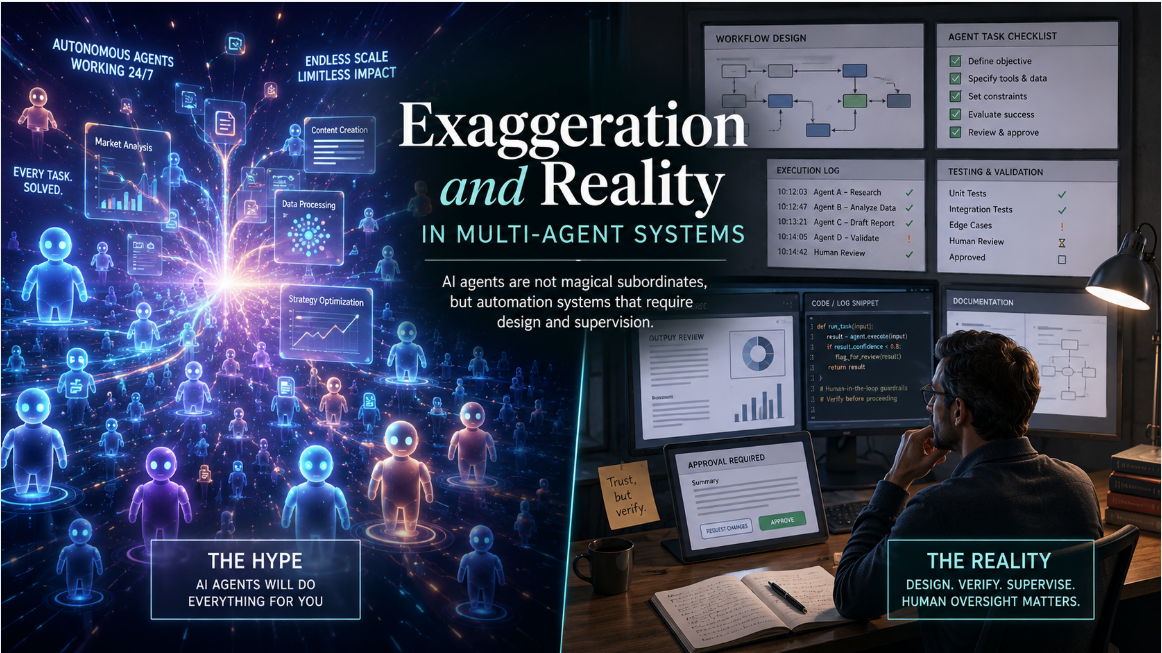
Secondly, there is a psychological effect when work loses meaning and becomes a series of AI babysitting duties. A poignant term from one workplace commentary is that poorly implemented AI turns employees into “digital babysitters” for the technologyremote.com. Instead of doing the creative or high-value work that humans excel at, employees find themselves monitoring dashboards, checking AI outputs for mistakes, and handling edge cases the AI can’t – essentially babysitting the AI systems. This shift can be demoralizing. People feel less ownership and pride in their work when they are just correcting a machine’s output all day. Over time, their skills might stagnate (as noted earlier), further reducing job satisfaction. “We become victims of our own efficiency,” wrote designer Tina He, describing how AI can create a “psychological Jevons Paradox” where increasing each hour’s output potential only raises the pressure to do even moreitsnicethat.com. In her words, it’s a trap that “threatens to consume our humanity in pursuit of ever-greater output,” as workers chase an ever-receding bar for productivityitsnicethat.com. This kind of environment, where one never feels “done” because AI tools always enable another tweak or iteration, is fertile ground for burnout.
Finally, AI overload can reduce personal interaction and teamwork, which are important for morale. If every communication is automated and every task is AI-assisted, employees might have fewer reasons to collaborate or brainstorm together, leading to isolation. Some workers also worry about job security in the face of AI, which adds stress – though in reality AI often shifts roles rather than replaces them entirely. The key point for managers is that throwing too many AI tools at the team without strategy can overwhelm and alienate the people who actually drive the business. As one tech leader observed, “AI isn’t just a production tool, it’s a thinking partner. But if we treat it like a mill, we’ll fall into the same trap [as the first Industrial Revolution]… instead of freeing humans, we just worked more.”itsnicethat.com In other words, if AI is used simply to demand more output from employees without improving how work is done, it can become a self-defeating cycle of overwork.
Strategies to Mitigate AI Slop and Boost Real Productivity
Given these challenges, what can managers and business leaders do to harness AI in a way that genuinely improves productivity and decision-making? The goal should be to capture AI’s benefits (speed, scale, automation of drudgery) while avoiding the traps of AI work slop. Here are several strategies and best practices to consider:
- Set Realistic Expectations: Anchor your AI initiatives in reality, not hype. Recognize that AI is an augmenting tool, not a magic replacement for human workers. Any productivity gains will require time and process adjustments. Be wary of grandiose targets (like cutting workforce by half overnight) that the technology cannot supportremote.com. As one Gartner analyst cautioned, today’s AI impact is often “disproportionate to the hype” – start with modest goals and scale up as you learnremote.com.
- Use AI Where It Truly Adds Value: Be selective about what you automate or generate with AI. Identify the tasks that are mundane, repetitive, or data-intensive – these are great candidates for AI assistance, freeing up humans for more complex work. Avoid using AI just for the sake of it or in areas where a personal touch, creativity, or nuanced judgment is essential. In other words, find AI’s strengths and use it strategically, not everywhereremote.com. This prevents tech overload and keeps workflows efficient.
- Maintain Human Oversight and Quality Control: Institute a rule that AI output is always subject to human review, especially for important content and decisions. This ensures errors or nonsense (“hallucinations”) are caught, and it keeps employees intellectually engaged. In practice, this might mean assigning team members to routinely fact-check AI-generated reports or having editors polish AI-written text. Such oversight needs to be baked into timelines (AI might produce something in 1 minute, but allow an hour for a human to verify it). Research confirms that AI performs best with a human in the loop – “large language models only operate at best when a human’s in the loop with judgment and oversight,” as an Upwork Institute director emphasizesremote.com. Don’t assume the AI got it right; design workflows assuming it needs supervision.
- Invest in Training and Digital Literacy: Provide employees with the training to use AI tools effectively and discerningly. This includes not just how to operate the software, but how to critically evaluate its output. Teaching people how to craft good prompts, how to spot AI errors or biases, and how to integrate AI results into their work can dramatically reduce inefficiencies. Well-trained employees will spend less time wrestling with tools and more time applying them smartlyremote.com. Training should also cover when not to use AI. By improving AI literacy, you empower staff to make the tech work for them (and not the other way around).
- Encourage Open Dialogue and Feedback: Create channels for employees to share their experiences with AI integration – what’s working, what isn’t. Often, frontline workers will identify where AI is creating more hassle than help. An open dialogue can alert management to issues (like a particular AI platform’s summaries being unreliable) so you can adjust courseremote.com. It also validates employees’ perspective and prevents frustration from simmering. Agile companies form cross-functional teams or “AI councils” that regularly discuss tool usage and recommend improvements. Continuous feedback helps fine-tune AI deployment so that it serves its intended purpose.
- Focus on Meaningful Metrics (Avoid Vanity Metrics): Redefine how you measure productivity and success in the AI era. Shift emphasis from raw output counts to outcome-oriented KPIs. For example, instead of applauding an AI system for generating 1000 leads (quantity), measure how many of those leads convert to sales (quality). Instead of tracking lines of code written by an AI coder, track the reduction in bugs or time saved in deployment. By aligning metrics with real business value – revenue, customer satisfaction, efficiency gains – you discourage the production of slop for slop’s sake. This may require educating the team and leadership about the limitations of vanity metrics. It’s worth noting that many organizations have recognized this need: recent data shows a broad move toward AI performance metrics tied to tangible gains rather than surface statsthegutenberg.com. When you reward impact over activity, AI will be used in ways that truly drive the business forward.
- Manage Information Flow and Avoid Overload: Tame the firehose of AI content by setting guidelines on communication and reporting. For instance, if an AI meeting assistant is used, perhaps limit its output to key decisions and tasks rather than a full transcript, unless requested. Encourage brevity and clarity in AI-generated communications. Some companies establish “quiet hours” or norms to discourage over-communication, even from bots. Essentially, apply the same rigor to information generated by AI as you would to information generated by humans – is it necessary? Who is the audience? What value does it add? By curbing redundant or low-value AI outputs, you prevent the team from drowning in data. As part of this, educate employees on information curation skills: how to filter AI outputs, turn off unneeded notifications, and structure AI reports to focus on essentials.
- Preserve Human Deliberation and Creativity: Deliberately make space for human creativity and critical thinking in your processes. This could mean encouraging teams to sometimes “turn off” the AI and brainstorm manually, so they don’t lose their creative muscles. It could also mean setting aside time to double-check AI’s recommendations with independent research or gut instinct. Some companies have even instituted policies like “no GPT days” or requiring an initial draft from a person before using AI, as a way to keep people thinking originally. The key is to ensure that humans are not just passively accepting AI outputs. One approach is to treat AI-generated ideas or drafts as starting points to be debated and improved, rather than final answers. By fostering a culture where employees feel responsible for the results (with AI as a helper), you keep critical thinking alive. Studies suggest that such an approach can actually enhance learning and outcomes – when AI is used properly as a partner, it can augment human abilities instead of diminishing themtime.com.
- Monitor Workloads and Employee Well-being: Keep a close eye on how AI is impacting your team’s work patterns and stress levels. Don’t assume that just because a task is automated, your people are less busy – they might be busy in new, hidden ways (like double-checking the automation). Solicit feedback on workload regularly. If you introduced an AI tool to save time, verify later whether it actually did or if it shifted work elsewhere. As one set of guidelines advises: “Make sure that AI tools are genuinely reducing workloads, not adding hidden tasks.”remote.com If signs of overload or burnout appear (e.g., longer hours, more mistakes, complaints of stress), consider dialing back or refining the AI processes. Sometimes the solution might be as simple as rolling back an automation that isn’t pulling its weight, or hiring a person to handle a bottleneck that AI can’t address. Remember, the ultimate goal is human productivity and sustainable performance. It defeats the purpose if AI makes work more taxing. By being attentive to your team’s well-being, you can adjust your AI strategy to truly empower rather than exhaust your workforce.
Implementing these strategies requires thoughtful leadership, but the payoff can be substantial. When done right, AI adoption can strip away tedious tasks, provide decision-makers with timely insights, and augment human creativity and expertise. The difference lies in intentional, human-centric integration rather than blind proliferation of AI for every problem.
Conclusion
The rise of generative AI in corporate environments has brought to light a critical lesson: Productivity isn’t just about producing more – it’s about producing value. “AI work slop” is what happens when organizations lose sight of that distinction, allowing volume to masquerade as progress. The resulting productivity paradox – lots of activity with little impact – reminds us that technology alone cannot deliver success without the right management approach.
Business professionals and leaders today have a dual responsibility. First, cut through the hype and be clear-eyed about what AI can and cannot do. Second, guide their teams to use AI as a true efficiency tool, not a generator of digital busywork. By defining clear goals, maintaining quality standards, and keeping humans in control of the narrative, companies can avoid the slop and harness AI to achieve smarter, not just faster, work.
In the end, the organizations that will thrive in the AI era are those that marry human judgment with AI capabilities in a balanced way. They will be the ones who automate the tedious tasks and elevate the creative ones – who filter the noise to amplify the signal. These businesses will still produce lots of outputs, but more importantly, they’ll produce outcomes that matter: innovative products, happier customers, and empowered employees. In short, they will have solved the productivity paradox by ensuring every bit of AI-driven productivity is real, meaningful, and sustainable progressmckinsey.comremote.com.