
 ChatGPT
Executive Summary
- On April 16, 2026, Anthropic released Claude Opus 4.7 as its new generally available flagship. The launch matters not only because the model is stronger at coding, long-running tasks, and vision, but because it changes migration behavior: adaptive thinking replaces older reasoning controls, sampling parameters are effectively gone, token counting changed, and higher-resolution image handling can raise cost.
- On April 16, 2026, OpenAI gave Codex its biggest expansion yet, turning it from a coding agent into a broader desktop work agent. The update added background computer use on macOS, an in-app browser, image generation, memory preview, more than 90 plugins, richer PR/review flows, and long-running automations.
- Claude for Word is real, but the evidence trail is messy. By April 20, official sources showed a live add-in on the Microsoft Marketplace and a detailed Anthropic help article, yet Anthropic’s public newsroom and April release notes still had no dedicated Claude for Word entry. Multiple media reports place the beta rollout on April 11, 2026, which is just outside the requested date window.
- The biggest industry pattern of April 13–20 was the shift from “assistant” to “work agent.” In the same few days, AI vendors pushed deeper into Word documents, desktop development, scientific workflows, visual design, and agent infrastructure.
- Competitive positioning this week favored Anthropic on flagship model quality and new workplace surfaces, while OpenAI’s answer was breadth: broaden Codex, strengthen agent infrastructure, and launch a specialized model for life sciences. That is less a benchmark fight than a workflow-control fight.
News Table
| Importance | Date | Topic | What happened | Why it matters | Main audience affected | Main sources |
|---|---|---|---|---|---|---|
| S — broad flagship-model impact | April 16, 2026 | Claude Opus 4.7 | Anthropic launched its new generally available top model, with stronger coding, multi-step agentic work, better vision, and the same headline API price as Opus 4.6. | This is a real deployment event, not just a benchmark update: developers need to retune prompts, token budgets, and reasoning controls, and enterprise buyers get a stronger broadly deployable model while Mythos remains restricted. | Developers, AI product teams, enterprise buyers | Official launch post, release notes, migration guide, major press coverage. |
| A — important distribution move, but evidence is messy | Reported rollout April 11, 2026; documented during April 13–20 | Claude for Word | Official sources confirm a real Anthropic Word add-in in beta, with tracked changes, comment-thread editing, semantic navigation, and cross-app context with Excel and PowerPoint. Multiple reports place the rollout on April 11, but Anthropic did not publish a clear newsroom post or release-note item for it. | It puts Claude directly inside the most common enterprise document workflow and takes direct aim at Copilot-style document assistance. The lower rating reflects date ambiguity and inconsistent official documentation, not low strategic importance. | Legal teams, finance teams, document-heavy enterprise users, IT admins | Microsoft Marketplace listing, Anthropic help docs, media reporting. |
| S — major product-positioning shift | April 16, 2026 | OpenAI Codex | OpenAI shipped a major Codex update: computer use on macOS, an in-app browser, image generation, memory preview, 90+ plugins, PR/review features, multiple terminals, SSH alpha, context-aware suggestions, and longer-running automations. | This moves Codex closer to a practical work agent rather than a code-only assistant. It is also OpenAI’s clearest competitive response to Anthropic’s momentum in coding and agentic tooling. | Developers, engineering managers, dev-tools buyers, product teams | Official product post, Codex changelog/docs, major press coverage. |
| A — meaningful expansion beyond text and code | April 17, 2026 | Claude Design | Anthropic launched Claude Design in research preview, powered by Opus 4.7, for prototypes, slides, one-pagers, mockups, and design-system-aware visual work, with export and Claude Code handoff. | It extends Anthropic from model vendor to workflow application vendor, especially for PM, design, and presentation work. | Product managers, designers, marketers, founders, enterprise teams | Official launch post and release notes. |
| B — important for agent builders | April 15, 2026 | OpenAI Agents SDK update | OpenAI updated the Agents SDK with a more model-native harness, configurable memory, Codex-like filesystem tools, and native sandbox execution across multiple providers. General availability uses standard API pricing. | This is core infrastructure for companies building their own agents, and it shows OpenAI productizing the same long-horizon, tool-using patterns behind Codex. | Developers, platform teams, enterprise AI builders | Official product announcement and docs. |
| B — important vertical specialization | April 16, 2026 | GPT-Rosalind | OpenAI introduced a purpose-built life sciences model in research preview, plus a Codex plugin that connects to 50+ scientific tools and data sources. Access is gated through a trusted-access structure for qualified customers. | It shows OpenAI moving into high-value domain models for regulated scientific work, not just general chat or coding. | Pharma, biotech, research organizations, scientific AI teams | Official research post and Reuters coverage. |
Claude Opus 4.7
Importance: S — this was the biggest pure model release of the week because it affects every existing Claude deployment and strengthens Anthropic’s hand in coding and agentic enterprise work.
Date and source type: April 16, 2026; official company launch post, official release notes, official developer migration guide, plus press coverage.
What was announced is straightforward: Claude Opus 4.7 is now generally available across Claude products and the API, and Anthropic kept the headline API price the same as Opus 4.6 at $5 per million input tokens and $25 per million output tokens. Anthropic positioned it as a step up in advanced software engineering, vision, and long-running multi-step work. In Anthropic’s public materials, the standout claims were stronger instruction following, better reliability on multi-step workflows, state-of-the-art performance on its Finance Agent evaluation and GDPval-AA, and a meaningful coding jump over Opus 4.6, including a cited move to 70% on CursorBench versus 58% for Opus 4.6.
What is actually new is not only quality, but operating behavior. Anthropic’s migration guide says Opus 4.7 removes the older extended-thinking mode, replaces it with adaptive thinking plus a new effort parameter, rejects non-default temperature, top_p, and top_k, omits visible summarized thinking by default unless developers opt back in, and uses a new tokenizer that can consume roughly 1.0x to 1.35x as many tokens as earlier models. Anthropic also recommends the new xhigh effort level for coding and agentic workloads. In practice, that means teams cannot treat this as a drop-in swap if they care about latency, budget, or product UX.
Practical usage implications are large. Opus 4.7 keeps the 1M-token context window, high-resolution image support, and the full Claude tool stack, but high-resolution images can use up to roughly three times as many image tokens as before, and the model’s more literal instruction-following means older prompts may suddenly behave differently. Anthropic also says Opus 4.7 tends to use tools less often by default, while higher effort settings drive more tool use in coding and search. For teams building on Claude, the headline is not merely “better model,” but “new default behavior profile.”
On safety and limitations, Anthropic’s own materials frame Opus 4.7 as having a similar overall safety profile to Opus 4.6, with improvements in honesty and resistance to prompt injection in some areas, modest weakness in some harm-reduction behaviors, and newly added real-time cybersecurity safeguards that can trigger refusals on higher-risk requests. Anthropic also explicitly positions Opus 4.7 below its more restricted Mythos Preview model, using 4.7 as the broadly available model while it keeps stronger cyber-oriented capability under tighter control.
Who is affected is broad: developers building agents, enterprises standardizing on a top-tier model, and knowledge-work teams that rely on long documents, data-heavy analysis, or vision-heavy workflows. In competitive terms, the release reinforces Anthropic’s claim that it currently has one of the strongest practical coding-and-agents stacks on the market. The immediate competitive implication is not that Anthropic “won the week,” but that it raised the baseline OpenAI had to answer with something more than another benchmark card. OpenAI’s April 16 Codex expansion looks like that answer.
Claude for Word
Importance: A — strategically important because it puts Claude inside a core enterprise workflow, but the documentary record is unusually unclear, so this item needs stricter fact separation than the others.
Date and source type: no clean official announcement date located; official evidence comes from the Microsoft Marketplace listing and Anthropic help-center documentation available by April 20, while multiple media reports place the beta rollout on April 11, 2026.
Facts confirmed by official sources. Claude for Word is a real product name, not just blog shorthand. The Microsoft Marketplace listing is titled “Claude by Anthropic for Word,” and Anthropic’s own help center has a page titled “Use Claude for Word.” Those official sources describe a Word add-in that can read and edit the open document, preserve styles and numbering, land changes through Word’s native tracked-changes system, work through comment threads, fill templates, and perform semantic navigation across documents. Anthropic’s help-center documentation also says Claude for Word can share context with Claude for Excel and Claude for PowerPoint, and that organizations can deploy it through the Microsoft 365 Admin Center or via manifest files.
Anthropic’s official documentation adds several details that matter to enterprise buyers. The add-in can run through an internal LLM gateway tied to Amazon Bedrock, Google Cloud Vertex AI, or Microsoft Azure, which means some organizations can use it without individual Claude accounts. The same documentation also says inputs and outputs are deleted from Anthropic’s backend within 30 days, chat history is not saved between sessions, and the feature is not currently included in Enterprise audit logs or the Compliance API. Anthropic further warns that the beta is not recommended for final client deliverables without review, litigation filings without verification, or highly sensitive documents without appropriate controls, and it explicitly warns about prompt-injection risks from untrusted external documents. Those warnings are unusually important because the target use cases include legal and financial documents.
Information supported by multiple reliable sources but not clearly established in an official announcement. Multiple reports, including Business Insider and other industry coverage published inside the April 13–20 window, say Anthropic rolled out the beta on April 11, 2026, and describe it as a new Word add-in aimed especially at lawyers or document-heavy professionals. That date is plausible and widely repeated, but Anthropic’s own public newsroom and April 2026 release notes do not include a dedicated Claude for Word post or release-note entry. So the most precise reading is: a real official product existed and was being publicly documented during April 13–20, while the underlying rollout likely started on April 11, just outside your requested range.
Low-confidence claims, mislabeling, or likely misunderstandings. The weak part of the Claude for Word story is the claim that there was a formal Anthropic public announcement equivalent to an Opus or Claude Design launch. As of April 20, Anthropic’s public newsroom lists Opus 4.7 and Claude Design for that week, but not Claude for Word, and the April release notes likewise list Opus 4.7 and Claude Design but no Word entry. There is also an official-source discrepancy on availability: the Microsoft Marketplace listing says Claude for Word is currently available to Team and Enterprise customers, while Anthropic’s help article says it is available to Pro, Max, Team, and Enterprise plans. That could reflect a fast-moving rollout or stale marketplace copy, but it does mean precise launch-day plan availability should be treated carefully.
What is actually new here is distribution. Anthropic already had Excel and PowerPoint add-ins, but Word is the most symbolically and commercially important “knowledge work” surface in the Microsoft stack. The product is not a generic chatbot pane; it is tuned to native document review mechanics such as tracked changes, comment replies, semantic clause search, and cross-app movement between models, spreadsheets, and slide decks. Anthropic’s own examples lean hard into contract review, finance memo drafting, and document QA. It also says Word users can switch among Opus 4.7, Opus 4.6, and Sonnet 4.6.
Why it matters is simple: it is a serious attempt to bypass the “open a chatbot, then paste into Word” workflow and meet users where work still happens. Who is affected most is not general consumers; it is legal teams, finance teams, consultants, policy staff, and any enterprise group that lives in Word but wants AI assistance without leaving the document. In competitive terms, this is Anthropic pressing on a sensitive part of Microsoft’s home turf while simultaneously leaning on Microsoft’s distribution rails through AppSource and Microsoft 365 deployment. That is a stronger competitive move than it first appears.
OpenAI Codex
Importance: S — this was the most important OpenAI product move of the week because it broadens Codex from a coding surface into a more general desktop work agent.
Date and source type: April 16, 2026; official product announcement, official developer docs and changelog, plus major media coverage.
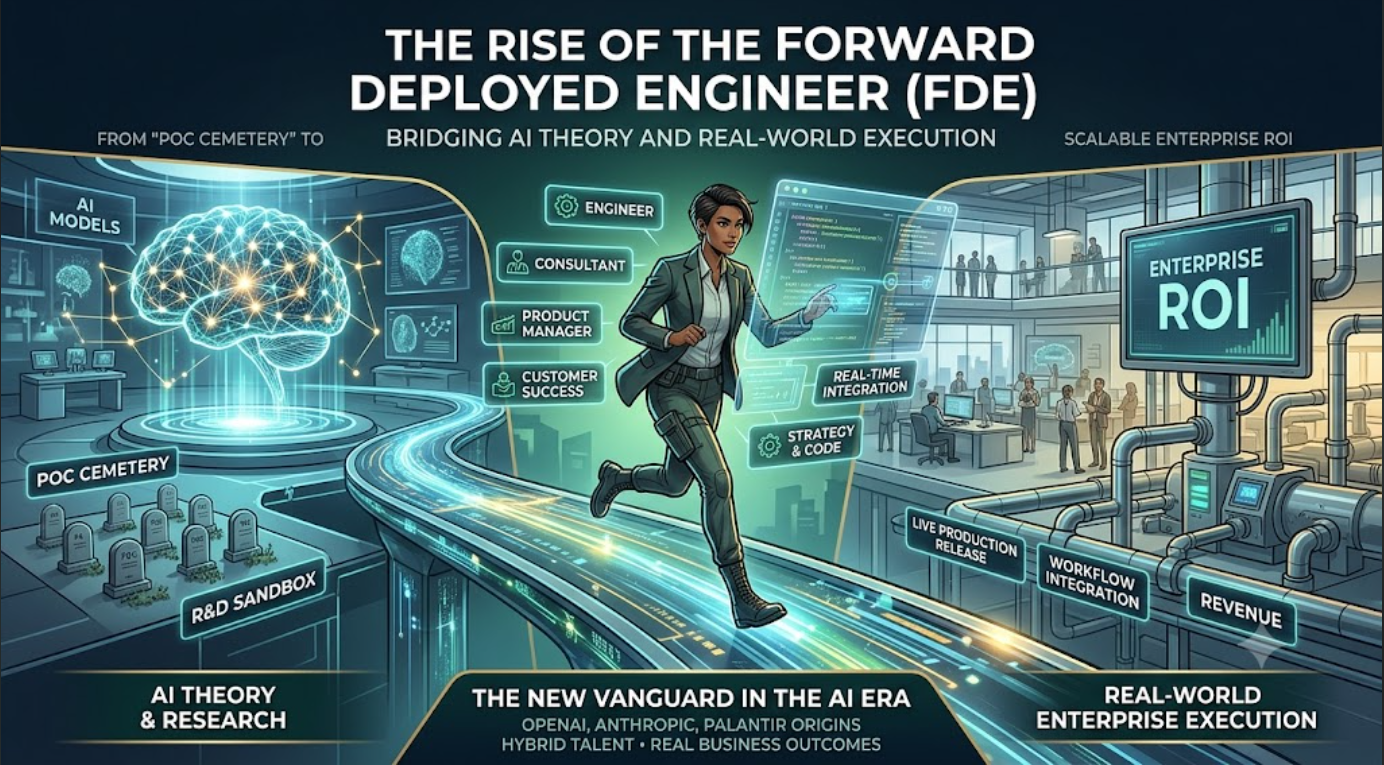
What OpenAI announced is a substantial Codex expansion. In OpenAI’s own words, Codex is becoming “a more powerful partner” across the full software development lifecycle for the more than 3 million developers who use it weekly. The core additions are background computer use, a native in-app browser, image generation with gpt-image-1.5, more than 90 new plugins, memory preview, context-aware suggestions, self-scheduling automations, GitHub review workflows, multiple terminals, SSH-based remote devbox support in alpha, and richer artifact previews for documents, spreadsheets, slides, and PDFs.
What is actually new is the scope change. Codex is no longer framed only as “AI inside your repo.” OpenAI’s April 16 changelog explicitly added chats that can start without choosing a project folder first and said they are useful for research, writing, planning, analysis, source gathering, and other tool-driven work that does not begin in a codebase. That is a notable line. It means OpenAI is deliberately making Codex a broader work environment, not just a software engineering assistant.
On the user-facing capability side, the most consequential feature is computer use. OpenAI says Codex can now operate apps on your Mac by seeing, clicking, and typing with its own cursor, and that multiple agents can work in parallel on the machine without interfering with the user’s own work. The in-app browser adds another verification surface, letting users comment directly on pages. Memory preview lets Codex retain stable preferences and recurring work patterns where available. Those are the ingredients of a practical desktop agent, not just an autocomplete system.
The limitations matter. Computer use is initially on macOS, and OpenAI says the feature is unavailable in the EEA, the UK, and Switzerland at launch. The Codex desktop app itself is available on macOS and Windows, while the CLI supports macOS, Windows, and Linux. Memory and context-aware suggestions were rolling out more slowly to Enterprise, Edu, and European users. In other words, the story is not “Codex everywhere all at once”; it is “Codex broadens now, with uneven surface availability by platform and region.”
Why this matters is that OpenAI has finally made a serious workflow argument against Anthropic, not just a model argument. In competitive terms, this update reads as a direct attempt to close the gap with Claude Code and broader Anthropic agent products by widening Codex into the same territory: long-running tasks, desktop control, memory, plugins, automation, and richer review surfaces. That “direct shot at Claude Code” framing comes from media, not OpenAI’s own copy, but the underlying feature set supports the interpretation. Developers, engineering managers, and enterprise dev-tools buyers are the most directly affected, though product teams and technical researchers will notice the new non-repo chat workflows too.
Other Important Developments
Claude Design — Importance: A. On April 17, Anthropic launched Claude Design in research preview as an Anthropic Labs product powered by Opus 4.7. It can generate and refine prototypes, slides, one-pagers, and mockups; import from text prompts, images, documents, and codebases; export to PDF, PPTX, Canva, and HTML; and hand projects off to Claude Code. This is strategically new because it pulls Claude beyond text and coding into visual product and presentation work, and it makes Anthropic look more like a workflow-software company rather than only a model provider. The main audiences are PMs, designers, marketers, founders, and enterprise teams that need fast visual iteration without standing up a full design workflow. Competitive implication: Anthropic is increasingly trying to own the layer where ideas turn into artifacts, not just the model behind that process.
OpenAI Agents SDK — Importance: B. On April 15, OpenAI updated the Agents SDK with a model-native harness, configurable memory, native sandbox execution, shell and patch tools, and support for providers including Blaxel, Cloudflare, Daytona, E2B, Modal, Runloop, and Vercel. OpenAI said the new capabilities are generally available and priced under standard API terms. This is not a consumer headline, but it is important because it lowers the cost of building controlled, long-horizon agents in production and shows OpenAI taking the internal machinery of agent products like Codex and turning it into platform infrastructure. It mainly affects developers and platform teams that want to build governed agents on top of OpenAI APIs. Competitive implication: OpenAI is trying to win not only end-user agent products, but the developer stack for building agents.
GPT-Rosalind — Importance: B. Also on April 16, OpenAI introduced GPT-Rosalind, a life-sciences-focused reasoning model for biology, drug discovery, and translational medicine, alongside a Codex plugin that connects to more than 50 data sources and tools. Access is through a trusted-access structure for qualified customers and governed research environments, and OpenAI is working with customers including Amgen, Moderna, Thermo Fisher Scientific, and others. This is new because it is a purpose-built vertical model series rather than another general model refresh. It matters mainly to pharma, biotech, and research organizations, but more broadly it signals where the frontier market is going: specialized AI systems for expensive, domain-specific workflows. Competitive implication: OpenAI is broadening its response to Anthropic not only with better agent tooling, but also with verticalized models in high-value sectors.
This Week’s AI Industry Trends
The biggest pattern from April 13 through April 20 was that leading AI vendors stopped talking mainly about “assistants” and started shipping more complete work agents. The week’s products were designed to see documents, manipulate applications, keep context over time, use tools, and hand work from one surface to another. Codex’s computer use and browser, Claude for Word’s tracked-changes workflow, Claude Design’s prototype-to-code handoff, and the Agents SDK’s sandbox execution all point the same way.
A second pattern was vertical and surface specialization. Instead of one chatbot for everything, companies are shipping domain-shaped products: Word for document-heavy professionals, GPT-Rosalind for life sciences, Codex for developer and adjacent technical work, and Claude Design for visual product and presentation tasks. Even outside the three priority topics, Adobe’s April 15 Firefly AI Assistant announcement used the same orchestration language and explicitly said Adobe would bring those workflows to Claude, which reinforces how quickly major software vendors are reorganizing around agentic interfaces.
The competitive picture of the week was therefore sharper than a simple Anthropic-versus-OpenAI model bakeoff. Anthropic looked ahead on flagship coding-model momentum and on invading everyday workplace tools such as Word and design/prototyping. OpenAI, in turn, looked determined to answer with platform breadth: a broader Codex, better agent infrastructure, and a vertical model for science. The practical reading for business and tech readers is this: the market is no longer deciding only who has the “smartest model.” It is deciding who controls the workflows where high-value work actually gets done.