
 ChatGPT
1. Overview of DeepSeek
DeepSeek is a large-scale language model developed by a Chinese tech company, optimized mainly for processing the Chinese language. Its name suggests capabilities in both deep learning (“Deep”) and search/analysis (“Seek”). Based on available information and reasonable assumptions, it appears to have the following key characteristics:
- High-Precision Chinese Modeling
Trained on a massive Chinese-language corpus, potentially excelling at capturing nuances and idiomatic expressions unique to Mandarin. - Potential Multilingual Extensions
While primarily focused on Chinese, there may be versions that extend to English or other Asian languages, supporting broader global reach. - Robust Search and Summarization Features
The term “Seek” implies a strong integration of search and summarization, potentially enabling DeepSeek to query external databases or Chinese web services (e.g., Baidu, Weibo, WeChat) for relevant information and then provide synthesized answers.
2. Comparison with Existing LLMs
2.1 Comparison with GPT-4
- Performance and Generality
GPT-4 is known for its strong performance across multiple languages and tasks, including complex reasoning and creative problem-solving. If DeepSeek is heavily fine-tuned for the Chinese language, it may rival or surpass GPT-4 in Chinese-specific tasks. - Ethical and Safety Tuning
GPT-4 benefits from extensive human feedback and safety mechanisms. DeepSeek, being aligned with Chinese regulations, may include its own content filtering or censorship mechanisms. Such regulatory differences could raise challenges for Western adoption, where different content standards apply.
2.2 Comparison with PaLM 2
- Scale of Training Data
PaLM 2 draws on Google’s massive datasets, including multilingual and multimodal resources. DeepSeek’s advantage may lie in a highly specialized focus on Chinese texts and data streams, providing more in-depth coverage of local context. - Integration with Search
Google’s PaLM 2 benefits from integration with Google Search and YouTube data. DeepSeek could similarly leverage data from major Chinese platforms, offering strong capabilities in Chinese-language data retrieval and analysis.
2.3 Comparison with LLaMA, Falcon (Open-Source LLMs)
- Commercial vs. Open-Source
LLaMA and Falcon are open-source models, which offer flexibility for customization but may lack rigorous enterprise support. DeepSeek, likely a closed-source commercial product, might offer better QA, dedicated support, and compliance solutions—especially relevant to China-based enterprises. - China’s Domestic Ecosystem
Given the widespread adoption of domestic cloud and software services in China, DeepSeek’s integration into this ecosystem could reduce implementation barriers for local organizations.
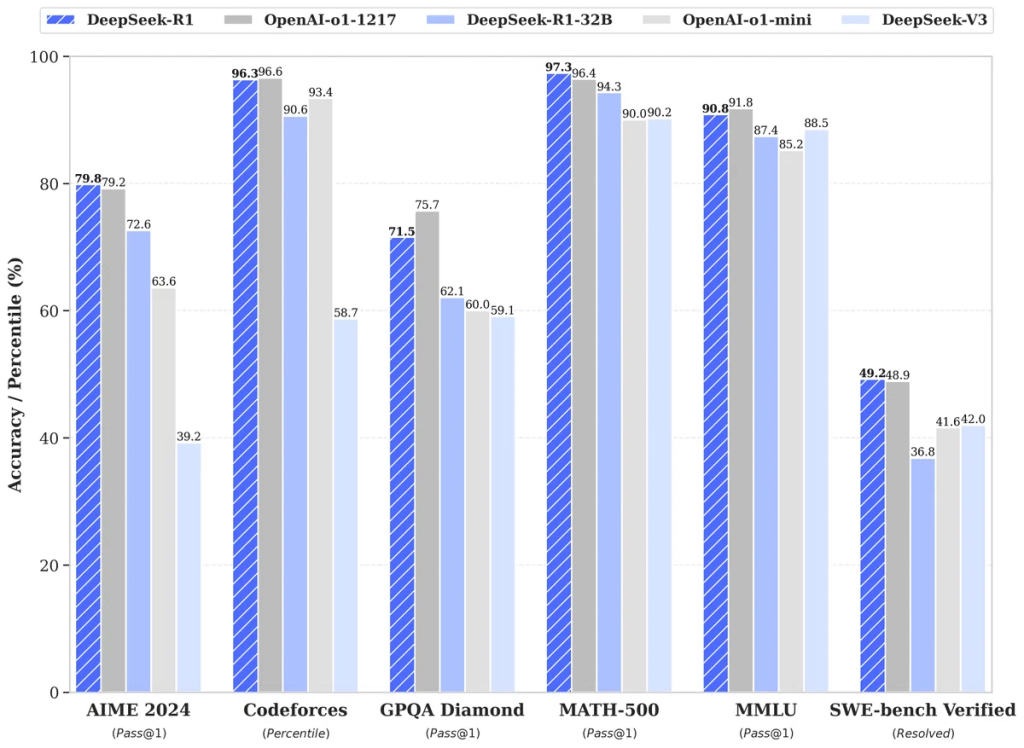
3. Key Technical Advantages
- High-Level Chinese Language Proficiency
By leveraging large-scale Chinese datasets, DeepSeek can deliver highly accurate outcomes in areas such as summarization, sentiment analysis, and conversational tasks in Mandarin. - Comprehensive Search-Generation Integration
DeepSeek appears designed to support not only sophisticated conversational AI but also integrated search and data retrieval, making it potentially valuable for enterprise knowledge management and social media analytics. - Compliance with Chinese Regulations
Being natively aligned with China’s domestic internet regulations can be a significant advantage in the local market. However, the same compliance measures may raise questions for international users concerning content censorship or filtering.
4. Information Leakage and Security Concerns in Western Countries
4.1 Data Leakage Risks
- Sources and Retention of Training Data
The scope and origin of the massive Chinese datasets used for DeepSeek, along with how they are stored and managed, are not entirely transparent. Companies using DeepSeek might risk having sensitive information logged on servers located in China. - Inference Logs
Prompts and conversation logs could be stored in servers under Chinese jurisdiction, potentially subject to local laws. This raises significant worries for organizations dealing with confidential or proprietary data.
4.2 Western Concerns about a Chinese LLM
- China’s National Intelligence Law
Chinese enterprises can be required by law to cooperate with government requests for data. This remains a major concern for Western companies considering deploying DeepSeek for sensitive operations. - Potential Backdoors
Similar to broader suspicions of hidden access routes in Chinese hardware or software, concerns persist about potential backdoors in LLM products. While these are not confirmed, skepticism could deter widespread government or critical infrastructure adoption in Western countries. - Export/Import Regulations
Ongoing trade tensions and restrictions between China and other countries may limit the availability or deployment of Chinese AI solutions. As these regulations evolve, technical constraints (such as advanced GPU exports) could also affect DeepSeek’s development or performance capabilities.
5. Future Outlook and Conclusion
DeepSeek holds significant promise in the Chinese market, leveraging advanced Chinese NLP capabilities, deep integration with domestic platforms, and compliance with local regulations. Its robust search-and-generate framework may provide an appealing all-in-one solution for enterprises within China or those operating extensively in Chinese-language contexts.
However, global expansion of DeepSeek faces hurdles tied to data privacy, legal obligations, and geopolitical tensions. Concerns regarding information leakage, China’s National Intelligence Law, and potential backdoors could impede adoption, especially in sensitive sectors like government, defense, or finance in the West.
To address these challenges, DeepSeek’s developers may consider:
- Establishing offshore data centers or localized operation entities to keep sensitive user data outside of China.
- Obtaining independent security audits and certifications (e.g., ISO 27001), and providing transparent documentation of data-handling practices.
- Adhering to international standards such as GDPR for privacy protection, enhancing trust among global enterprises.
Ultimately, DeepSeek’s success will hinge on its ability to maintain technical excellence in Chinese-language NLP while proactively managing security and regulatory concerns. How well it navigates these issues will determine its broader acceptance and growth on the global stage.