
The Impact of AI on Academic Publishing and Knowledge Dissemination

Source: https://answerthis.io/blog/the-impact-of-ai-on-academic-publishing-and-knowledge-dissemination

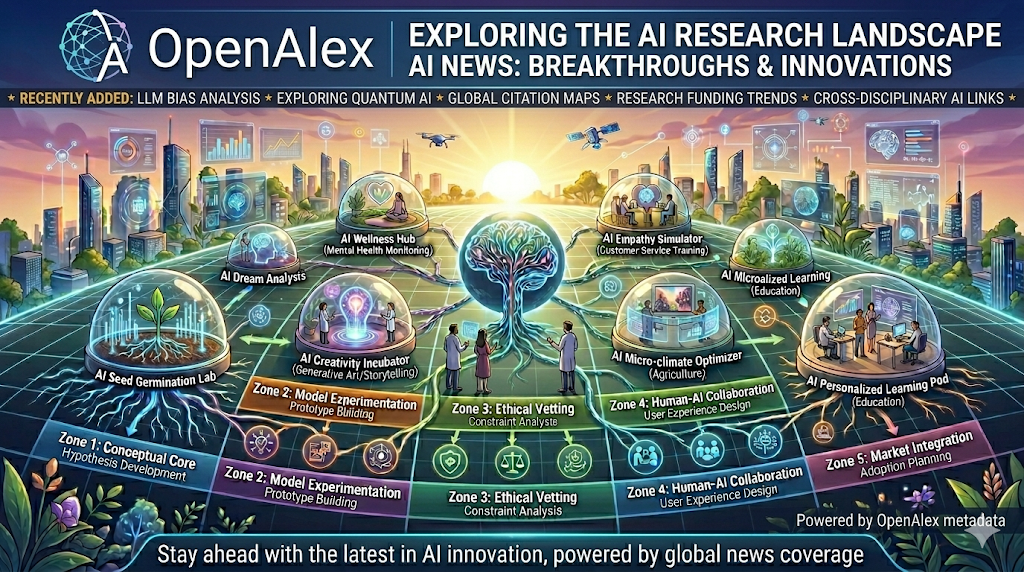
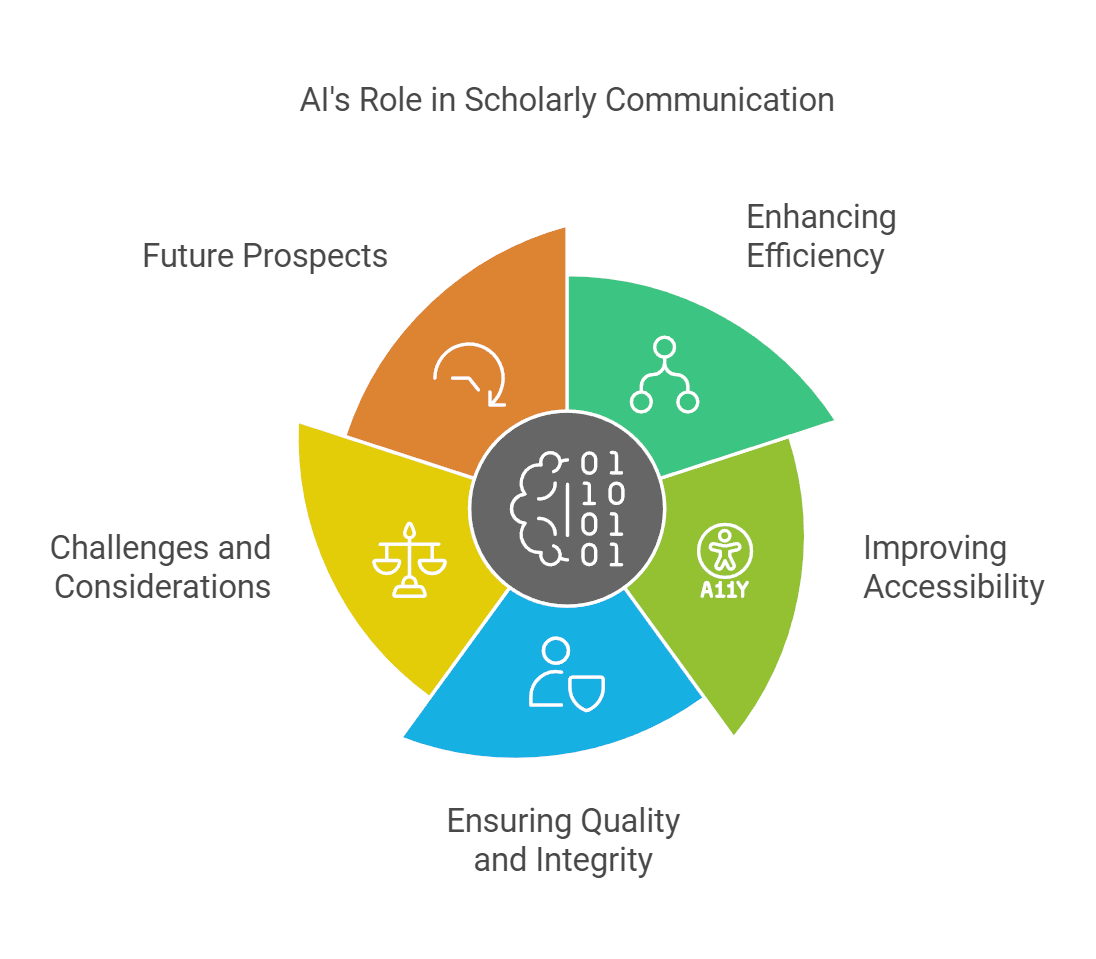
The article “The Impact of AI on Academic Publishing and Knowledge Dissemination” explores how artificial intelligence (AI) is transforming scholarly communication. Key insights include:

1. Enhancing Efficiency

  • Automated Processes: AI streamlines manuscript submissions, peer reviews, and editorial tasks, reducing time and human error.
  • Content Generation: AI tools assist in drafting articles, summarizing research, and translating texts, aiding authors and editors.

2. Improving Accessibility

  • Open Access Support: AI facilitates the dissemination of research through open-access platforms, broadening public reach.
  • Language Translation: AI-powered translations make scholarly works accessible to non-native speakers, promoting global knowledge exchange.

3. Ensuring Quality and Integrity

  • Plagiarism Detection: AI systems identify duplicate content, maintaining originality in publications.
  • Data Analysis: AI evaluates research data for accuracy, enhancing the reliability of published findings.

Challenges and Considerations

  • Ethical Concerns: The use of AI in content creation raises questions about authorship and intellectual property rights.
  • Bias and Fairness: AI algorithms may inadvertently perpetuate biases, affecting the objectivity of scholarly communications.

Future Prospects

  • Personalized Content: AI can tailor research recommendations to individual interests, improving information relevance.
  • Collaborative Research: AI fosters interdisciplinary collaboration by connecting researchers with complementary expertise.

In summary, AI significantly enhances efficiency, accessibility, and quality in academic publishing. However, addressing ethical challenges is crucial to fully realize its potential in knowledge dissemination.
  • Related Posts

    AI Governance in Corporate AI Utilization: Frameworks and Best Practices

    Executive Summary 1. Definition and Purpose of AI Governance In a corporate context, AI governance refers to the established set of processes, policies, and organizational structures that guide how AI systems are developed and used, to ensure they align with…

    AI Adoption Slowdown: Data Analysis and Implications

    Introduction The recent U.S. Census Bureau data revealed an unexpected dip in AI tool usage among large enterprises. Specifically, the biweekly Business Trends and Outlook Survey (BTOS) found that the share of companies with over 250 employees using AI dropped…

    You Missed

    Will OpenAI Prism accelerate scientific research?

    Will OpenAI Prism accelerate scientific research?

    Considering AI and Communism

    Considering AI and Communism

    Order in the Age of AI

    Order in the Age of AI

    Where Should AI Memory Live?

    Where Should AI Memory Live?

    2026 Will Be the First Year of Enterprise AI

    2026 Will Be the First Year of Enterprise AI

    Does the Age of Local LLMs Democratize AI?

    Does the Age of Local LLMs Democratize AI?

    Data Science and Buddhism: The Ugly Duckling Theorem and the Middle Way

    Data Science and Buddhism: The Ugly Duckling Theorem and the Middle Way

    Google’s Gemini 3: Launch and Early Reception

    Google’s Gemini 3: Launch and Early Reception

    AI Governance in Corporate AI Utilization: Frameworks and Best Practices

    AI Governance in Corporate AI Utilization: Frameworks and Best Practices

    AI Mentor and the Problem of Free Will

    AI Mentor and the Problem of Free Will

    The AI Bubble Collapse Is Not the The End — It Is the Beginning of Selection

    The AI Bubble Collapse Is Not the The End — It Is the Beginning of Selection

    Notable AI News Roundup: ChatGPT Atlas, Company Knowledge, Claude Code Web, Pet Cameo, Copilot 12 Features, NTT Tsuzumi 2 and 22 More Developments

    Notable AI News Roundup: ChatGPT Atlas, Company Knowledge, Claude Code Web, Pet Cameo, Copilot 12 Features, NTT Tsuzumi 2 and 22 More Developments

    KJ Method Resurfaces in AI Workslop Problem

    KJ Method Resurfaces in AI Workslop Problem

    AI Work Slop and the Productivity Paradox in Business

    AI Work Slop and the Productivity Paradox in Business

    OpenAI’s “Sora 2” and its impact on Japanese anime and video game copyrights

    OpenAI’s “Sora 2” and its impact on Japanese anime and video game copyrights

    Claude Sonnet 4.5: Technical Evolution and Practical Applications of Next-Generation AI

    Claude Sonnet 4.5: Technical Evolution and Practical Applications of Next-Generation AI

    Global AI Development Summary — September 2025

    Global AI Development Summary — September 2025

    Comparison : GPT-5-Codex V.S. Claude Code

    Comparison : GPT-5-Codex V.S. Claude Code

    【HRM】How a Tiny Hierarchical Reasoning Model Outperformed GPT-Scale Systems: A Clear Explanation of the Hierarchical Reasoning Model

    【HRM】How a Tiny Hierarchical Reasoning Model Outperformed GPT-Scale Systems: A Clear Explanation of the Hierarchical Reasoning Model

    GPT‑5‑Codex: OpenAI’s Agentic Coding Model

    GPT‑5‑Codex: OpenAI’s Agentic Coding Model

    AI Adoption Slowdown: Data Analysis and Implications

    AI Adoption Slowdown: Data Analysis and Implications

    Grokking in Large Language Models: Concepts, Models, and Applications

    Grokking in Large Language Models: Concepts, Models, and Applications

    AI Development — August 2025

    AI Development — August 2025

    Agent-Based Personal AI on Edge Devices (2025)

    Agent-Based Personal AI on Edge Devices (2025)

    Ambient AI and Ambient Intelligence: Current Trends and Future Outlook

    Ambient AI and Ambient Intelligence: Current Trends and Future Outlook