
Neuromorphic Computing: Can It Play a Role in Mainstream AI Development?

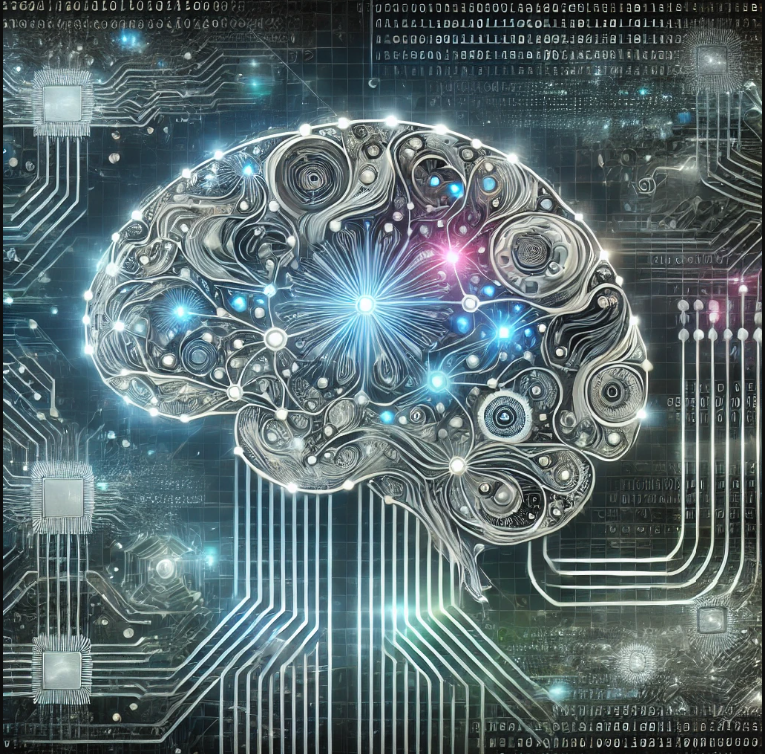
Neuromorphic computing, inspired by the structure and functionality of the human brain, has shown promise in energy efficiency and parallel processing. However, it has yet to make a significant impact in the mainstream AI development currently dominated by large-scale models and data centers. This article examines the current status and future potential of neuromorphic computing amidst evolving AI trends, such as lightweight AI models like DeepSeek.


Current Status and Challenges of Neuromorphic Computing

Neuromorphic computing aims to replicate the brain’s efficiency in processing information, offering advantages in power consumption and real-time processing. However, several challenges hinder its adoption in mainstream AI:

  • Lack of Generalization: Neuromorphic systems excel in specific applications, such as processing sensor data with spiking neural networks, but they struggle to match the versatility of general-purpose AI models like OpenAI’s o1.
  • Immature Development Ecosystem: The tools and frameworks for developing neuromorphic hardware and software are still in their infancy, limiting their competitiveness with GPUs and TPUs optimized for deep learning.
  • Ecosystem Barriers: The current AI ecosystem is heavily reliant on cloud computing and large-scale data infrastructure. Integrating neuromorphic computing into this framework requires significant changes.

The Rise of Lightweight AI Models Like DeepSeek

The emergence of lightweight AI models like DeepSeek, which rivals the performance of larger models with minimal computational resources, has raised questions about the future direction of AI development. DeepSeek highlights key considerations:

  • Efficiency in Computing Resources: Neuromorphic computing’s strengths in low-power, efficient processing align well with the success of lightweight AI models like DeepSeek.
  • Potential for Edge Devices: Neuromorphic systems are well-suited for edge applications, where power efficiency and local processing are critical.

The Role of Neuromorphic Computing Amid U.S. Investments in AI

The United States has made significant investments in AI development, such as the “Stargate Project,” which includes the use of nuclear power to sustain large-scale data centers. Neuromorphic computing currently occupies a niche role in this landscape:

  • Short-Term Impact: Neuromorphic computing has yet to be integrated into the infrastructure supporting large-scale AI systems, as its capabilities are not yet sufficient for the extensive parallelism and versatility required.
  • Long-Term Potential: Neuromorphic computing could play a critical role in energy-efficient AI systems and specialized applications. It may eventually complement sustainable energy solutions, such as nuclear power, to optimize energy use.

The Potential Role of Neuromorphic Computing in Future AI

As the feasibility of large-scale AI systems comes into question, neuromorphic computing could address several challenges:

  • Decentralized AI Systems: Neuromorphic technology can thrive in edge computing and IoT devices, reducing dependence on centralized data centers.
  • Energy Efficiency: With AI systems requiring ever-growing power, the low-power characteristics of neuromorphic computing could offer significant advantages.
  • Exploration of New AI Architectures: Neuromorphic systems may enable the development of novel algorithms and models that go beyond traditional deep learning.

Conclusion

Neuromorphic computing is not yet a major player in the mainstream AI landscape dominated by large-scale models and centralized data centers. However, its potential in energy-efficient and specialized applications positions it as a technology to watch. The success of lightweight AI models like DeepSeek suggests a growing demand for “smaller, smarter AI,” which could open the door for neuromorphic computing to influence the future of AI development.

While it may take time for neuromorphic systems to achieve the versatility and scale of current AI models, their long-term potential could lead to breakthroughs in how AI is developed and deployed.
  • tada@aicritique.org

    He has been a watcher of the industrial boom from the early 1980s to the present day. 1982, planner of high-tech seminars at the Japan Technology and Economy Centre, and of seminars and research projects at JMA Consulting; in 1986 he organised AI chip seminars on fuzzy inference and other topics, triggering the fuzzy boom; after freelance writing on CG and multimedia, he founded the Mindware Research Institute, selling the Japanese version of Viscovery SOMine since 2000, and Hugin and XLSTAT since 2003 in Japan. The AI portal site, www.aicritique.org was started in 2024 after losing the rights to XLSTAT due to a hostile takeover in 2023.

    Related Posts

    KJ Method Resurfaces in AI Workslop Problem

    To solve the AI ​​Workslop problem, an information organization technique invented in Japan in the 1960s may be effective. Kunihiro Tada, founder of the Mindware Research Institute, says that by reconstructing data mining technology in line with the KJ method,…

    The AI Arms Race: Insights from Scale AI CEO Alexandr Wang

    In a riveting discussion, Alexandr Wang, founder and CEO of Scale AI, sheds light on the competitive landscape of artificial intelligence between the U.S. and China. He shares insights on AI model performance, the need for infrastructure, and the future…

    Leave a Reply

    Your email address will not be published. Required fields are marked *

    You Missed

    Data Science and Buddhism: The Ugly Duckling Theorem and the Middle Way

    Data Science and Buddhism: The Ugly Duckling Theorem and the Middle Way

    Google’s Gemini 3: Launch and Early Reception

    Google’s Gemini 3: Launch and Early Reception

    AI Governance in Corporate AI Utilization: Frameworks and Best Practices

    AI Governance in Corporate AI Utilization: Frameworks and Best Practices

    AI Mentor and the Problem of Free Will

    AI Mentor and the Problem of Free Will

    The AI Bubble Collapse Is Not the The End — It Is the Beginning of Selection

    The AI Bubble Collapse Is Not the The End — It Is the Beginning of Selection

    Notable AI News Roundup: ChatGPT Atlas, Company Knowledge, Claude Code Web, Pet Cameo, Copilot 12 Features, NTT Tsuzumi 2 and 22 More Developments

    Notable AI News Roundup: ChatGPT Atlas, Company Knowledge, Claude Code Web, Pet Cameo, Copilot 12 Features, NTT Tsuzumi 2 and 22 More Developments

    KJ Method Resurfaces in AI Workslop Problem

    KJ Method Resurfaces in AI Workslop Problem

    AI Work Slop and the Productivity Paradox in Business

    AI Work Slop and the Productivity Paradox in Business

    OpenAI’s “Sora 2” and its impact on Japanese anime and video game copyrights

    OpenAI’s “Sora 2” and its impact on Japanese anime and video game copyrights

    Claude Sonnet 4.5: Technical Evolution and Practical Applications of Next-Generation AI

    Claude Sonnet 4.5: Technical Evolution and Practical Applications of Next-Generation AI

    Global AI Development Summary — September 2025

    Global AI Development Summary — September 2025

    Comparison : GPT-5-Codex V.S. Claude Code

    Comparison : GPT-5-Codex V.S. Claude Code

    【HRM】How a Tiny Hierarchical Reasoning Model Outperformed GPT-Scale Systems: A Clear Explanation of the Hierarchical Reasoning Model

    【HRM】How a Tiny Hierarchical Reasoning Model Outperformed GPT-Scale Systems: A Clear Explanation of the Hierarchical Reasoning Model

    GPT‑5‑Codex: OpenAI’s Agentic Coding Model

    GPT‑5‑Codex: OpenAI’s Agentic Coding Model

    AI Adoption Slowdown: Data Analysis and Implications

    AI Adoption Slowdown: Data Analysis and Implications

    Grokking in Large Language Models: Concepts, Models, and Applications

    Grokking in Large Language Models: Concepts, Models, and Applications

    AI Development — August 2025

    AI Development — August 2025

    Agent-Based Personal AI on Edge Devices (2025)

    Agent-Based Personal AI on Edge Devices (2025)

    Ambient AI and Ambient Intelligence: Current Trends and Future Outlook

    Ambient AI and Ambient Intelligence: Current Trends and Future Outlook

    Comparison of Auto-Coding Tools and Integration Patterns

    Comparison of Auto-Coding Tools and Integration Patterns

    Comparing the Coding Capabilities of OpenAI Codex vs GPT-5

    Comparing the Coding Capabilities of OpenAI Codex vs GPT-5

    Comprehensive Report: GPT-5 – Features, Announcements, Reviews, Reactions, and Impact

    Comprehensive Report: GPT-5 – Features, Announcements, Reviews, Reactions, and Impact

    July 2025 – AI Development Highlights

    July 2025 – AI Development Highlights

    ConceptMiner -Creativity Support System, Integrating qualitative and quantitative data to create a foundation for collaboration between humans and AI

    ConceptMiner -Creativity Support System, Integrating qualitative and quantitative data to create a foundation for collaboration between humans and AI

    ChatGPT Agent (Agent Mode) – Capabilities, Performance, and Security

    ChatGPT Agent (Agent Mode) – Capabilities, Performance, and Security