
 ChatGPT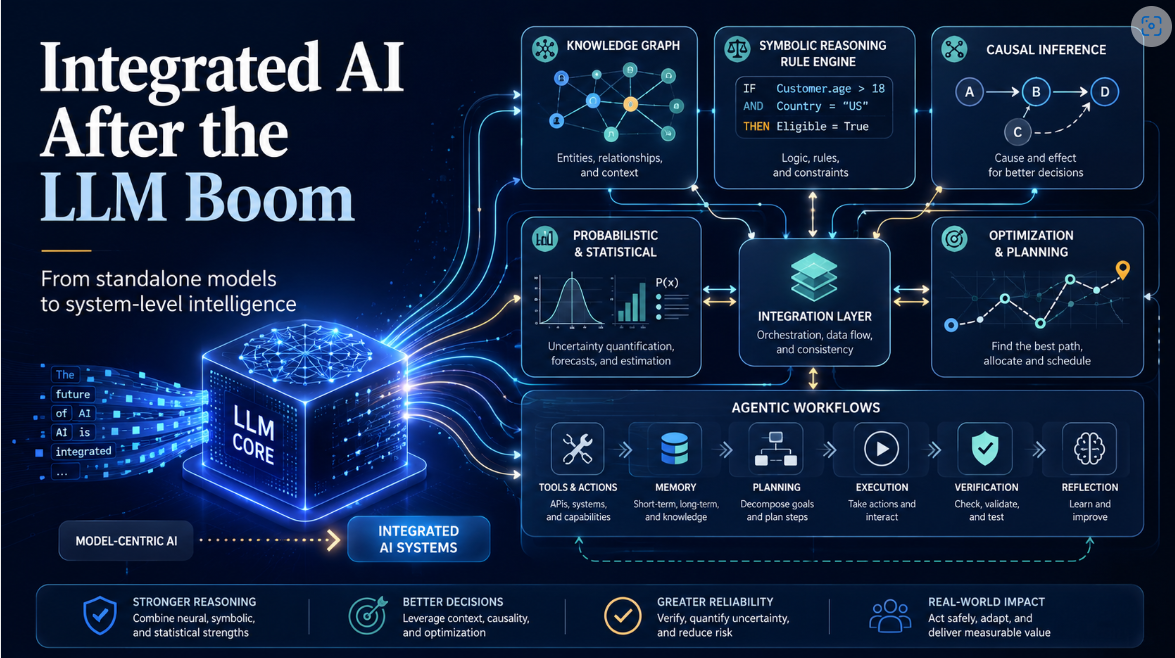
Executive summary
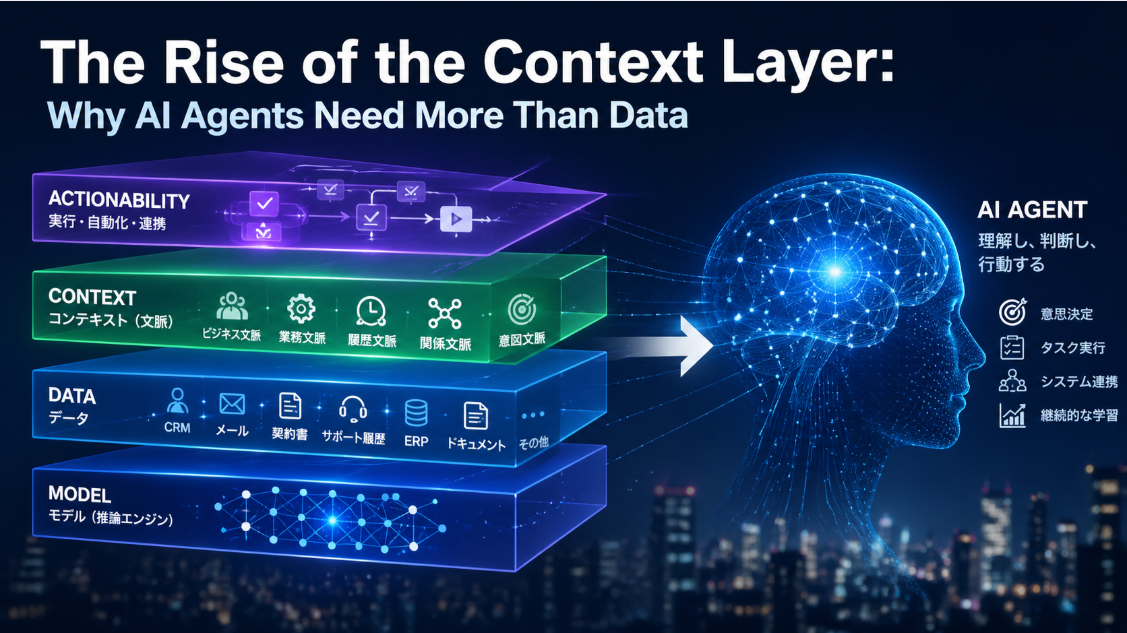
- The most important shift in AI in 2024–2026 is not a swing back from neural AI to old-style symbolic AI. It is a move toward system architectures that combine frontier models with retrieval, tools, structured knowledge, workflow controls, verification, and sometimes formal reasoning, optimization, causal models, or probabilistic methods. OpenAI, Anthropic, Microsoft, Google Cloud, SAP, Oracle, ServiceNow, Databricks, and Palantir are all shipping some version of this pattern, even when they use different product names. (1)
- Recent neural AI has delivered major achievements in language, code, multimodal generation, and benchmark performance, including systems that can use tools and systems such as AlphaGeometry and AlphaProof that combine learning with formal search or verification. But the limitations of standalone neural systems remain well documented: hallucinations, brittle math and logical reasoning, shallow causal reasoning, weak explainability, dependence on large data, and poor reliability in high-stakes domains. (2)
- RAG, GraphRAG, and tool-using agents are the fastest-moving commercialization layer because they deliver practical gains without requiring organizations to retrain frontier models. They improve grounding, provenance, and enterprise connectivity, but they do not by themselves solve deeper issues such as causal reasoning, formal guarantees, or long-horizon planning. (3)
- Neuro-symbolic AI is back in a narrower, more pragmatic form than many headlines suggest. In the LLM era, it often appears as model-plus-knowledge-graph, model-plus-rules, model-plus-verifier, or model-plus-formal-tool architectures. Experts disagree on how broad the label should be, but there is growing consensus that symbols matter when they play a causal role in inference, constraint enforcement, proof checking, or decision control, rather than serving as passive reference material. (4)
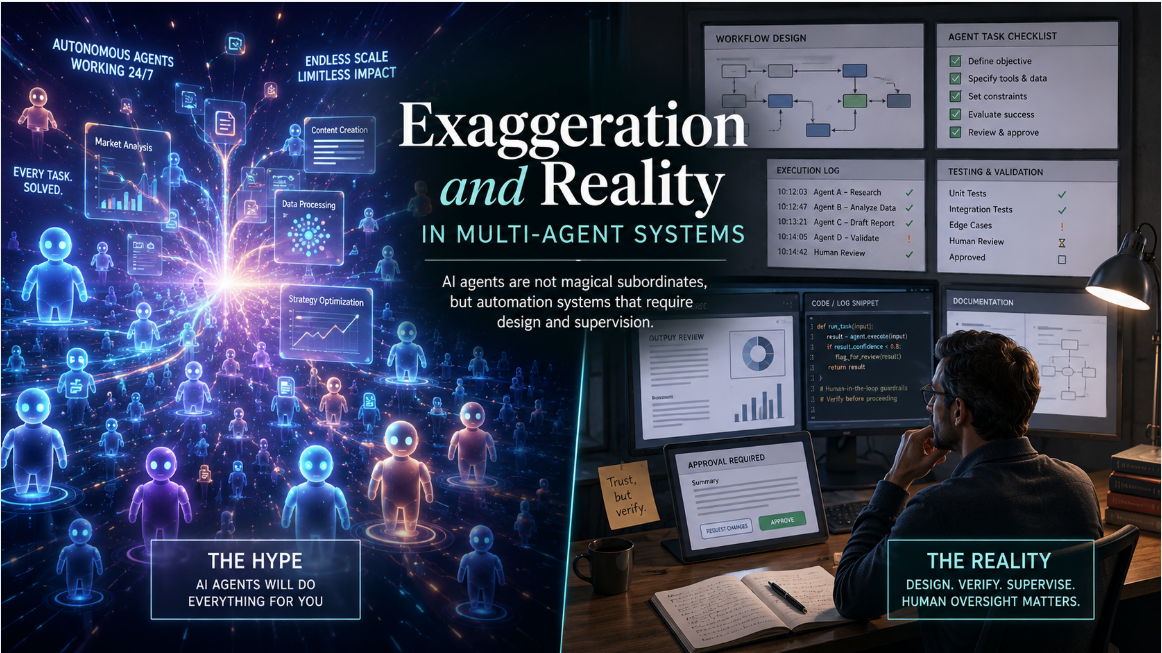
- Enterprise adoption is real, but the market is also noisy. Public evidence shows meaningful progress in observability, workflow orchestration, policy controls, knowledge integration, and evaluation. At the same time, analysts warn that a large share of “agentic AI” projects are immature or overstated, and the most ambitious claims still rely heavily on vendor-authored materials rather than independent validation. (5)
- In regulated and high-reliability sectors such as healthcare, finance, public services, legal work, and industrial operations, the winning architectures are likely to be hybrid by necessity: LLMs for language and interface; retrieval or graphs for grounding; rules or workflows for controls; statistical or causal models for estimation; and optimization or formal methods for making or checking decisions. This is increasingly aligned with regulatory pressure around transparency, risk management, and human oversight. (6)
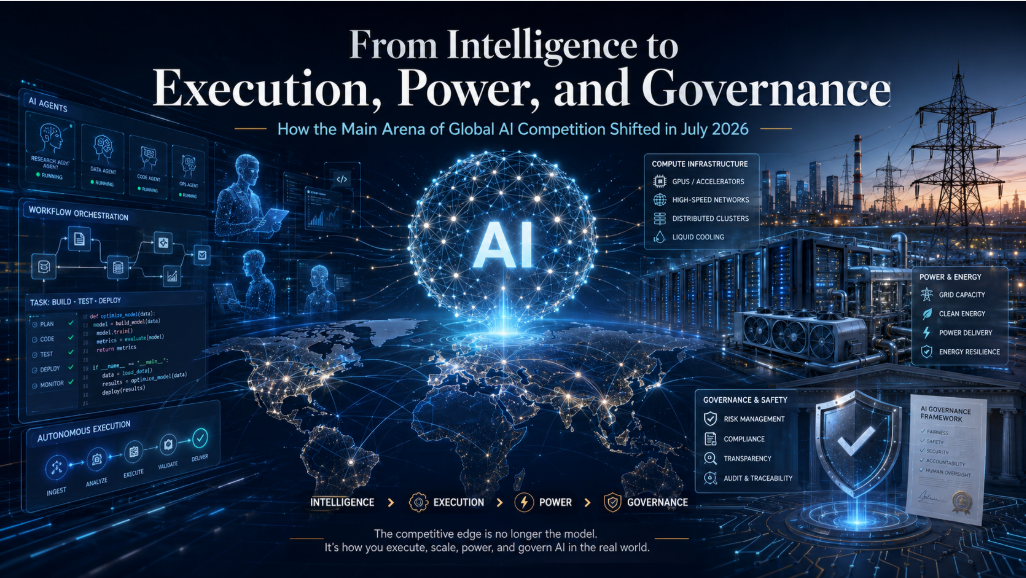
- Over the next three to five years, integrated AI is likely to become the dominant enterprise architecture, even if not the dominant research ideology. Frontier models will continue to improve through scale and reinforcement learning, but most business value will come from wrapping those models in data, tools, memory, workflow, verification, and governance layers. For Japanese firms, the strongest early opportunities are manufacturing, supply chain, quality/compliance, public-sector knowledge work, and trustworthy software engineering, where structured process knowledge is already rich and business tolerance for error is low. (7)
Detailed research report for article writing
Background and context. Neural AI’s achievements remain extraordinary. Frontier models now write and summarize text, generate and debug code, handle multimodal inputs, and in many products invoke external tools, search the web, or operate over enterprise files. OpenAI’s current API stack explicitly centers “agentic” loops with built-in tools such as web search, file search, computer use, code execution, remote MCP servers, and function calling; Anthropic likewise frames effective agents as models augmented with tools, memory, and orchestration; Google describes Gemini 2.5 models as “hybrid reasoning” systems and offers an enterprise agent platform with tools, sessions, memory, and code execution; and open models such as Llama 3.2 added tool calling for on-device agentic applications. (1)
The technical ceiling of standalone neural AI, however, is becoming clearer. OpenAI’s own research states that hallucinations remain a stubborn problem because training and evaluation often reward guessing rather than calibrated uncertainty. Formal causal benchmarks such as CLadder show that LLMs still struggle with causal inference grounded in structural rules. Recent work also finds that LLMs often perform only shallow causal reasoning, and studies of math reasoning such as GSM-Symbolic and later “reasoning model” stress tests document brittle performance under distribution shifts or increased problem complexity. DARPA’s long-running “three waves” framing remains a useful heuristic: first-wave handcrafted knowledge was brittle; second-wave statistical learning was powerful but data-hungry, weak on explanations, and poor at adapting to novel conditions; current research is trying to move toward systems with contextual reasoning and stronger assurances. (8)
These weaknesses matter most in high-reliability domains. NIST’s Generative AI Profile highlights risks around confabulation, harmful or misleading content, privacy, security, and opaque behavior. The EU AI Act imposes a risk-based regime and special diligence on high-risk systems. In healthcare, the FDA’s guidance on clinical decision support and on AI for drug and biologic regulatory decision-making both emphasize context of use, credibility, and human interpretability rather than black-box trust alone. In other words, the policy environment is increasingly rewarding integrated architectures that can support traceability, validation, and oversight. (6)
Why integrated approaches are gaining momentum. The attraction of hybrid systems is straightforward. Neural models are good at perception, generation, fuzzily matching patterns, and flexible interfaces. Symbolic and decision-theoretic methods are good at explicit structure: logic, constraints, provenance, counterfactuals, proofs, rules, knowledge representation, and optimization. The current wave of integrated AI tries to recombine these strengths rather than choose one camp. Surveys published in 2024–2026 consistently describe the field as moving toward data-and-knowledge-driven AI, where neural learning is combined with symbols, rules, graphs, probability, and decision procedures. (9)
Major integrated approaches.
Neuro-symbolic AI combines learned representations with symbolic structures such as logic, programs, rules, or proofs. It is attractive when data are noisy but the task still has hard semantic structure, as in theorem proving, visual reasoning, and constrained decision support. Representative work includes DeepProbLog, NS-CL, NSIL, AlphaGeometry, and AlphaProof. Its advantages are interpretability, compositionality, and the ability to enforce or check explicit constraints; its limits are symbol grounding, engineering complexity, and reasoning cost at scale. Adoption today is meaningful in narrow high-value settings, but still limited in mass-market enterprise products. (10)
Knowledge graphs plus LLMs use curated relationships, ontologies, or entity graphs to ground responses, improve multi-hop retrieval, or structure enterprise context. This family includes classic KG reasoning, LLM-augmented KG construction, and GraphRAG-style architectures. It is particularly promising for enterprise question answering, compliance, fraud analysis, biomedical reasoning, and workflow navigation. Its strengths are provenance and explicit relationships; its costs are graph construction, schema maintenance, and coverage gaps. Practical adoption is accelerating because vendors can add graph layers to existing data estates without rebuilding the base model. (11)
Rule-based reasoning with neural models is being used both for safety and for business logic. NVIDIA’s NeMo Guardrails is a concrete example: it inserts dialog, retrieval, execution, and output “rails” around LLM behavior. Salesforce’s public positioning around “hybrid reasoning” likewise points toward balancing LLM flexibility with structured business logic. The upside is controllability; the downside is brittle rule maintenance and the difficulty of keeping rules aligned with learned behavior and changing data. Commercial adoption is already strong in enterprise workflow platforms because rules map naturally to policy, approvals, and exception handling. (12)
Logic programming, theorem proving, constraint solving, and neural AI now represent one of the most technically interesting research frontiers. DeepProbLog and later probabilistic-neuro-symbolic systems integrate neural predicates with logic programs. AlphaGeometry and AlphaProof use neural guidance together with symbolic deduction or formal proof search. Recent work in theorem proving and formalized software requirements uses LLMs plus external verifiers or proof assistants, and DARPA’s PROVERS program shows institutional demand for formal-methods pipelines that are usable by non-experts. The advantages are precise guarantees and machine-checkable outputs; the limitations are formalization cost, search complexity, and narrow domain fit. Adoption remains selective but strategically important in software assurance, cyber, math, chip/toolchain verification, and regulated reasoning tasks. (10)
Causal inference with machine learning and generative AI is moving from theory into practical integration. Surveys in 2024–2025 document rapid work on deep causal learning, causal discovery, and the use of LLMs to help generate or interpret causal structures. CLadder shows that LLMs alone are not enough for formal causal reasoning, while other research suggests LLMs can still help domain experts draft causal graphs, encode assumptions, or transform unstructured inputs into more analyzable representations. This is especially relevant in policy, medicine, marketing, and risk where decision-makers want answers to “why,” “what if,” and “what should we intervene on?” rather than just “what is likely?” Adoption is still earlier than RAG, but it is growing in decision intelligence and regulated analytics. (13)
Bayesian statistics, multivariate statistics, probabilistic graphical models, and deep learning address a different weakness of pure deep learning: uncertainty. Bayesian deep learning, functional priors, credal approaches, and the re-linking of PGMs with deep learning are all aimed at better calibration, uncertainty quantification, and robustness under shift. This matters when business users need confidence estimates rather than only point predictions. The practical challenge is that these systems can be computationally expensive and are harder to operationalize than plain neural inference, but their value is high in medical imaging, scientific modeling, risk estimation, and low-data domains. (14)
Reinforcement learning, optimization, operations research, and AI agents are converging quickly. RL remains central in some frontier model training and in neural combinatorial optimization; meanwhile, operations research is being reconnected with LLMs for natural-language model building, heuristic generation, and agent-driven decision support. NVIDIA’s cuOpt is a clean commercialization example: the language interface can be neural, but the final plan comes from hard optimization. The advantage is that businesses often need optimized actions, not eloquent prose. The constraint is that many real optimization tasks still require explicit modeling and domain-specific integration. (15)
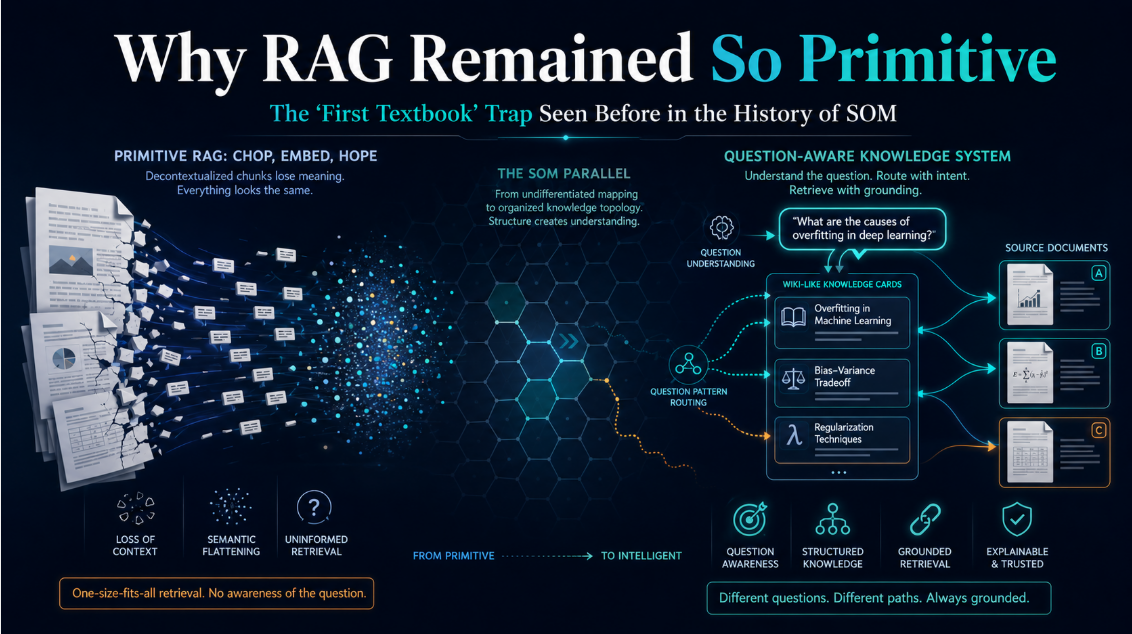
RAG, GraphRAG, and Agentic RAG are the most commercially mature integrated family. RAG combines parametric memory with non-parametric retrieval. GraphRAG adds graph extraction, network analysis, and community summaries so that questions can be answered over narrative corpora or weakly structured enterprise data. Agentic RAG goes further by letting an agent decide what to retrieve, what tool to call, and when to verify or revise. The practical gains are grounding, freshness, and lower customization cost. The limitations are retrieval quality, chunking/schema errors, cost blowups from too much context, and failure when the answer requires real reasoning rather than search. (3)
Planning, memory, tool use, verification, and workflow control in agents are now central, not peripheral. ReAct established the basic pattern of interleaving reasoning and acting. By 2025–2026, surveys of agent planning, memory, and evaluation treat tool use, reflection, plan selection, and memory management as core research axes. Enterprise platforms increasingly expose these functions as first-class product features rather than custom glue code. This is why the market language has shifted from “model” to “agent system” or “agent platform.” (16)
Connections to AutoML, MLOps, decision intelligence, and decision-support systems are now becoming obvious. Databricks positions Mosaic AI as a layer that can combine classical ML and GenAI and evaluate agent systems with MLflow; Gartner defines decision intelligence platforms as software that composes data, analytics, knowledge, and AI to support or automate decisions; and products from Aera, Palantir, C3.ai, Oracle, and SAP all sit in this “decision stack” zone more than in pure chatbot territory. The long-term implication is that many enterprise AI budgets will be justified through decision quality, workflow throughput, and governance, not through raw model novelty. (17)
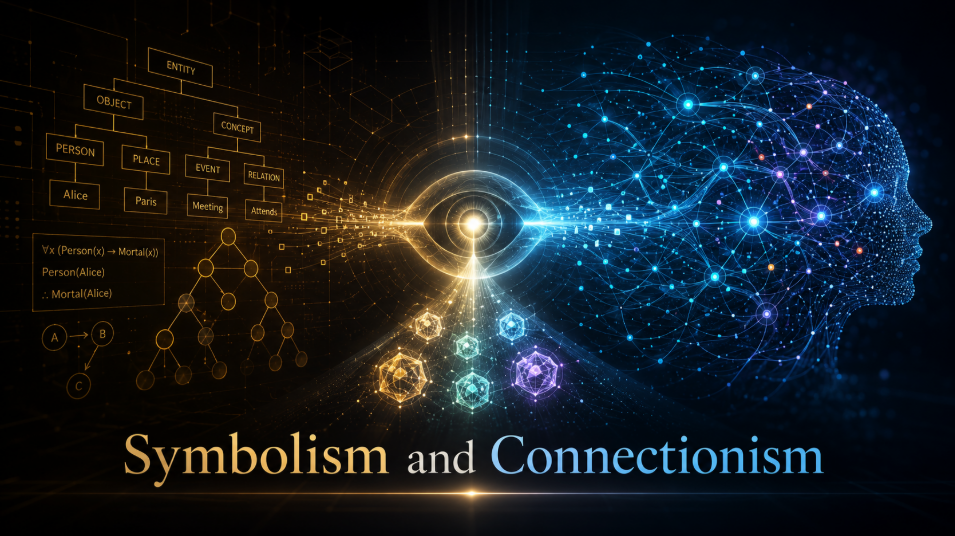
Focused investigation of neuro-symbolic AI. Neuro-symbolic AI has deep roots in older attempts to combine symbolic reasoning with connectionist learning. Before deep learning’s rise, the field wrestled with how to encode logic in neural systems and how to make neural systems compositional. The first wave of AI emphasized rules and handcrafted knowledge; the second wave emphasized statistical learning from large data. DARPA’s own framing of the third wave as contextual adaptation captures why neuro-symbolic work never really disappeared: the field kept returning whenever researchers hit the limits of pattern recognition alone. (18)
What changed after the deep learning boom is the degree of asymmetry in the hybrid. In the 1980s and 1990s, the ambition was often to build unified cognitive architectures. In the 2020s, the dominant pattern is more modular: let the neural model do perception, language, or proposal generation; let symbols, graphs, rules, solvers, or verifiers constrain, check, or guide it. That design is visible in AlphaGeometry, AlphaProof, DeepProbLog, theorem-prover pipelines such as APOLLO, and a large body of KG reasoning work. (19)
Representative researchers and institutions include Artur d’Avila Garcez, Vaishak Belle, Luc De Raedt, Bernhard Schölkopf, the IBM Research neuro-symbolic program, Google DeepMind’s formal-math teams, and groups around KG reasoning and probabilistic logic in Europe and North America. The field’s venues now span NeurIPS, ICML, ICLR, AAAI, IJCAI, ACL/EMNLP, KDD, UAI, KR, and specialized communities such as the International Conference on Neural-Symbolic Learning and Reasoning and the Symbolic-Neural Learning workshops. (4)
In the LLM era, the debate over definition matters. A broad view says that “LLM + tools,” “LLM + knowledge graphs,” and “LLM + verifiers” all count as neuro-symbolic because they combine subsymbolic learning with explicit symbolic structures or actions. A narrower view says they count only when symbolic objects actively shape inference or correctness, as in program execution, proof checking, logic constraints, or typed graph traversal, not when a model merely reads retrieved text. Recent position papers explicitly call for clearer characterization because the label is being stretched by marketing and by the sheer diversity of hybrid systems. A sensible business reading is this: the closer the symbolic element is to the final decision path, not just the context window, the more justifiable the neuro-symbolic label becomes. (20)
Research and development trends since 2020. One clear trend has been the move from end-to-end differentiable neuro-symbolic prototypes toward modular hybrid systems. Early 2020s work focused on compositional integration, probabilistic logic, and differentiable operators. Later work increasingly emphasizes interfaces: retrieval layers, graph extractors, tool APIs, remote memory, planner-controller loops, proof checkers, and evaluator-judge modules. That shift reflects both engineering reality and the rise of frontier base models that are too large to redesign internally. (21)
A second trend is that knowledge grounding has become a major organizing principle. RAG started as a way to reconnect generation with external memory. GraphRAG and KG-LLM work then pushed toward richer structure, better multi-hop reasoning, and improved provenance. Many EMNLP, ACL, KDD, CIKM, and database-adjacent efforts after 2023 are essentially about turning raw corpora into better structured substrates for LLM reasoning. (3)
A third trend is the rise of verification and external checking. This includes theorem provers, code verifiers, hallucination evaluators, and fact-checking or rail systems. The research logic is straightforward: if models are powerful but unreliable, then a second subsystem must test or constrain them. That pattern now appears across software verification, mathematical proving, and production RAG evaluation. (22)
A fourth trend is the re-entry of causal and probabilistic reasoning into the LLM conversation. The field no longer treats “reasoning” as synonymous with chain-of-thought alone. Instead, there is active work on whether models can represent interventions, counterfactuals, probabilistic belief updates, and uncertainty. That is why UAI- and UAI-adjacent work, Bayesian teaching, CLadder, and causal-LLM surveys matter disproportionately: they are forcing a more formal standard for reasoning claims. (23)
A fifth trend is the convergence of agents and enterprise control planes. Research on planning, memory, tool use, and evaluation is rapidly feeding product stacks. Microsoft Foundry Agent Service, Google’s enterprise agent platform, OpenAI’s Agents SDK, Anthropic’s MCP-based tool ecosystem, and Databricks’ agent observability/evaluation all show the same R&D logic turning into product logic. (24)
Corporate and commercialization trends. The most important practical observation is that “integration” means different things across firms.
OpenAI’s public stack is strongest on tool orchestration, retrieval, and agent runtime. The Responses API, tools, MCP, connectors, file search, and the Agents SDK all support model-plus-system designs, and OpenAI’s own deep research product is explicitly described as a multi-step agent that searches, analyzes, and synthesizes across sources. What is less visible in OpenAI’s public materials is a native symbolic reasoning layer in the classic neuro-symbolic sense. The integration is real, but it is mostly tool-centric and workflow-centric, not logic-centric. (1)
Google DeepMind shows the strongest evidence of research-grade hybrid reasoning through AlphaGeometry and AlphaProof, where neural proposals are tightly coupled with symbolic deduction or formal proof systems. On the product side, Google Cloud is pushing a broad enterprise agent platform with memory, code execution, governance, and Workspace integration. The research is deeply hybrid; the enterprise platform is more about orchestration and grounding than explicit formal reasoning. (19)
Microsoft has two of the clearest public examples of hybridization: GraphRAG on the research side, and Agent Service plus Semantic Kernel on the product side. GraphRAG is not just better search; it is a structured understanding pipeline that extracts graphs, performs community analysis, and uses graph artifacts at query time. Semantic Kernel’s evolution away from older hand-built planners toward function calling is also telling: Microsoft is betting that many planning problems are best served by models plus explicit tools rather than by purely prompt-defined logic. (25)
IBM remains the company most explicitly committed to the neuro-symbolic identity. Its research pages still frame neuro-symbolic AI as strategic, and IBM has published systems spanning concept learning, logical neural reasoning, vector-symbolic architectures, and learning symbolic programs from raw data. Commercially, however, IBM’s strongest product traction is in governance and enterprise AI management through watsonx and watsonx.governance. In short: strong hybrid research brand; more conventional enterprise software monetization. (26)
Anthropic has become central to the tooling layer through MCP and rich tool-use support. Its public work on effective agents, multi-agent research systems, advanced tool use, and autonomy measurement makes it a major shaper of the agent ecosystem. But, like OpenAI, Anthropic’s public positioning is more about augmented language models than about explicit symbolic reasoning. The system design is hybrid; the research identity is not primarily “neuro-symbolic.” (27)
Meta’s story is mixed. In research, CICERO remains one of the best demonstrations of combining language with strategic reasoning and planning. In product/model releases, Meta has emphasized open-weight multimodal models, tool calling, and agentic use cases, while internal engineering posts describe unified agent platforms for infrastructure optimization and controlled data access. The enterprise commercialization of explicit symbolic integration is still lighter than at Microsoft, Palantir, or SAP. (28)
NVIDIA is building the infrastructure layer for integrated AI: cuOpt for optimization, NeMo Guardrails for policy/rule enforcement, AI-Q for multi-agent research systems, and technical guidance on GraphRAG and LLM-driven knowledge graphs. NVIDIA’s role is less about owning the business ontology and more about accelerating the components that let other firms build reliable hybrid stacks. (29)
Among enterprise software firms, Salesforce, Palantir, ServiceNow, SAP, Oracle, Databricks, and C3.ai all show meaningful but different integrations. Salesforce’s Agentforce and Atlas Reasoning Engine combine models with workflow data and increasingly with business logic, but public technical detail is still relatively light. Palantir’s strongest differentiator is its Ontology, which gives agents an explicit enterprise representation of entities, relations, and actions; this is one of the clearest public cases of structured knowledge actively mediating agent behavior. ServiceNow combines agents with workflow orchestration and an enterprise knowledge graph. SAP is building Joule around process context and SAP Knowledge Graph. Oracle is pairing agents with vector search, graph features, and GraphRAG inside the database stack. Databricks is strongest in evaluation, governance, vector retrieval, and the ability to mix classical ML and GenAI. C3.ai continues to position itself as an enterprise decision platform spanning predictive ML, generative AI, graph analytics, and operational optimization. (30)
The startup landscape reinforces the same pattern. RelationalAI argues that relational knowledge graphs will become the “memory” and reasoning substrate for decision agents. causaLens positions causal models as the basis for explainable digital workers and intervention recommendations. Glean is building a Work AI platform anchored in system-of-context, connectors, deep research, and agents. Hebbia has gained traction in high-stakes knowledge work, especially finance and law, where workflow-based document reasoning matters more than pure chat. Vectara has concentrated on RAG and agent evaluation, especially hallucination detection and correction. These firms matter because they are attacking specific failure modes of generic LLM applications rather than trying to outscale foundation model labs. (31)
Industry applications. In finance, the most promising hybrid mixes are graph plus rules for fraud and compliance, causal and Bayesian models for risk and scenario analysis, and optimization for portfolio, pricing, or treasury decisions. Oracle explicitly highlights fraud and financial flows as graph use cases; Palantir’s ontology-centric approach is naturally aligned with compliance-heavy financial operations; and financial RAG work increasingly uses knowledge graphs to organize document corpora. (32)
In healthcare and drug discovery, LLM-only assistants face regulatory and safety limits. The better fit is model-plus-guideline, model-plus-knowledge-graph, causal estimation for treatment effects, and Bayesian uncertainty for diagnostics. FDA guidance underscores the need for credibility assessment and interpretability, while the broader research trend favors causal and probabilistic layers for medical decision support. (33)
In manufacturing, the most promising pattern is computer vision or time-series ML at the edge, combined with optimization and rules for action selection. C3.ai’s reliability and asset performance products, NVIDIA’s cuOpt, and broader reviews of AI-driven decision support in Industry 4.0 all point to the same architecture: predictive models identify risk, while a separate decision layer schedules, dispatches, or reconfigures. (34)
In legal and compliance, the strongest candidates are RAG with citations, knowledge graphs for clause/entity relationships, formal methods for checkable logic, and workflow controls for accountability. Vendors such as Hebbia, IBM, and ServiceNow are already targeting this space, but public evidence suggests that success depends less on raw model intelligence than on audit trails, source grounding, and policy controls. (35)
In government and public policy, integrated AI is attractive for policy simulation, citizen-service routing, and risk prediction because decision-makers need counterfactuals, traceability, and human override. Causal and decision-intelligence approaches are therefore more relevant than pure generation. Japan’s IPA and NII materials also show that trustworthy AI, formal methods, and knowledge graph applications are already present in the domestic research and policy ecosystem. (36)
In supply chain and logistics, the natural stack is forecasting plus optimization plus workflow agents. C3.ai markets demand forecasting and inventory optimization; SAP positions Joule agents around business-process expertise; and NVIDIA’s cuOpt targets route planning and other large-scale decision problems. This is one of the clearest areas where integrated AI can produce measurable operational ROI quickly. (34)
In scientific research, the frontier is hybrid by design: large models for literature and hypothesis generation, graph or symbolic systems for structured knowledge, simulation for testing, and formal proof or search for mathematics and some scientific subproblems. DeepMind’s AI-for-science materials explicitly mention combining LLMs with deduction engines, and AlphaGeometry/AlphaProof show how valuable formalism becomes when correctness matters. (37)
In education, the most promising architecture is LLM tutor plus knowledge graph or mastery model plus verifier. Bayesian teaching research is relevant because it frames tutoring as belief updating, while knowledge-graph work helps structure curriculum relations and prerequisite dependencies. Commercial adoption is still uneven, but the technical direction is clear. (38)
In cybersecurity, graph reasoning, formal methods, and agents with strict controls look stronger than free-form assistants. DARPA’s PROVERS, NVIDIA guardrails, and surveys on neuro-symbolic AI in cybersecurity all point to the value of explicit structure and verification for attack-path analysis, policy enforcement, and response workflows. Gartner’s forecast that AI applications will drive a growing share of incident response by 2028 adds commercial pressure, but also raises the bar for assurance. (39)
Critical perspectives and future outlook from 2026. The case for integrated AI is strong, but it is not a silver bullet. The symbol grounding problem remains unresolved: symbols only help when they connect cleanly to reality, which often requires messy data engineering and human curation. Knowledge bases and graphs are expensive to build and update, especially when the underlying business changes quickly. Rules can conflict with learned behavior. Formal reasoning can become computationally expensive. Evaluation remains immature, especially for agents, where success depends on long-horizon behavior rather than single-turn accuracy. And operating hybrid systems is often harder than deploying a single model endpoint. (40)
The honest comparison, then, is not “LLMs vs neuro-symbolic AI,” but “continued model improvement vs systems engineering around models.” The scaling camp can point to real progress: hybrid reasoning models, better tool use, stronger coding systems, and formal-math breakthroughs continue to arrive. The hybrid camp can point out that many of those breakthroughs already depend on external structure, search, verification, or tool access. The empirical trend suggests both sides are partly right. Better base models will continue to matter, but the dominant architecture for production systems will increasingly be model-centered rather than model-only. (41)
For the next three to five years, the highest-confidence forecast is as follows. Integrated AI will likely become the default enterprise deployment pattern; LLMs will increasingly evolve into components of larger cognitive systems; early adopters should prioritize use cases with strong existing process structure and measurable ROI, such as copilots over internal knowledge, compliance workflows, customer-service triage with policy controls, industrial optimization, and software engineering assurance; and talent demand will shift toward people who can bridge models, data engineering, knowledge design, workflow automation, evaluation, and governance. Analyst forecasts reinforce the direction even if they probably overstate the speed: Gartner expects agentic capabilities to spread across enterprise applications, but also warns that many projects will fail because value and control are still immature. (42)
For Japanese companies and research institutions, the opportunity is not to outspend the hyperscalers on foundation models. It is to apply integrated AI where Japan already has structural advantages: manufacturing, robotics, quality assurance, supply chains, regulated operations, and knowledge-rich business processes. IPA’s AI materials emphasize both utilization and safety; NII’s current programs explicitly include knowledge graph applications, generative AI for trustworthy software engineering, and testing/trust exploration for AI systems; and Japan continues to host symbolic-neural and trustworthy-AI communities. The main challenge is data and knowledge infrastructure: unless firms invest in interoperable data, domain ontologies, and evaluation discipline, they will remain buyers of generic agent interfaces rather than builders of defensible hybrid systems. (43)
What is really happening can be summarized three ways. First: the center of gravity is shifting from bigger models to better systems around models. Second: enterprise AI is converging on stacks that combine language models with memory, retrieval, tools, workflow controls, and evaluation, with symbols and graphs used wherever they improve reliability or actionability. Third: neuro-symbolic AI is returning not as a replacement for LLMs, but as one of the main ways to make them trustworthy enough to do consequential work. (4)
Comparison table
Directional ratings for business use in 2026. “High” means comparatively strong on that criterion; “Low” means comparatively weak. These are synthesis judgments, not benchmark scores.
| Neural AI alone | High on broad language tasks; variable on domain truth | Low | Medium | Low | Medium | High at scale | Medium | Low–Medium | Low–Medium | Low | High | High as assistant | Best universal interface layer, weakest on guarantees | (2) |
| Neuro-symbolic AI | Medium–High in structured domains | High | High | Medium–High | Medium | Medium–High | Low–Medium | High | High | High | Medium | High | Strong where rules, proofs, or constraints matter | (40) |
| RAG / GraphRAG | Medium–High when knowledge is retrievable | Medium–High | Medium | High | Medium | Medium | Medium | Medium–High | Medium | Medium | High | High | Fastest practical route to grounded enterprise AI | (3) |
| Causal AI | Medium in prediction; high in intervention analysis | High | High on “why/what-if” | Medium | Medium | Medium | Medium | High | High | High | Medium | High | Best for decisions that need causal justification | (13) |
| Statistical and ML integration | High for estimation/forecasting | Medium | Medium | Medium–High | Medium–High | Medium | High | Medium–High | Medium | Medium | High | High | Strong for calibrated estimation and low-data settings | (14) |
| Optimization and decision-intelligence integration | High when objectives/constraints are explicit | High | High for action selection | High | Medium | Medium | High | High | High | High | High | High | Often the best way to turn AI insight into operations | (29) |
| Agentic AI | Medium today, with high variance | Low–Medium unless instrumented | Medium–High for workflows | Medium | Low–Medium | High | Medium | Medium | Low–Medium unless guarded | Medium–High | High | Very High | Powerful composition layer, but still operationally immature | (45) |
Major players table
Research institutions and academic communities
| Player | Main initiatives | Related technologies | Assessment | Public sources |
|---|---|---|---|---|
| University of Edinburgh / Vaishak Belle | Conceptual and historical framing of neuro-symbolic AI in the LLM era | Neuro-symbolic reasoning, hybrid AI framing | Important for definition-setting and intellectual coherence, less so for productization | (4) |
| KU Leuven / Luc De Raedt ecosystem | DeepProbLog, soft unification, ongoing DeepLog line | Probabilistic logic programming, differentiable reasoning | One of the most important academic lineages in probabilistic neuro-symbolic AI | (10) |
| Bernhard Schölkopf / causal and representation-learning community | Formal causal reasoning benchmarks and causal representation learning | CLadder, causal inference, causal representation learning | Critical for pushing “reasoning” beyond verbal imitation toward formal causal competence | (23) |
| DARPA ecosystem | AI Next, AI Forward, MCS, PROVERS | Contextual adaptation, common sense, explainability, formal assurance | Strong indicator of long-term institutional demand for hybrid and trustworthy AI | (18) |
| ACL / EMNLP / KDD / UAI / NeSy / SNL communities | Knowledge grounding, agent evaluation, causal reasoning, KG+LLM, symbolic-neural learning | KG-LLM fusion, agent planning, evaluation, neuro-symbolic methods | The clearest sign that the field has broadened from a niche into a multi-venue research program | (11) |
Companies
| Company | What public evidence shows | Actual technical integration | Caution on claims | Public sources |
|---|---|---|---|---|
| OpenAI | Agents SDK, built-in tools, MCP/connectors, deep research, file/web search | Tool-centric system integration around frontier models | Limited public evidence of native symbolic reasoning beyond tool use and verification patterns | (46) |
| Google DeepMind / Google Cloud | AlphaGeometry, AlphaProof, Gemini hybrid reasoning, enterprise agent platform | Strong research-grade neural + formal search; product-grade tools/memory/governance | Research is deeply hybrid, but enterprise platform is broader orchestration rather than explicit symbolic AI | (19) |
| Microsoft | GraphRAG, Foundry Agent Service, Semantic Kernel | Graph-based grounding, function calling, agent orchestration | Public research detail is strong for GraphRAG, less so for all enterprise agent quality claims | (25) |
| IBM | Direct neuro-symbolic research agenda; watsonx governance | Logical neural nets, vector-symbolic methods, governance | Research depth is stronger than visible commercial neuro-symbolic adoption | (26) |
| Anthropic | MCP, tool use, multi-agent research, advanced tool discovery/use | Protocol- and tool-oriented augmentation | More “augmented LLM systems” than explicit symbolic reasoning | (27) |
| Meta | CICERO, tool-calling Llama models, internal unified agent platforms | Strategic reasoning, tool use, controlled infra agents | Less visible enterprise knowledge/decision layer than peers | (28) |
| NVIDIA | cuOpt, NeMo Guardrails, AI-Q, GraphRAG guidance | Optimization, rule rails, agent infrastructure, graph/RAG acceleration | Strong enabler layer, weaker business-semantic layer | (29) |
| Salesforce | Agentforce, Atlas Reasoning Engine, hybrid reasoning messaging | CRM data + workflow + business-logic mediated agents | Public info is product-led; technical depth is thinner than Microsoft/DeepMind papers | (30) |
| Palantir | AIP, Ontology MCP, AIP Agents, AIP Analyst | Ontology-centered structured context for agents | One of the clearest enterprise knowledge-representation stories, but still mostly vendor-authored evidence | (47) |
| Databricks | Mosaic AI, Agent Bricks, MLflow 3, vector search, policy/governance | GenAI + classical ML + evaluation + observability | Strong operational layer; less emphasis on symbolic reasoning | (17) |
| ServiceNow | AI Agent Orchestrator, AI Agent Studio, Knowledge Graph | Workflow-native agents with semantic enterprise graph | Strong process integration; broader reasoning claims still early | (48) |
| SAP | Joule agents and assistants, SAP Knowledge Graph | Process context + enterprise semantics + workflow execution | Strong for SAP-centric environments; less transparent outside that boundary | (49) |
| Oracle | AI Agent Studio, AI Vector Search, Oracle Graph, GraphRAG | Database-native vector + graph + agent stack | Strong data-platform story; much evidence is Oracle-authored | (50) |
| C3.ai | Agentic platform, generative AI, graph/time-series/optimization apps | Enterprise AI apps combining predictive and generative layers | Long enterprise experience, but public technical detail is uneven | (51) |
Startups
| Startup | Focus | Why it matters | Public sources |
|---|---|---|---|
| RelationalAI | Relational knowledge graphs and decision agents | Shows the resurgence of knowledge representation as enterprise memory and reasoning substrate | (31) |
| causaLens | Causal AI and digital workers | One of the clearest “decision, not just prediction” value propositions | (52) |
| Glean | Enterprise search, system of context, agents, deep research | Strong example of enterprise grounding before action | (53) |
| Hebbia | Structured knowledge work, especially finance/legal | Important example of workflow-first, high-stakes document reasoning | (35) |
| Vectara | RAG evaluation, hallucination detection/correction | Highlights that evaluation and correction are becoming products in their own right | (54) |
Key papers and source list
| Theme | Source | Year | Key point | Why it matters |
|---|---|---|---|---|
| LLM limitations | OpenAI, Why Language Models Hallucinate | 2025 | Hallucination persists because training/evals reward guessing | Strong primary-source admission from a frontier lab |
| AI waves | DARPA, AI Next / three waves framing | 2018–2024 | Contrasts handcrafted knowledge, statistical learning, and contextual adaptation | Useful conceptual bridge from symbolic to hybrid AI |
| RAG | Lewis et al., Retrieval-Augmented Generation | 2020 | Combines parametric and non-parametric memory | Foundation for the modern enterprise grounding stack |
| GraphRAG | Edge et al., From Local to Global | 2024 | Uses graph extraction and community summaries for richer retrieval | Signature paper in graph-structured grounding |
| Neuro-symbolic survey | Bhuyan et al., Neuro-symbolic artificial intelligence: a survey | 2024 | Organizes NeSy around representation, learning, reasoning, and decision-making | Good high-level map for business readers |
| NeSy systematic review | Colelough, Neuro-Symbolic AI in 2024 | 2025 | Taxonomizes major NeSy areas | Useful for current field structure |
| Data + knowledge AI | Wang et al., Towards Data-And Knowledge-Driven AI | 2025 | Frames neuro-symbolic work as part of a broader data-and-knowledge movement | Helps avoid the false “symbolic comeback” narrative |
| Definition debate | Sinha et al., Toward a Clearer Characterization of Neuro-Symbolic | 2025 | Argues the term is being stretched and needs conceptual clarity | Important for deciding what counts as NeSy in the LLM era |
| Historical framing | Belle and Marcus, The Future Is Neuro-Symbolic | 2026 | Reinterprets hybrid AI for the current era | Strong expert perspective, though still a position paper |
| Probabilistic logic | Manhaeve et al., DeepProbLog | 2021 | Integrates neural predicates with probabilistic logic programming | Canonical neuro-symbolic architecture |
| Visual reasoning | Mao et al., Neuro-Symbolic Concept Learner | 2019 | Learns concepts and executes symbolic programs | Still one of the field’s classic exemplars |
| Learning symbolic programs | Cunnington et al., NSIL | 2023 | Learns answer-set programs from raw data | Illustrates learning-plus-symbolic induction |
| Formal math | DeepMind / Nature, AlphaGeometry | 2024 | Combines theorem synthesis and symbolic deduction for geometry | Best-known modern research success in hybrid reasoning |
| Formal math | DeepMind / Nature, AlphaProof | 2025 | Uses RL and formal proof search for Olympiad-level math | Demonstrates verifier-centric AI progress |
| Causal reasoning benchmark | Jin et al., CLadder | 2023 | Formal causal reasoning benchmark for LLMs | Important evidence against overclaiming causal understanding |
| Causal + LLM opportunity | Kıcıman et al., Causal Reasoning and Large Language Models | 2023 | Shows LLMs can help with causal argument generation but still have limits | Balanced bridge between enthusiasm and caution |
| Deep causal learning | Jiao et al., Causal Inference Meets Deep Learning | 2024 | Surveys how deep learning and causal methods are being fused | Good state-of-the-art review |
| Causal + GenAI | Imai et al., Causal Representation Learning with GenAI | 2024 | Uses generative models for causal inference with unstructured treatments | Sign of post-2023 integration trend |
| Bayesian integration | Fortuin, Priors in Bayesian Deep Learning | 2022 | Reviews priors and uncertainty in Bayesian DL | Core source for uncertainty-aware AI |
| Bayesian reasoning in LLMs | Qiu et al., Bayesian Teaching Enables Probabilistic Reasoning in LLMs | 2026 | Shows LLM probabilistic reasoning can be improved through Bayesian teaching | Strong example of statistical reasoning augmentation |
| Agent planning | Huang et al., Understanding the planning of LLM agents | 2024 | Taxonomy of decomposition, selection, modules, reflection, memory | Useful for making agent design legible to non-specialists |
| ReAct | Yao et al., Synergizing Reasoning and Acting | 2022 | Introduces interleaved reasoning and tool actions | Foundational pattern behind many agent systems |
| Agent memory | Hu et al., Memory in the Age of AI Agents | 2025 | Organizes forms, functions, and dynamics of memory | Shows how fast the agent stack is maturing |
| Agent evaluation | A Survey on Evaluation of LLM-based Agents | 2026 | Reviews planning, tool use, applications, and benchmarks | Important because evaluation is a major bottleneck |
| KG + LLM survey | Ma et al., LLMs Meet Knowledge Graphs for QA | 2025 | Taxonomy of KG-LLM fusion methods | Strong source for business uses of structured knowledge |
| KG reasoning survey | Liu et al., Neural-Symbolic Reasoning over KGs | 2025 | Reviews query-centric neural-symbolic KG methods | Excellent bridge between database, graph, and reasoning communities |
| Constraint reasoning | Bonlarron et al., LLM Meets Constraint Propagation | 2025 | Uses constraint propagation to enforce external constraints in generation | Good example of explicit-control integration |
| Theorem proving | Ospanov et al., APOLLO | 2025 | Uses compiler-guided repair in LLM-based theorem proving | Shows verifier loops can dramatically improve correctness |
| Policy / standards | NIST AI 600-1 | 2024 | Generative AI risk profile | High-value source for trust, reliability, and governance |
| Regulation | EU AI Act overview | 2026 page | Risk-based regime for AI, especially high-risk uses | Explains why integrated AI is commercially attractive in regulated sectors |
| Healthcare regulation | FDA CDS guidance and FDA AI credibility guidance | 2025–2026 | Emphasize context of use, interpretability, and credibility assessment | Key reason LLM-only systems face limits in medicine |
Article outline
Five possible titles
- Beyond the Model: Why the Next AI Architecture Is Integrated, Not Purely Neural
- The End of AI Monoculture: How LLMs Are Being Recombined with Rules, Graphs, Causality, and Optimization
- From Chatbots to Decision Systems: The Rise of Integrated AI
- Neuro-Symbolic AI in the LLM Era: Hype, Reality, and the New Hybrid Stack
- What Comes After the LLM Boom: The Business Case for Integrated AI
Lead paragraph
For the past few years, the AI story has been dominated by the astonishing rise of large language models and generative AI. But as these systems move from demos into real operations, their weaknesses have become harder to ignore: they hallucinate, reason inconsistently, struggle with causality, and remain difficult to audit in high-stakes settings. The result is not a retreat from neural AI, but a redesign around it. Across research labs and enterprise software, the real trend is the rise of integrated AI systems that combine models with retrieval, knowledge graphs, rules, verifiers, optimization engines, causal methods, and workflow controls. (2)
Suggested chapter structure
| Chapter | Key points | Suggested figure / table |
|---|---|---|
| The neural AI breakthrough and its ceiling | Achievements of LLMs, multimodal models, agents; limitations in hallucination, causal reasoning, planning, and trust | Figure: “From model-only to system-level AI” |
| Why integration is happening now | Business and regulatory pressures; need for grounding, assurance, and actionability | Table: “Why enterprises are wrapping models in structure” |
| The integrated AI toolbox | Explain neuro-symbolic, KG+LLM, rules, theorem provers, causal AI, Bayesian layers, optimization engines, and agents in plain English | Figure: “Integrated AI stack by function” |
| Neuro-symbolic AI revisited | History, what changed after deep learning, what counts as neuro-symbolic in 2026 | Table: “Broad vs narrow definitions of neuro-symbolic AI” |
| The research map after 2023 | Classify trends: grounding, verification, formal reasoning, agent planning, causal/probabilistic integration, OR integration | Figure: “R&D trends by technical stream and venue” |
| Who is commercializing what | Compare OpenAI, Google, Microsoft, IBM, Anthropic, NVIDIA, SAP, Oracle, Palantir, etc. | Table: “Vendors by type of integration actually visible in public sources” |
| Where hybrid AI will matter first | Finance, healthcare, manufacturing, legal, government, supply chain, science, education, cyber | Industry matrix |
| What this means for executives | Adoption priorities, capability roadmap, governance, talent, and vendor selection | Figure: “Enterprise adoption ladder” |
Main arguments
The article should argue five things plainly. First, the industry is moving from “models” to “systems.” Second, enterprise value comes from combining LLM flexibility with explicit structure, not from bigger models alone. Third, neuro-symbolic AI is real again, but mostly as part of modular architectures rather than as a revival of expert systems. Fourth, the fastest commercial wins are in grounding, workflow, and decision support, not in abstract general reasoning. Fifth, the firms that win will treat knowledge, process, and evaluation as strategic assets, not only model access. (44)
Core conclusion for readers
The field is not abandoning neural AI. It is reorganizing around the fact that neural AI alone is rarely enough for reliable work. The next-generation AI system is likely to be a hybrid operating stack in which LLMs provide the interface and generative flexibility, while graphs, rules, causal models, verifiers, and optimizers provide memory, constraints, and decision quality. (45)
Suggested interview questions for experts
- Which LLM limitations have proved to be engineering problems, and which now look like architectural limits?
- Where do you draw the boundary between “tool-augmented LLMs” and true neuro-symbolic AI?
- Are knowledge graphs becoming a durable enterprise asset, or are they still too expensive to maintain?
- In your domain, when do rules or formal methods outperform end-to-end learning?
- Where is causal inference genuinely adding value beyond traditional predictive ML?
- What makes an agent system auditable enough for regulated use?
- Which hybrid patterns are producing measurable ROI today, and which remain mainly research prototypes?
- What talent mix do organizations need to build integrated AI well?
- What should companies in Japan build themselves, and what should they buy from global model/platform vendors?
Citations and source notes
This report prioritizes primary and near-primary sources: research papers, conference papers, official documentation, standards and regulatory pages, and vendor technical materials. Because much of the commercialization evidence in this field is published by vendors themselves, several claims about product capabilities should be treated as vendor-described architecture, not as independently benchmarked proof of performance. That caution applies especially to enterprise agent marketing. Where stronger independent evidence exists, it usually concerns a narrower technical claim such as GraphRAG, AlphaGeometry, AlphaProof, CLadder, DeepProbLog, or formal-methods workflows. (25)
Open questions remain. There is still no universally accepted definition of neuro-symbolic AI in the LLM era. Comparative evaluation across agent systems is immature. Many enterprises still lack the ontologies, clean metadata, and process instrumentation needed to benefit from graph- or rule-centered designs. And the economic tradeoff between “improve the base model” and “build a more structured system around it” will remain case-specific for several years. (20)

 tada@aicritique.org