
 ChatGPT
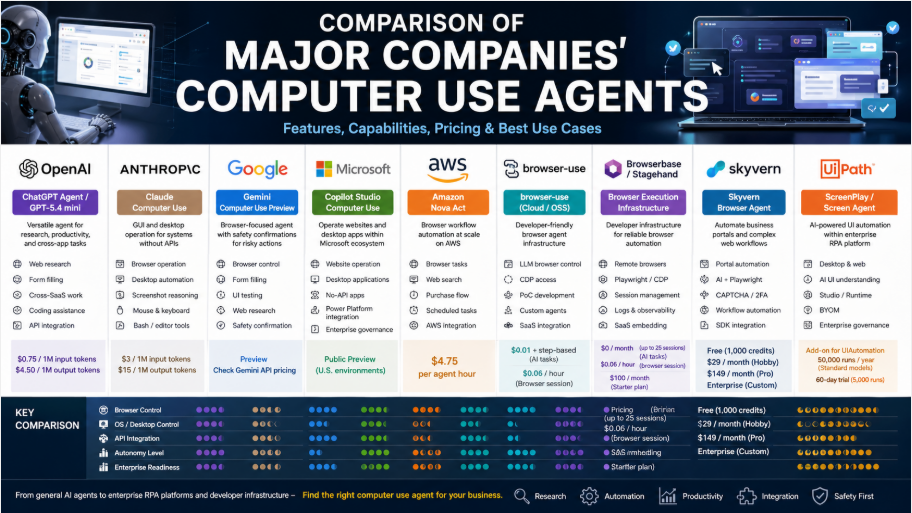
Comparative Table
| Item | GitHub Copilot | Replit Agent | Devin AI (Cognition) | OpenAI Codex (Web & CLI) | GPT-5 (OpenAI) | Claude (Anthropic) | Gemini (Google) | Cursor (AI IDE) |
|---|---|---|---|---|---|---|---|---|
| Overview | MS/GitHub AI pair-programmer; 201 copilot era → 2025 agent mode & Workspace | Replit’s in-IDE/Cloud coding agent; 2023→, 2025 “Dynamic Intelligence” update | Autonomous SWE agent platform; 2024→ | 2025: Codex Web (cloud agent) + Codex CLI (local agent) | 2025 flagship LLM; unified default in ChatGPT & used across Copilot | Claude 3.x→4+ line; strong coding models (Opus/Sonnet) | Gemini Code Assist (IDE) & Gemini CLI (open-source agent) | AI code editor + Bugbot code-review agent |
| Key features | Inline completions, chat, Agent Mode, Workspace; deep GitHub integration | Multi-file edits, deploys, autonomous goals, credits pool; cloud VMs | Plans → code → test → PR; multi-agent parallel “cloud SWE”; Jira/Linear/Slack | Cloud agent that runs parallel tasks; CLI runs locally with sandboxed exec | SOTA coding benchmarks; long-context; function calling; agents | Very large context; high SWE-bench; long-running tasks; Claude Code | IDE add-ins + free for individuals; CLI ReAct loop, MCP tooling | IDE with model routing; Bugbot finds logic/security issues on PRs |
| Langs / IDEs | VS Code, JetBrains, Neovim; many langs | Replit editor + API; supports popular langs; deployable | Works against repos/build systems; IDE-agnostic | Works against local repo/terminal; Codex Web integrates with repos | Across OpenAI surfaces + IDEs via partners (incl. GitHub Copilot) | API + Claude desktop/app; IDE via partners | VS Code / JetBrains; CLI; Google Cloud IDEs | Cursor IDE (VS Code-like), GitHub PR integration |
| Performance | Model routing; “Agent Mode” self-healing; enterprise studies & guides | New “Dynamic Intelligence”; usage-based “effort pricing”; Core plan includes top models | Positioning: “parallel cloud SWE”; enterprise case wins | OpenAI cites SOTA coding collaboration; local CLI minimizes latency | 74.9% SWE-bench Verified (OpenAI claim); faster/safer than 4.x | ~70.3% SWE-bench Verified (Claude 3.7 Sonnet subset); Opus 4 leads on SWE-bench claims | Google says 2.5× task success vs no-assistant; 2.5 Pro contexts | Bugbot launched; Wired coverage; catches logic/security bugs |
| Latency | Low in-editor; server-side model selection | In-product; backed by credits/quota | Cloud agents (longer-running tasks) | CLI: local loop → lower round-trips; Web: cloud | API & ChatGPT; improved speed vs GPT-4 | API latency typical of frontier models | CLI local loop + Google backends; generous free usage | IDE local hints + cloud calls; Bugbot runs on PRs |
| Pricing | Free (limited); Pro/Business/Enterprise tiers (per-user) | Core $20/mo (annual); Teams ≈ $40/user/mo; credits for Agent | Pricing page lists Core/Team/Enterprise with ACU usage | Included for Plus/Team/Enterprise (Web); CLI is open-source | In ChatGPT (free/premium) & API pricing; also in MS Copilot | Consumer Pro $17/mo annual ($20 monthly); API per-token | Individuals free; business Standard/Enterprise | Cursor Pro $20/mo, Ultra $200/mo; Bugbot ~$40/mo |
| Target users | Students→Enterprise; strongest in GitHub-centric teams | Indies, students, startups; also enterprise (SOC2, SSO) | Enterprise engineering teams adopting agents | CLI lovers, power users; cloud agent for teams | Broad: consumers, developers, enterprises; used inside Copilot | Teams needing long-context, careful coding, safety guardrails | Individuals (free) + enterprises on Google Cloud | Individuals/teams wanting AI-first editor + PR review |
| Strengths | Deep GitHub/IDE integration; policy controls; model choice | One place to code+deploy; agent that ships; bundled credits | End-to-end autonomy; SOC2; ticket→PR flow | Local-first agent; sandbox exec; open-source CLI | Top generalist + coding; benchmarked; widely integrated | Very strong coding focus; sustained tasks; long contexts | Open-source CLI; generous free usage; strong IDE reach | Editor UX for AI coding; Bugbot improves reliability |
| Weaknesses | Complex policy/licensing; not server-air-gapped | Cloud dependence; credits mgmt; cost debates | Vendor lock-in; opaque cost at scale | New offering; enterprise guardrails still maturing | Model picker UX churn; some user backlash on defaults | Rate limits/costs at high throughput | Business SKUs needed for enterprise controls | Privacy mode/telemetry trade-offs; extra cost for Bugbot |
| Security & compliance | Detailed data-handling docs; user-controlled retention; MS enterprise posture | SOC 2; enterprise controls; security guidance | SOC 2 Type II, enterprise security & VPC options | CLI keeps code local; Web runs in secure sandboxes | OpenAI platform security posture; deprecations/controls | Anthropic enterprise policies; API controls; safety | Google Cloud governance; OSS CLI | Security page; privacy modes; active discussion in forums |
| Notable use cases | Org-wide productivity; Copilot Workspace projects | Rapid prototyping→deploy; classroom; indie SaaS | Full features built by agent; bug-finding; PRs | Terminal-first devs; local code manipulation; CI helpers | Embedded across Copilot / ChatGPT; coding & refactors | Multi-hour agentic coding; big refactors; code reviews | Free learning, CLI scripting, enterprise SDLC | AI-first editor, automated PR review in CI |
| Roadmap signals | “Agent mode” & Workspace expansion; GPT-5 routing | “Dynamic Intelligence” (agentic autonomy) | Scaling multi-agent cloud SWE; deeper enterprise | Codex Web + CLI maturation; closer ChatGPT/IDE links | Agentic behaviors; safety, routing; dev features | Larger contexts; Claude Code & Sonnet/Opus iterations | MCP integrations; CLI growth; enterprise SDLC tools | Expanding Bugbot; more background agents & memories |
Citations: Copilot pricing/agent/workspace GitHubThe GitHub BlogGitHub Next · Copilot model comparison & data handling/retention controls GitHub Docs+1GitHub Resources · Replit pricing/Core/Teams/credits/“dynamic intelligence” ReplitOrbReplit DocsReplit Blog · Devin site/pricing/security SOC2 Devin+1Devin Docs+1 · OpenAI Codex (Web & CLI) pages + GitHub repo OpenAIOpenAI Help CenterGitHub · GPT-5 launch & dev post (benchmarks) + press coverage & MS integration into Copilot OpenAI+1AP NewsThe Verge · Claude coding benchmark posts (Sonnet 3.7 subset, Opus 4 leads) + pricing page Anthropic+1Anthropic · Gemini Code Assist/CLI, free individual plan, Google I/O updates, VS Code extension blog.google+1Google for DevelopersVisual Studio Marketplace · Cursor pricing/features/Bugbot product & news Cursor+1CursorWIRED
Detailed descriptions
GitHub Copilot
GitHub Copilot has evolved from inline suggestions to a multi-modal agentic companion inside your editor and on the web. Agent Mode (2025) can iterate on code, recognize runtime errors, and attempt self-healing; Copilot Workspace (introduced 2024, expanding since) adds a shareable natural-language project environment that versions context, proposes plans, and can open PRs. Copilot routes across multiple models (now including GPT-5) and lets organizations govern model selection and data policies. Pricing spans Free → Pro/Business/Enterprise, with enterprise policy controls and integration across GitHub (issues, repos, PRs). Security posture and data-handling are documented with user-controlled retention options; businesses often pair Copilot with GitHub Advanced Security and policies for secrets and dependency scanning. Copilot’s strengths are deep GitHub/IDE integration and org-level management; weaknesses include complex licensing across tiers and limited server-air-gapping. For performance, GitHub publishes guidance on model comparison and impact measurement rather than headline single-number benchmarks; real-world developer reports show solid productivity on routine tasks, with reduced reliability across multi-file, complex changes unless combined with agent modes or Workspace. Expect continued Agent Mode and Workspace expansion, tighter GPT-5 routing, and more enterprise governance. The GitHub Blog+1GitHub Docs+1GitHubGitHub Resources
Replit Agent
Replit’s Agent lives where you build and ship: it writes code, edits multiple files, runs & deploys—all in the same place. In July 2025, Dynamic Intelligence added better context awareness, iterative reasoning, and goal-driven autonomy. Replit’s Core plan (about $20/mo annual) bundles full Agent access and monthly AI credits; Teams begins ~$40/user/mo with collaboration features. Replit positions for students→indies→startups, and now enterprises with SOC 2, SSO/SAML, and enterprise controls. Security docs emphasize GCP-backed hosting and enterprise options. Strengths: rapid prototyping → deploy in a single product, agent that “finishes the job,” and simple onboarding. Weaknesses: cloud dependence, credit/effort-based billing confusion, and possible cost unpredictability for heavy agent use. Replit’s roadmap is clearly agent-first, with continued improvements to autonomy and enterprise posture. Replit BlogReplit+1OrbReplit Docs+1
Devin AI (Cognition)
Devin is positioned as an autonomous software engineer: it ingests tickets, plans a solution, writes code, runs tests, and opens PRs—end-to-end. It integrates with Slack/Linear/Jira and claims “parallel cloud SWE agents” for more serious engineering work. The pricing site lists Core / Team / Enterprise with ACU-based usage and API access on higher tiers; SOC 2 Type II is in place with a published security posture and enterprise options like VPCs. Real-world adoption stories (and marketing) highlight Devin building features across greenfield and brownfield codebases. Strengths: agent autonomy, enterprise-grade security, and integrations; weaknesses: vendor lock-in and potentially high cost at scale, plus the usual agent safety/guardrail considerations. Expect Cognition to deepen enterprise features, scale parallelism, and broaden CI/CD hooks. Devin+1Devin Docs+1
OpenAI Codex (Web & CLI)
Revived in 2025 as a two-part offering: Codex Web (cloud software-engineering agent accessible from ChatGPT/Org plans) and Codex CLI (an open-source local agent that runs in your terminal). Codex Web lets you delegate parallel tasks—write features, answer codebase questions, run tests, propose PRs—inside secure cloud sandboxes preloaded with your repo. The CLI (npm/brew install) works locally: it can read/modify/run code under your control, reducing data-exposure concerns and latency, and enabling terminal-native workflows. Documentation and the public repo clarify setup and safety modes. Strengths: local-first developer experience via CLI, deep reasoning models, and seamless elevation into cloud agents; weaknesses: it’s still maturing, and enterprise compliance stories for Codex Web are newer compared with Copilot/Devin/Google Cloud. Roadmap indicators: tighter fusion with ChatGPT Agents/Workflows, broader IDE tie-ins, and safer default execution. OpenAI Help CenterGitHubOpenAI
GPT-5 (OpenAI)
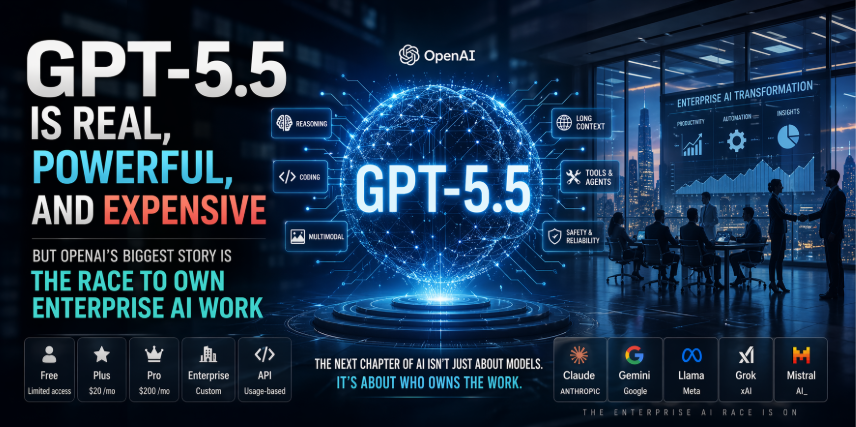
Launched Aug 2025, GPT-5 is OpenAI’s unified flagship and is now routed into Microsoft Copilot properties (including GitHub Copilot). For coding, OpenAI touts SOTA results, e.g., 74.9% on SWE-bench Verified, and stronger bug-fixing, editing, and answering questions about larger codebases with improved instruction following and reduced hallucination. Early coverage underscores Microsoft’s integration across its Copilot fleet. Strengths: generalist excellence + coding, abundant ecosystem, and improved reliability; weaknesses: model churn and UX debates (e.g., default model switches) and the usual cost/governance considerations at scale. Expect continued agentic features, function/tool calling refinements, and safety improvements in developer surfaces. OpenAI+1The Verge
Claude (Anthropic)
Anthropic has leaned hard into coding. Claude 3.7 Sonnet reported 70.3% on a verified SWE-bench subset (without scaffold 63.7%), and Claude Opus 4 claims leadership on SWE-bench (Anthropic’s framing). Claude emphasizes long-context (hundreds of thousands to 1M tokens in some variants via product updates) and long-running tasks, which help with repo-wide refactors, code reviews, and multi-hour agent sessions. Pricing: consumer Pro ($17/mo annual; $20 monthly) and API per-token. Strengths: long-context + careful coding, strong safety; weaknesses: rate limits and cost for very high throughput. Roadmap signals: “Claude Code,” sustained-task improvements, and enterprise agent integrations. Anthropic+2Anthropic+2
Gemini (Google) — Code Assist & Gemini CLI
Google now offers Gemini Code Assist (IDE assistants for VS Code/JetBrains, plus business SKUs) and the open-source Gemini CLI, which is an MCP-enabled ReAct agent in your terminal. Google states (I/O 2025) teams using Code Assist achieved 2.5× higher task completion odds than those without assistants; individuals get a notably free plan with high usage. The CLI operates locally with tool calling and can orchestrate complex code tasks. Strengths: free individual plan, OSS CLI, tight Google Cloud integration; weaknesses: some enterprise features require Standard/Enterprise SKUs. Expect continued MCP tooling, Canvas/CLI fusion, and SDLC integrations. blog.google+1Google for Developers
Cursor (IDE) + Bugbot
Cursor is an AI-first editor (VS Code-like) with powerful refactor/edit-by-instruction flows and model routing. In July 2025 it launched Bugbot, an AI PR-review agent that comments on logic bugs, edge-cases, and security issues before merge; media coverage emphasized its usefulness when AI agents move fast. Pricing: Cursor Pro $20/mo, Ultra $200/mo; Bugbot around $40/mo per seat. Security posture is documented; community discussions highlight privacy modes vs capabilities trade-offs. Strengths: editor experience + Bugbot for reliability; weaknesses: extra cost for code-review and privacy trade-offs for background agents/memories. Roadmap: more background agents, deeper GitHub/CI integrations. Cursor+2Cursor+2WIRED
Diagram – Multi-tool Integration Patterns

How teams combine these:
- Pair-programming in editor (Copilot or Gemini) → agentic build (Devin / Replit Agent / Codex Web) → PR review (Cursor Bugbot + Human review) → deploy (Replit or existing CI/CD).
- Terminal-first devs: Codex CLI or Gemini CLI for local, auditable edits; escalate to cloud agents or open PRs when ready.
Example Integration Patterns (actionable)
- GitHub-centric enterprise
Copilot (Agent Mode) for everyday coding → Copilot Workspace for greenfield ideation → Devin for ticket-sized features → Cursor Bugbot gates merges → standard CI/CD.
Benefits: single source of truth (GitHub); PR-native checks. Trade-off: cost across multiple tools. The GitHub Blog+1DevinCursor - Indie/startup shipping quickly
Replit Agent to build + deploy → occasional Claude/GPT-5 in chat for trickier refactors → Bugbot on GitHub PRs if repo hosted there.
Benefits: speed to live app; fewer moving parts. Trade-off: cloud dependence / credit mgmt. Replit BlogReplit - Security-sensitive/local workflows
Codex CLI or Gemini CLI locally (keep code on device) → open PRs → optional cloud agents for heavy lifts.
Benefits: tighter data control & auditability. Trade-off: more manual orchestration. OpenAI Help CenterGoogle for Developers
Full Citations (primary/official first, then reputable coverage)
- GitHub Copilot: Plans/features & model comparison; data-handling/retention; Agent Mode; Workspace. GitHubGitHub Docs+1GitHub ResourcesThe GitHub Blog+1GitHub Next
- Replit Agent: Pricing/Core/Teams; credits & AI billing; “Dynamic Intelligence” update (Jul 1 2025); enterprise/security pages. Replit+1OrbReplit DocsReplit Blog
- Devin (Cognition): Product & integrations; pricing; security & SOC 2. Devin+1Devin Docs+1
- OpenAI Codex: Codex Web overview; Codex CLI docs + GitHub repo. OpenAIOpenAI Help CenterGitHub
- GPT-5: Launch & capabilities; developer post with coding benchmarks; Microsoft Copilot integration coverage (The Verge); AP overview. OpenAI+1The VergeAP News
- Anthropic Claude: Claude 3.7 Sonnet SWE-bench subset; Claude 4/Opus claims; pricing. Anthropic+1Anthropic
- Google Gemini: Code Assist (free for individuals); Gemini CLI docs & blog; I/O 2025 efficacy stat; VS Code extension. blog.google+2blog.google+2Google for DevelopersVisual Studio Marketplace
- Cursor: Pricing; Bugbot product & docs; Wired coverage. Cursor+1CursorWIRED
Notes on “Performance Metrics”
- SWE-bench Verified (repo-level bug fixing) is currently the most cited independent indicator for software-engineering ability. OpenAI (GPT-5) and Anthropic (Claude) cite their own runs—use them as directional, not absolute. OpenAIAnthropic
- HumanEval is mostly saturated and less discriminative for 2025 models. Prefer repo-level or agent-task evaluations when available.
- Org-specific success still depends largely on tooling integration (repos, tests, CI) and guardrails (permissions, secrets, policies).
Security & Compliance (quick read)
- Copilot: granular data-collection controls & retention settings; enterprise data pipeline transparency. GitHub ResourcesGitHub Docs
- Replit: SOC 2, SSO/SAML, enterprise controls; security guides and GCP-based hosting. ReplitReplit Docs
- Devin: SOC 2 Type II; enterprise security features (VPC, encryption, access controls). Devin Docs
- Codex CLI: local-first—your code can remain on device; Codex Web runs code in cloud sandboxes with repo scoping. OpenAI Help CenterOpenAI
- Gemini: OSS CLI + Google Cloud compliance for business SKUs. Google for DevelopersGoogle Cloud
- Cursor: security page; privacy-mode trade-offs noted by community. CursorCursor – Community Forum
Real-world Use Cases
- Copilot @ GitHub orgs: repo-native coding and Workspace for new projects. The GitHub Blog
- Replit Agent: one-click deploy from agent-generated code; used for classrooms and MVPs. Replit
- Devin: “ticket→PR” loops, with autonomous testing; used by “top teams” (vendor claims). Devin
- Codex CLI: terminal automation (read/modify/run) with safer local boundaries. OpenAI Help Center
- Gemini: free individual learning & bug-fixing; enterprise SDLC support with Standard/Enterprise. blog.googleGoogle Cloud
- Cursor Bugbot: PR review catching logic/security issues; highlighted in press. WIRED
Future Roadmaps (public signals)
- Copilot: expansion of Agent Mode and Workspace, model routing with GPT-5. The GitHub Blog+1
- Replit: deeper agent autonomy (“Dynamic Intelligence”), enterprise controls. Replit Blog
- Devin: scaling parallel agents, richer enterprise deployment patterns. Devin
- OpenAI Codex: tighter ChatGPT + IDE ties; CLI iterations. OpenAI
- GPT-5: agentic features, safety & tool-use improvements. OpenAI
- Claude: longer contexts and agentic coding improvements. Anthropic
- Gemini: MCP integrations & CLI growth, enterprise SDLC. Google for DevelopersGoogle Cloud
- Cursor: more background agents/memories, PR-review evolution. Cursor

 Claude