
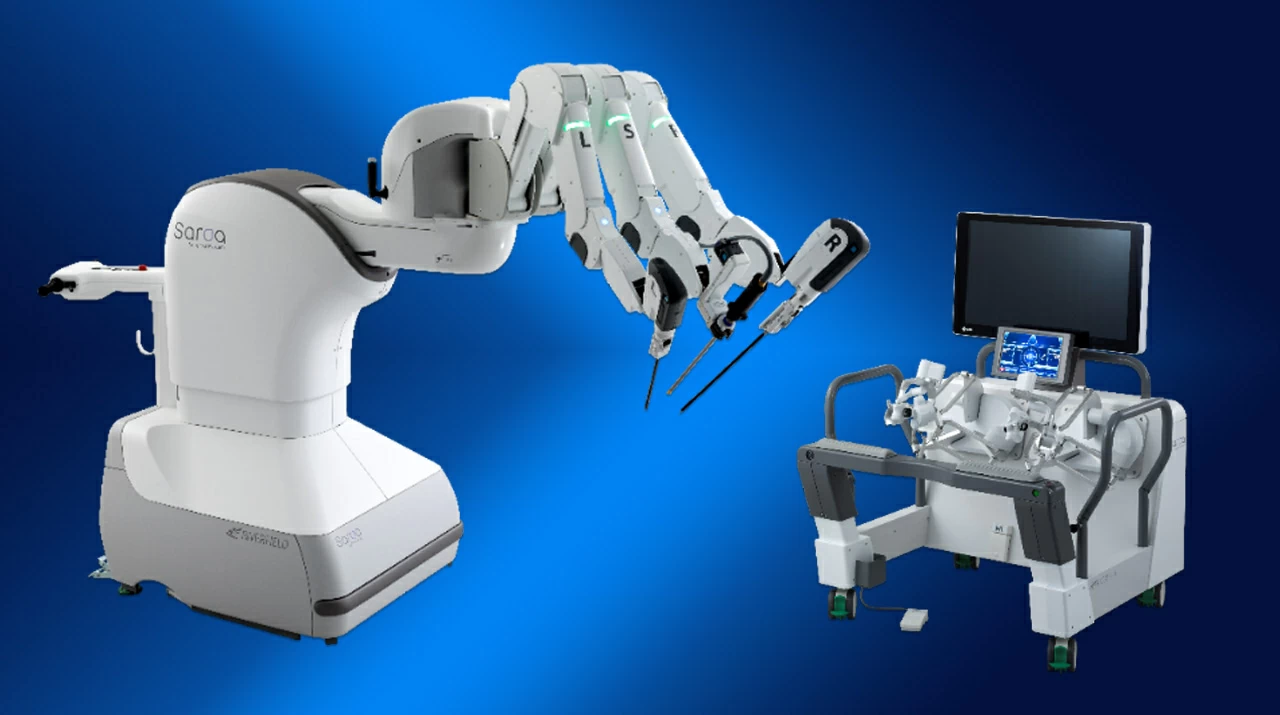
Akita University and Take Robo have developed three medical AI systems

Akita University and Take Robo have developed three medical AI systems aimed at enhancing rehabilitation for patients with motor impairments. These systems include:

  1. Gait Training Robot: Designed for patients with hemiplegia due to stroke, this robot assists in walking rehabilitation by using an exoskeleton that supports the affected leg. It mirrors the movements of the healthy leg, promoting natural gait patterns. Functional Electrical Stimulation (FES) is applied to stimulate muscle contractions, facilitating smoother movement. The system can be adapted for patients with paraplegia by attaching the exoskeleton to both legs, with pre-programmed walking motions to aid in gait restoration. Robocre
  2. Tabletop Upper Limb Rehabilitation Robot: This device targets arm rehabilitation for stroke patients. Equipped with omni-wheels and force sensors, it moves in response to the patient’s applied force, allowing for adjustable training loads based on the patient’s condition. The system incorporates augmented reality (AR) to enhance engagement, providing visual cues through AR goggles to guide movements, thereby increasing patient motivation during therapy. Robocre
  3. Seated Balance Device: Aimed at improving trunk stability, this device helps patients develop better balance and core strength, which are essential for daily activities and overall mobility. Robocre

These AI-driven systems are designed to alleviate the burden on therapists by providing consistent and tailored rehabilitation support, ultimately aiming to extend healthy life expectancy and improve the quality of life for patients. The development emphasizes compactness and affordability to facilitate widespread adoption in various medical facilities.

Robocre

By integrating advanced robotics and AI, Akita University and Take Robo are contributing to the evolution of rehabilitation practices, offering innovative solutions to address the challenges posed by an aging population and the increasing prevalence of motor impairments.
  • Related Posts

    LucidSim: Transforming Robotics Training with AI and Simulation

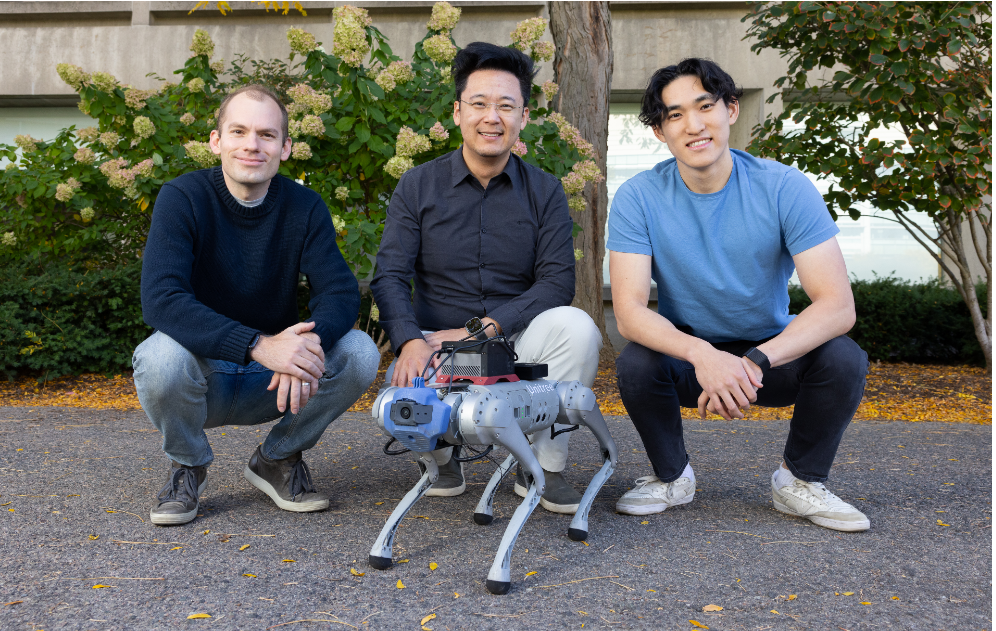
    November 13 2024 MIT CSAIL researchers have introduced LucidSim, a revolutionary system that uses generative AI and physics simulation to train robots in diverse and realistic virtual environments without relying on real-world data. LucidSim bridges the “sim-to-real gap” by generating…

    Leave a Reply

    Your email address will not be published. Required fields are marked *

    You Missed

    Data Science and Buddhism: The Ugly Duckling Theorem and the Middle Way

    Data Science and Buddhism: The Ugly Duckling Theorem and the Middle Way

    Google’s Gemini 3: Launch and Early Reception

    Google’s Gemini 3: Launch and Early Reception

    AI Governance in Corporate AI Utilization: Frameworks and Best Practices

    AI Governance in Corporate AI Utilization: Frameworks and Best Practices

    AI Mentor and the Problem of Free Will

    AI Mentor and the Problem of Free Will

    The AI Bubble Collapse Is Not the The End — It Is the Beginning of Selection

    The AI Bubble Collapse Is Not the The End — It Is the Beginning of Selection

    Notable AI News Roundup: ChatGPT Atlas, Company Knowledge, Claude Code Web, Pet Cameo, Copilot 12 Features, NTT Tsuzumi 2 and 22 More Developments

    Notable AI News Roundup: ChatGPT Atlas, Company Knowledge, Claude Code Web, Pet Cameo, Copilot 12 Features, NTT Tsuzumi 2 and 22 More Developments

    KJ Method Resurfaces in AI Workslop Problem

    KJ Method Resurfaces in AI Workslop Problem

    AI Work Slop and the Productivity Paradox in Business

    AI Work Slop and the Productivity Paradox in Business

    OpenAI’s “Sora 2” and its impact on Japanese anime and video game copyrights

    OpenAI’s “Sora 2” and its impact on Japanese anime and video game copyrights

    Claude Sonnet 4.5: Technical Evolution and Practical Applications of Next-Generation AI

    Claude Sonnet 4.5: Technical Evolution and Practical Applications of Next-Generation AI

    Global AI Development Summary — September 2025

    Global AI Development Summary — September 2025

    Comparison : GPT-5-Codex V.S. Claude Code

    Comparison : GPT-5-Codex V.S. Claude Code

    【HRM】How a Tiny Hierarchical Reasoning Model Outperformed GPT-Scale Systems: A Clear Explanation of the Hierarchical Reasoning Model

    【HRM】How a Tiny Hierarchical Reasoning Model Outperformed GPT-Scale Systems: A Clear Explanation of the Hierarchical Reasoning Model

    GPT‑5‑Codex: OpenAI’s Agentic Coding Model

    GPT‑5‑Codex: OpenAI’s Agentic Coding Model

    AI Adoption Slowdown: Data Analysis and Implications

    AI Adoption Slowdown: Data Analysis and Implications

    Grokking in Large Language Models: Concepts, Models, and Applications

    Grokking in Large Language Models: Concepts, Models, and Applications

    AI Development — August 2025

    AI Development — August 2025

    Agent-Based Personal AI on Edge Devices (2025)

    Agent-Based Personal AI on Edge Devices (2025)

    Ambient AI and Ambient Intelligence: Current Trends and Future Outlook

    Ambient AI and Ambient Intelligence: Current Trends and Future Outlook

    Comparison of Auto-Coding Tools and Integration Patterns

    Comparison of Auto-Coding Tools and Integration Patterns

    Comparing the Coding Capabilities of OpenAI Codex vs GPT-5

    Comparing the Coding Capabilities of OpenAI Codex vs GPT-5

    Comprehensive Report: GPT-5 – Features, Announcements, Reviews, Reactions, and Impact

    Comprehensive Report: GPT-5 – Features, Announcements, Reviews, Reactions, and Impact

    July 2025 – AI Development Highlights

    July 2025 – AI Development Highlights

    ConceptMiner -Creativity Support System, Integrating qualitative and quantitative data to create a foundation for collaboration between humans and AI

    ConceptMiner -Creativity Support System, Integrating qualitative and quantitative data to create a foundation for collaboration between humans and AI

    ChatGPT Agent (Agent Mode) – Capabilities, Performance, and Security

    ChatGPT Agent (Agent Mode) – Capabilities, Performance, and Security