
 ChatGPT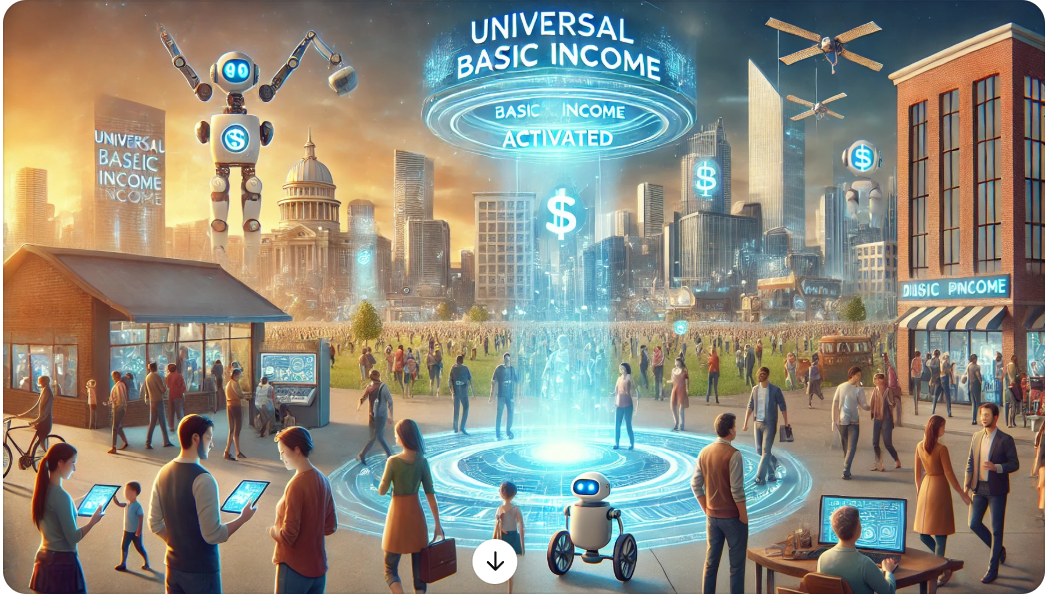
1. The Changing Value of Labor Due to AI: The Declining Market Value of Knowledge Workers
The advancement of AI-driven automation is not only replacing simple labor but also encroaching on knowledge-based jobs that require specialized expertise. This trend threatens to erode the market value of knowledge workers, including lawyers, doctors, teachers, engineers, and researchers, as AI becomes increasingly capable of searching, organizing, and applying knowledge.
However, viewing this issue solely from the perspective of knowledge workers risks ignoring historical precedents. During the Industrial Revolution, mechanization led to the “deskilling” of labor, transforming artisans into factory workers engaged in repetitive tasks. Rather than freeing workers from labor, mechanization intensified exploitation by increasing work hours, lowering wages, and creating new forms of labor discipline.
Similarly, in the age of AI, knowledge workers may not be “liberated” but instead reorganized into lower-wage, more precarious positions where they supervise, refine, or adapt AI-generated outputs. This shift is reminiscent of past labor transformations, where technological advancements primarily benefited capital owners while exacerbating economic disparities.
2. The Industrial Revolution and the Continuation of Labor: “Liberation” or “Reorganized Exploitation”?
The Industrial Revolution did not eliminate labor but rather restructured it. Mechanization led to mass urban migration, factory work, and increased productivity, but this did not translate into improved living conditions for workers. Instead, overwork, poor living conditions, and social instability ensued. The increased efficiency of production did not reduce labor hours; rather, it intensified exploitation under capitalist structures.
Applying this historical lesson to the AI revolution suggests that automation will not necessarily lead to a decrease in labor but will likely restructure labor into new forms that are more exploitative and precarious. As AI reduces the value of knowledge work, new low-wage jobs will emerge, such as monitoring AI outputs or managing AI-generated errors. Meanwhile, wealth accumulation will continue to concentrate in the hands of those who control AI technologies, deepening economic inequalities.
This scenario sets the stage for the discussion of Basic Income (BI)—a policy proposed as a response to technological unemployment and economic displacement.
3. The Dual Nature of Basic Income: “Relief” or “Control”?
The debate on BI often frames it as a welfare policy to support displaced workers. However, it can also be interpreted as a social control mechanism aimed at managing economic inequalities and preventing social unrest.
- Welfare Perspective (Worker Relief)
- As AI reduces the necessity for labor, BI provides a safety net to prevent poverty.
- Increased leisure time could encourage creative activities and community engagement.
- A new “value system” beyond the traditional labor market could emerge, fostering pursuits in arts, academia, and volunteer work.
- Control Perspective (Maintaining Social Order)
- As employment opportunities shrink, BI serves as a compensatory policy to pacify potential unrest.
- Providing basic financial support to the poor ensures that they remain dependent on state-controlled economic systems.
- The concept that “the poor must not be given idle time” (as Tokugawa Ieyasu reportedly stated) reflects a historical precedent where labor and social control were closely linked.
- Governments might introduce new forms of surveillance and behavioral regulations in exchange for BI (e.g., mandatory participation in government-sanctioned activities).
Recognizing this dual nature, BI should not be seen merely as a liberating force but as a potential instrument of governance.
4. The Risks of Excessive Free Time: “Crime Increase” and “Moral Decline”
Historically, societies with long working hours have exhibited lower crime rates, as seen during the early industrial era, where factory labor, despite its harsh conditions, structured daily life and minimized opportunities for criminal activity. Conversely, societies that have experienced sudden reductions in labor requirements often grapple with social instability and crime.
- Ancient Rome’s “Bread and Circuses” Strategy
- The Roman Empire controlled its lower classes by providing free grain (“bread”) and public entertainment (“circuses”) to distract them from political discontent.
- A modern equivalent could be a BI system that maintains social stability by offering minimal financial support alongside mass entertainment.
- Tokugawa Japan’s Societal Control Measures
- Tokugawa Ieyasu’s alleged statement, “The poor must not be given idle time,” reflects a governing strategy where leisure was regulated to prevent uprisings.
- Edo-period Japan maintained order by structuring free time through religious rituals, seasonal festivals, and social obligations.
- If BI were implemented today, governments might adopt new methods of leisure management, potentially requiring beneficiaries to engage in state-approved volunteer work or community service.
These historical examples highlight that free time, when mismanaged, can lead to increased unrest and necessitate new forms of social regulation.
5. Conclusion: Is AI-driven Basic Income “Liberation” or “Control”?
- AI threatens to devalue knowledge workers, leading to new forms of labor stratification.
- Historical parallels suggest that automation does not reduce labor but rather restructures it in ways that often deepen economic inequality.
- BI can be seen as both a welfare measure and a mechanism of social control, depending on its implementation.
- The risks associated with excess free time may lead to new government measures to regulate leisure and social behavior.
- Rather than liberating workers, BI may evolve into a system that dictates how people spend their non-working hours.
Thus, the discussion on AI and BI is not merely about economic redistribution but about how societies will structure and govern human life in the post-labor era. This is not just an economic policy debate but a philosophical and political question about the future of human autonomy in a world increasingly shaped by artificial intelligence.