
 ChatGPT
A structured, source-backed report on trends, capabilities, risks, and what to build next.
Executive summary (high-level)
- Edge becomes capable: NPUs in PCs/phones (40–50+ TOPS) and embedded modules (67–275+ TOPS; new Jetson Thor up to ~2070 FP4 TFLOPS) now run small/medium multimodal models locally, enabling real-time, privacy-preserving agents. MicrosoftAMDIntelNVIDIANVIDIA Developer
- Hybrid is the default: Sensitive, streaming, or latency-critical tasks run on-device; heavier reasoning bursts escalate to cloud with privacy controls (e.g., Apple’s Private Cloud Compute; Windows local-first Recall). QualcommMicrosoft Learn
- Form-factors diversify: Smart glasses (Meta Ray-Ban), pendants (Limitless), dedicated assistants (Bee Pioneer, Omi clip) push continuous sensing + summarization to the edge—while surfacing new privacy norms (explicit consent, visible indicators). The Washington PostTechRadarWIRED
- Markets & policy accelerate: Edge AI spend is rising fast; AI PCs expected to be a large share of shipments by 2025–2028; Japan’s METI is heavily funding advanced semiconductors (Rapidus) that underpin domestic edge/AI capacity. IDCCanalysReuters
1) Technical foundations
1.1 Hardware platforms (edge-ready, 2024–2025)
- PC/phone NPUs
- Microsoft Copilot+ PCs (Windows 11): minimum 40+ TOPS NPU requirement; shipped across Snapdragon X, Intel Lunar Lake, AMD Ryzen AI 300. Maturity: GA; broad OEM support. Challenges: battery/thermals under sustained gen-AI, model/tooling fragmentation. Microsoft
- Qualcomm Snapdragon X Elite (laptops): up to 45 TOPS NPU; on-device 13B LLM support per brief. Maturity: shipping across OEMs. Challenges: Windows ecosystem optimization, mixed independent perf data. QualcommNotebookcheck
- Intel Lunar Lake (Core Ultra 200V): up to 48 TOPS NPU (NPU4). Maturity: shipping 2024/2025. Challenges: software stacks converging (ONNX/DirectML) for consistent perf. IntelTechRepublic
- AMD Ryzen AI 300: up to 50 TOPS NPU. Maturity: shipping. Challenges: app enablement consistency. AMD
- Apple Intelligence (A17/M-series era): on-device models + Private Cloud Compute for escalations; privacy-auditable cloud path. Maturity: rolling out features across devices. Challenges: model size limits on device. Qualcomm
- Embedded/robotics & maker
- NVIDIA Jetson Orin: up to 275 TOPS (AGX); Orin NX to 157 TOPS; Orin Nano Super dev kit to 67 TOPS. Maturity: production. Challenges: memory for VLMs, integration. NVIDIANVIDIA DeveloperThe Verge
- NVIDIA Jetson AGX Thor (2025): dev kit with up to ~2070 FP4 TFLOPS AI compute; 7.5× Orin compute, for next-gen agentic robotics. Maturity: new 2025 kit. Challenges: power envelope (130 W), early ecosystem. NVIDIA DeveloperWindows Central
- Google Edge TPU / Coral: low-power inference (≈4 TOPS) for classic CV/sensor tasks. Maturity: stable; niche for ultra-low power. Challenges: large-language/multimodal limits without cloud. ScienceDirect
1.2 Software stacks & toolchains
- Windows Copilot Runtime: system AI layer with dozens of built-in models for local features; aligns app developers to NPU/DirectML. Maturity: rolling out with Copilot+ PCs. Counterpoint Research
- NVIDIA TensorRT-LLM (Jetson): quantization, fast attention, paged KV cache—official Jetson support (JetPack 6.1 branch) enables on-device LLM/VLM. Maturity: active; guides & wheels available. NVIDIA Developer ForumsGitHub
- Apple Core ML + PCC: efficient on-device runtime with privacy-auditable cloud escalation. Maturity: production. Qualcomm
- Android/Qualcomm AI Stack: NNAPI/QNN runtimes across Snapdragon mobile/PC. Maturity: maturing in 2024–25 PC wave. Qualcomm
1.3 Architectural trend: hybrid (local + cloud)
- Pattern: always-on sensing, low-latency intent parsing, and safety filters stay on device; heavy planning/search/specialist tools escalate to cloud with strict privacy contracts (e.g., Private Cloud Compute assures third-party auditability; Windows Recall keeps snapshots local with admin controls). QualcommMicrosoft Learn
2) Evolution of personal assistant capabilities
2.1 Case studies & devices (2024–2025)
- Bee AI – Pioneer (wearable assistant)
- What it does: continuous listening with visible indicator, real-time translation (40 languages), summarization, task help; emphasis on on-device processing and privacy (mute button/LED). Status: Orders with shipping timeline; Bee announced it’s “joining Amazon”. Challenges: battery life, robust diarization in noisy scenes.
- Omi device (clip-on assistant)
- What it does: records conversations for memory/summaries; stores locally on phone or in cloud; target price point $89; dev kits for glasses/embedded. Challenges: consent workflows in public spaces; mobile power budgets. Omi AI
- Meta Ray-Ban smart glasses
- What it does: real-time camera + voice + assistant for “look and ask” experiences; multimodal on-the-go. Challenges: visible recording cues; model-offload tradeoffs. The Washington Post
- Limitless Pendant (ex-Rewind)
- What it does: ambient capture and meeting memory with Consent Mode and visible cues to address privacy. Challenge: social acceptability & lawful basis across jurisdictions. TechRadar
- Windows “Recall” (PC)
- What it does: takes local encrypted snapshots for memory/semantic search on Copilot+ PCs; heavily revised after privacy backlash; now shipping with controls, but tests still flag sensitive capture gaps. Challenge: default behaviors and filter reliability. Windows CentralMicrosoft LearnTom’s Guide
2.2 Emerging capability frontier toward 2035
- Emotion & mental-state inference: multimodal emotion recognition (speech/face/body) is improving; 2025 reviews emphasize robust, explainable fusion and privacy-preserving deployment—pre-condition for safe coaching agents. Microsoft
- Multimodal, first-person memory: body-worn cameras/mics + models like GazeLLM (egocentric gaze-aware reasoning) and SensorLLM (aligning IMU/time-series to language) foreshadow rich autobiographical memory and routine assistance on device. TechRepublicarXiv
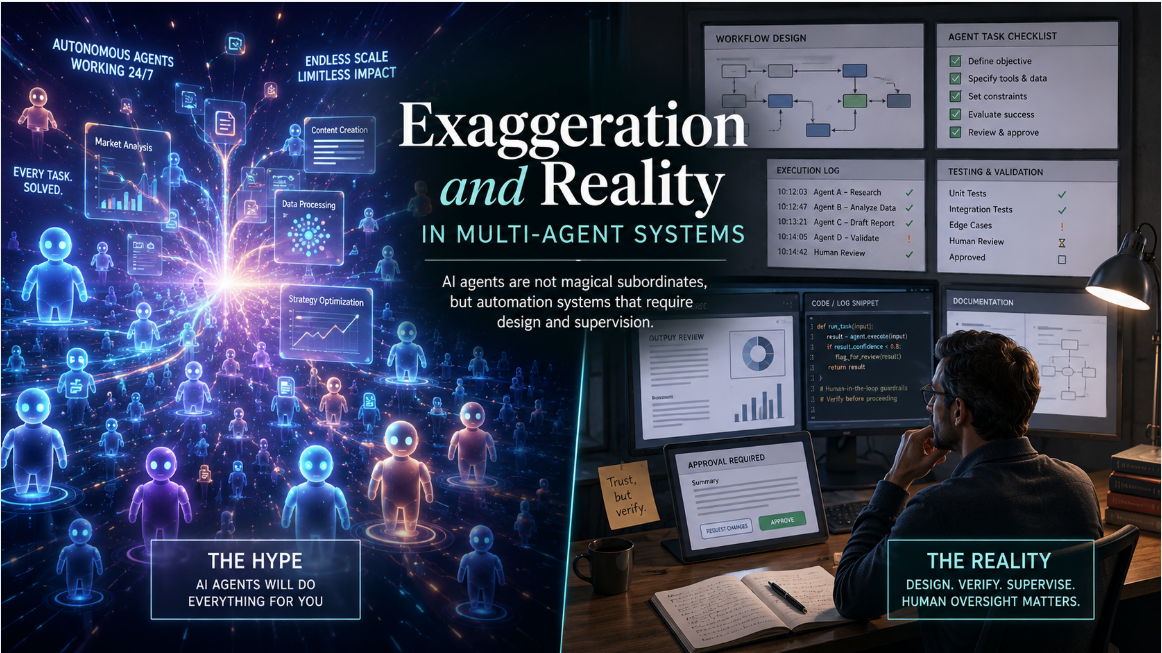
- Multi-agent orchestration: OS-level runtimes (Windows) and high-compute edge modules (Jetson Thor) enable local graphs of specialist agents (vision, speech, planning, tool-use) coordinating under tight latency budgets. Counterpoint ResearchNVIDIA Developer
3) Application scenarios & use cases
3.1 Medical support
- On-device monitoring & triage: fall detection, arrhythmia/respiratory anomaly alerts via edge models on wearables/IoT reduce latency and PHI exposure; surveys highlight edge body-sensor networks as a growth area (privacy, bandwidth, reliability). Challenge: clinical validation & regulatory pathways. Ministry of Economy, Trade and Industry
- Ambient documentation: While many deployments (e.g., clinical “ambient scribes”) remain cloud-centric today, hybrid on-device redaction and first-pass diarization move sensitive preprocessing to the edge; federated learning reviews in healthcare detail privacy preserving training across devices. Grand View Research
3.2 Elderly care & life assistance
- Activity-of-daily-living (ADL) recognition: LLM-aligned sensor models (SensorLLM) improve label-efficiency and generalization, enabling personalized routines and agentic nudges (meds, hydration, movement). arXiv
- Home energy & safety advisors: Smart-home agents on NPUs (voice + sensor fusion) coach users on energy saving, detect hazards, and coordinate appliances; telco APIs (GSMA Open Gateway) expand network-side signals that agents can safely tap. GSMA
4) Market, policy, and adoption trends
- Edge AI market indicators
- Edge AI (overall): ~$20.8 B in 2024, projected $66.5 B by 2030 (≈21–22% CAGR). (Vendor estimate; methodology varies.) Grand View Research
- Edge AI hardware: $26.1 B (2025) → $58.9 B (2030) (≈17.6% CAGR). MarketsandMarkets+1
- Edge AI software: $2.0 B (2024) → $8.9 B (2030) (≈29% CAGR). Grand View Research
- Edge computing spend (capex/opex): $261 B in 2025 → ~$380 B by 2028 (IDC). IDCComputer Weekly
- Device penetration momentum
- AI PCs: By end-2025, >50% of PCs priced ≥$800 will be “AI-capable”; >80% by 2028 (Canalys). Q1-2025 PC shipments grew ~4.9% YoY (IDC). CanalysIDC
- Wearables: Smartwatch shipments declined in 2024 then rebounded in 2025; Q1-2025 down 2% YoY overall with regional divergence; Q2-2025 HLOS segment up 10% YoY (Counterpoint). Counterpoint ResearchCounterpoint Research
- Mobile ecosystem: GSMA notes rising adoption of 5G/IoT/AI and 72 operator groups in Open Gateway (Feb-2025), easing carrier-grade API access for apps/agents. GSMA
- Policy (Japan spotlight)
- METI/GoJ semiconductor push: multi-year subsidies and frameworks to re-establish advanced manufacturing (e.g., Rapidus; additional $3.9 B approved Apr-2024; broader ¥ trillions plan in 2024–2025 policy). This underwrites domestic edge/AI supply chains. Reuters+1
5) Privacy, risk, and ethics
- Local ≠ automatically safe: Windows Recall shows that even local-only logging can capture sensitive data unless carefully filtered and consented; rollouts were delayed/re-architected and still face scrutiny. Risk: silent capture, bypassed filters, misuse on device. The VergeMicrosoft LearnTom’s Guide
- Consent & transparency norms: Wearables (e.g., Limitless Pendant) add Consent Mode and visible indicators; these reflect regulator expectations for informed, revocable consent (EDPB Guidelines on Consent; video-device guidance). Action: clear UI signaling and flow to pause/delete. TechRadarEuropean Data Protection Board+1
- Regulatory baselines:
- EU GDPR (lawful basis, data minimization; call/audio recording requires clear purpose and consent). European Data Protection BoardVoIPstudio
- Japan APPI (sensitive data/third-party provision typically consent-based; PPC oversight). Japanese Law TranslationChambers Practice GuidesConsumer Affairs Agency
- Privacy-preserving architectures: Private Cloud Compute (Apple) formalizes third-party auditability and on-device-first design; developers should emulate “local-by-default, audited escalation.” Qualcomm
6) Challenges & future outlook
Technical hurdles (now–2026)
- Model fit vs power/thermals: sustaining 15–60 W (Jetson/PC) or sub-1 W (wearables) while handling streaming AV + reasoning; requires quantization (INT4/FP4), attention kernels, and memory-aware KV caching (e.g., TensorRT-LLM). GitHub
- Interoperability & data silos: heterogeneous sensor schemas; aligning time-series with language (SensorLLM) is promising but early. arXiv
- Reliability & safety: hallucination, wrong advice, and biased monitoring; visible consent and pause now controls must be first-class (see Recall/Limitless responses). Microsoft LearnTechRadar
Forward features (2026–2035)
- Long-term, multimodal memory (compressed autobiographical stores on device with user-owned lifelog).
- Affective & social intelligence (robust emotion/context inference under privacy budgets). Microsoft
- Local multi-agent teams (perceptual agent + planner + tool-caller) on high-TOPS edge modules (e.g., Jetson Thor) and OS-level runtimes (Windows models). NVIDIA DeveloperCounterpoint Research
Technology & project snapshots (name • maturity • known challenges)
- Snapdragon X Elite (laptop NPU, ~45 TOPS) • Shipping (2024/25) • Windows enablement, independent sustained perf. Qualcomm
- Intel Lunar Lake (NPU up to 48 TOPS) • Shipping • toolchain convergence, thermal envelopes in fanless designs. Intel
- AMD Ryzen AI 300 (NPU up to 50 TOPS) • Shipping • app compatibility parity vs competitors. AMD
- Jetson Orin (up to 275 TOPS) • Production • VLM memory, integration complexity. NVIDIA
- Jetson AGX Thor (~2070 FP4 TFLOPS) • New 2025 dev kit • ecosystem maturity; 130 W power. NVIDIA Developer
- TensorRT-LLM for Jetson • Active (2024/25) • model porting and quantization quality. NVIDIA Developer Forums
- Apple Private Cloud Compute • Rolling out • developer access patterns, third-party audit cadence. Qualcomm
- Bee AI — Pioneer • Pre-orders/launch window • battery, noisy environments, consent in public.
- Omi device • Pre-orders/dev kits • privacy defaults, storage locality choices. Omi AI
- Meta Ray-Ban • Shipping • cueing bystanders, network dependency. The Washington Post
- Limitless Pendant • Shipping • social acceptability; cross-jurisdiction consent rules. TechRadar
- Windows Recall • GA (with controls) • sensitive capture, enterprise governance. Windows Central
Market & adoption—key numbers to track (with caveats)
- Edge AI market: $20.8 B (2024) → $66.5 B (2030) (est., GVR). Use as directional; triangulate with IDC edge-spend ($261 B 2025 → $380 B 2028) to scope infra demand. Grand View ResearchIDC
- AI PCs: >50% share (≥$800 band) by end-2025; >80% by 2028 (Canalys). Canalys
- Wearables: 2025 rebound in HLOS watches (+10% YoY in Q2) after 2024 softness (Counterpoint). Counterpoint Research
- Policy (Japan): continued Rapidus funding and semiconductor lawmaking to enable 2 nm mass production by ~2027 (Reuters June/Apr-2024). Reuters+1
Actionable recommendations (for R&D & productization)
- Pick an edge tier and model budget early
- Wearable/IoT: prioritize distilled classifiers + small SLMs; target sub-1–3 W; consider Coral/Orin Nano Super. The Verge
- PC/desk agents: design to 40–50 TOPS NPU; rely on Windows Copilot Runtime models for common tasks; keep heavy tools cloud-escalated with explicit user consent. MicrosoftCounterpoint Research
- Robotics/vision-heavy: use Jetson Orin/Thor + TensorRT-LLM for on-device VLM/LLM; design thermal headroom. NVIDIANVIDIA DeveloperNVIDIA Developer Forums
- Adopt a privacy-first hybrid pattern
- Local-by-default, with audited cloud escalation (Apple PCC is a reference). Ship pause/mute hard controls + visible indicators (learn from Limitless/Recall). QualcommTechRadarMicrosoft Learn
- Engineer for continuous consent & safe logging
- Show pre-capture dialogs, store locally with encrypted indexes, and allow redaction/export/delete. Align to EDPB consent guidance and APPI requirements in Japan. European Data Protection BoardJapanese Law Translation
- Design multi-agent systems for latency
- Split perception (always-on) vs planning (bursty) agents; co-schedule with NPU offload; exploit OS runtimes (Windows) or embedded stacks (Jetson). Counterpoint ResearchNVIDIA Developer Forums
- Invest in first-person multimodal ML
- Evaluate GazeLLM for egocentric reasoning and SensorLLM for ADL/health routines; these unlock reliable, personalized coaching without constant cloud. TechRepublicarXiv
- Follow policy money & ecosystems
- Track AI PC adoption and Japan METI/Rapidus milestones—these shape local supply, cost, and talent pools for edge-AI products. CanalysReuters
Sources (selected)
- Hardware/OS: Copilot+ 40+ TOPS (Microsoft), Snapdragon X Elite 45 TOPS (Qualcomm), Lunar Lake 48 TOPS (Intel), Ryzen AI 50 TOPS (AMD), Jetson Orin 275 TOPS / Thor (~2070 FP4 TFLOPS), Windows Copilot Runtime. MicrosoftQualcommIntelAMDNVIDIANVIDIA DeveloperCounterpoint Research
- Devices: Bee Pioneer, Omi device, Meta Ray-Ban, Limitless Pendant (consent). Omi AIThe Washington PostTechRadar
- Research: GazeLLM (egocentric), SensorLLM (time-series→LLM). TechRepublicarXiv
- Markets: IDC edge spend, Canalys AI-PC, Counterpoint wearables, GSMA Mobile Economy & Open Gateway. IDCCanalysCounterpoint ResearchCounterpoint ResearchGSMA
- Policy (Japan): Reuters/GoJ/METI materials on Rapidus & semiconductor strategy. Reuters+1Ministry of Economy, Trade and Industry
- Privacy: EDPB consent & video-device guidance; APPI/PPC; Recall posts/tests; Private Cloud Compute. European Data Protection Board+1Japanese Law TranslationMicrosoft LearnTom’s GuideQualcomm
Notes on interpretation
- Market sizes vary widely by firm/method; treat them as order-of-magnitude indicators and triangulate with concrete shipment/penetration proxies (AI PCs, wearables). Grand View ResearchIDCCanalys
If you’d like, I can turn this into (1) a slide deck with graphs, and/or (2) a comparison table of candidate edge stacks (Windows/Jetson/Android/iOS) with model sizes, latency targets, and privacy controls for your use cases.