
 ChatGPT
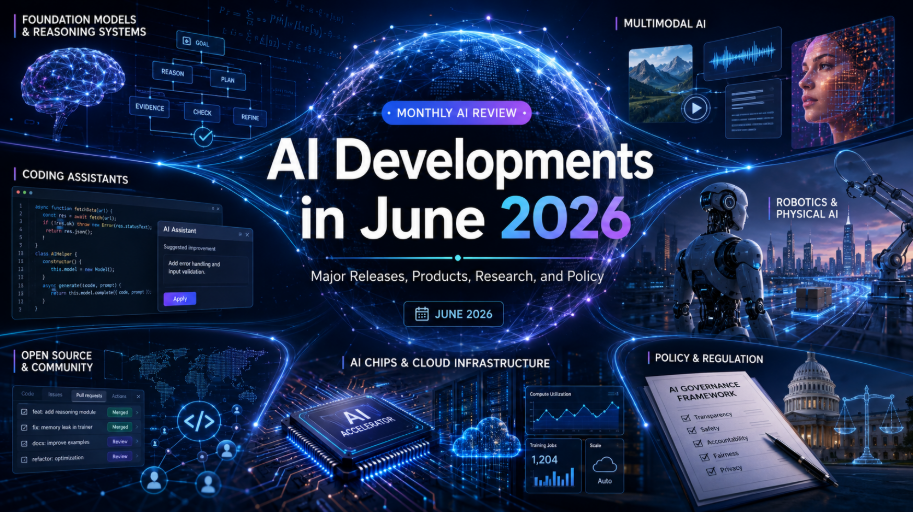
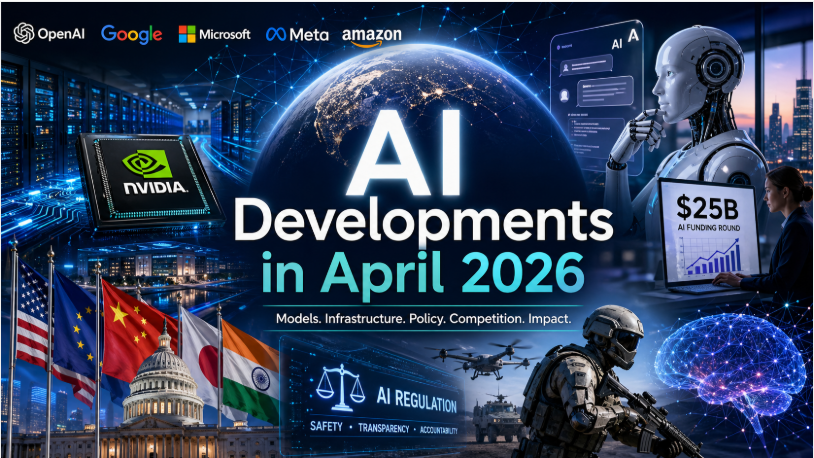
September 2025 underscored a turning point: the phase of foundational breakthroughs is giving way to one of deployment, governance, and societal integration. Advances in technology, infrastructure, policy, and strategy are now unfolding in parallel—spotlighting both opportunity and risk. Below is a synthesized overview of key developments.
1. Technology & Research
Transformer + Associative Memory Hybrid
A Japanese research team proposed an innovative hybrid approach that combines Transformers with associative memory models, addressing rank collapse without introducing additional parameters. This method promises improved model stability while maintaining computational efficiency.
Embodied / Physical-Agent AI
Google (via DeepMind) introduced Gemini Robotics 1.5, an AI system designed not only to perceive but also to act in the physical world. The update emphasizes improvements in motion transfer—the idea of transferring learned behaviors to differing robot embodiments—without per-robot retraining.
Additionally, they released Gemini Robotics On-Device, enabling locally executed robotic policies to reduce latency and network dependency.
Together, these steps push AI beyond language and vision, toward integrated spatial reasoning and action.
2. Industry & Infrastructure
AI-First Laptops
At the Snapdragon Summit, Humain unveiled the Horizon Pro, powered by a purpose-built AI OS called Humain One OS. The vision is to elevate AI from a backend-service model to a first-class, front-end component of the user experience.
Data Center Expansion
OpenAI, Nvidia, and Oracle announced a joint initiative to build five new U.S. data centers specifically for training frontier AI models. This move reflects surging demand for large-scale compute infrastructure.
China’s AI Summit
In Beijing, a major developer-focused AI summit convened with themes centered on prompt engineering, LLM training, and app integration. The event reaffirmed China’s ambition to lead not only in AI research but in ecosystem development.
AI in Japan’s Game Industry
Survey data indicates that 51 % of Japanese game developers now routinely use AI for asset generation, narrative design, and coding assistance. AI is no longer a fringe tool—it’s becoming embedded in everyday creative workflows.
3. Policy & Governance
California’s SB-53 (Transparency in Frontier AI Act)
On September 29, 2025, California Governor Newsom signed SB-53 into law. The legislation imposes obligations on AI companies handling “frontier” models, including:
- Publishing safety frameworks
- Reporting major safety incidents within 15 days
- Protecting whistleblowers
- Disclosing AI behavior during dangerous or adversarial testing phases
The law targets companies above certain revenue thresholds (e.g. > $500 million), using a flexible, outcomes-oriented regulatory design rather than model-by-model mandates. Notably, Anthropic publicly supported the law—an unusual alignment within the AI industry.
As a state-level law, SB-53 may serve as a testbed until broader federal or international regulation takes shape.
OECD / UNESCO Initiatives
- The OECD is actively pressing governments to adopt responsible AI practices in public institutions.
- UNESCO launched the AI Tools Radar, a platform to track AI deployments in public service and legal contexts, aiming to make adoption and risk more visible.
WTO Report
A WTO analysis suggests that AI, if equitably deployed, could expand global trade by ~40 % by 2040. However, closing the digital divide remains a prerequisite.
NIST Grants (U.S.)
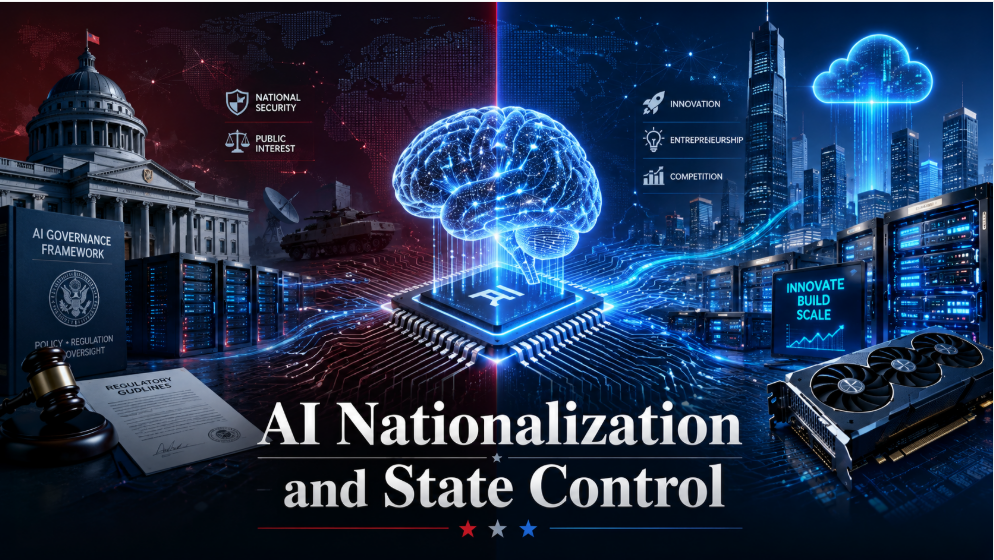
The United States has expanded its funding in AI, quantum technologies, and semiconductors via competitive R&D grant programs. This reflects a shift toward state-driven strategic investment in critical technologies.
4. Social & Strategic Trends
OpenAI’s Revenue Growth
In H1 2025, OpenAI generated $4.3 billion in revenue, up 16 % year-over-year—evidence of accelerating demand in both enterprise and consumer sectors.
AI-Powered Cyber Threats
A nascent but alarming trend is the rise of “zero-day AI attacks”—that is, using LLMs to discover and exploit previously unknown vulnerabilities. This challenges conventional cybersecurity defenses and prompts a reevaluation of prevention strategies.
Expansion into India & Latin America
- Anthropic and OpenAI have set their sights on India, aiming to integrate with its developer ecosystem and fast-growing market.
- In Latin America, the launch of “Latam-GPT” ambitiously seeks to create culturally and linguistically adapted AI systems for the region.
Ethics & Superintelligence Debate Resurfaces
Eliezer Yudkowsky’s If Anyone Builds It, Everyone Dies has reignited discussion around the risks of superintelligence. Bridging the gap between rapid technological progress and meaningful governance remains a core tension in the field.
5. Outlook & Challenges Ahead
The developments of September 2025 signal a clear inflection point: AI is shifting from “Which model is best?” to “How should this be governed, deployed, and scaled responsibly?” Key focus areas in the coming months and years will include:
- Robust, extensible models (memory augmentation, embodiment, modular adapters)
- User-facing integration (AI-first devices, edge inference, conversational UX)
- Governance & institutional design (transparency, accountability, international coordination)
- Risk management & defense (countering AI-powered attacks, securing systems)
- Bridging global divides (digital inclusion, localization, regional autonomy)
Ultimately, the future of AI will not rest solely on who builds the strongest model—but on who governs it wisely and ensures it benefits society broadly.

 tada@aicritique.org