
 Editor
— Reading the Coming AI Transition Through the Lens of the Internet Revolution
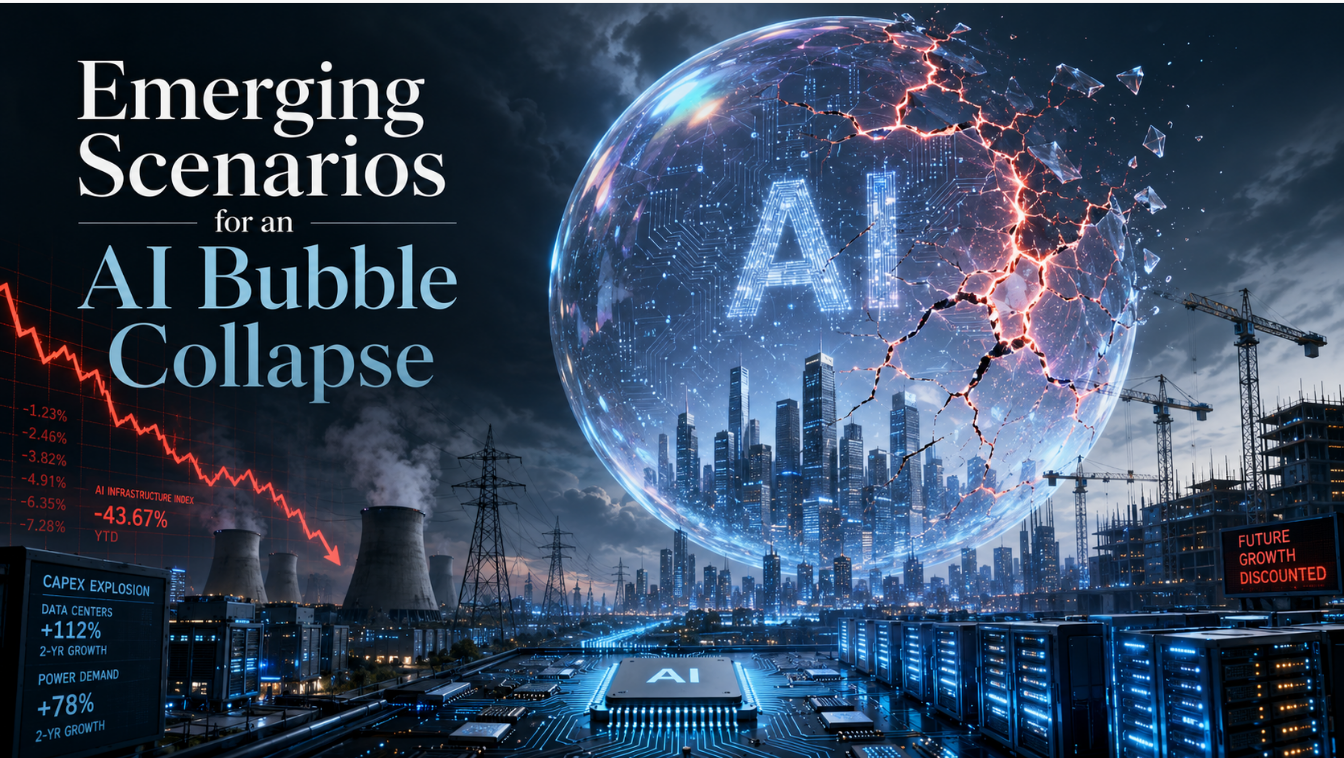
In 2025, financial institutions and technology analysts around the world are warning of an “AI bubble collapse.” Stock prices of generative-AI firms swing violently, hype cycles rise and fall, and a sense of tension pervades the tech sector. Yet calling this simply “the end” would be a mistake. Like every technological upheaval before it, this moment signals not collapse, but selection — the start of a structural re-ordering that will determine who survives the next decade.
■ Bubbles Collapse Are Not The End — They Are the Gateways to Maturity
At the dawn of commercial internet use in the late 1990s, the world experienced the dot-com bubble. Hundreds of start-ups went public, valuations soared, and in 2001 the NASDAQ crashed. But the Internet did not die; it evolved. Through faster connectivity and broadband penetration, it became a social infrastructure. Google, Amazon, and Apple emerged as the dominant platforms that defined the new economy.
Artificial intelligence will follow the same historical trajectory. The so-called “AI bubble collapse” is not the death of technology — it is a process of structural selection that separates enduring value from speculative excess.
■ Three Phases of the AI Era (2023 – Beyond 2033)
Phase 1: Hype and Imitation (2023 – 2025)
When ChatGPT was released on November 30, 2022, it ignited the first global encounter with large-scale generative AI. By 2023, adoption spread rapidly among individuals and enterprises, and AI became a “magical” force in public imagination. NVIDIA’s meteoric rise, global investment surges, and a chorus of “AI integration” echoed across industries.
Yet this period remains the era of experimentation and mimicry. Many companies cannot yet measure real ROI. Just as the early Internet was limited by dial-up modems, today’s AI still operates through centralized data centers and prototype workflows.
Phase 2: Correction and Selection (2026 – 2032)
The Internet, commercialized in 1994, required roughly a decade to transition from dial-up to broadband. AI will undergo a similar gestation. During these years, inflated valuations will deflate, and over-investment will give way to sober consolidation.
Survivors will be those who master the trinity of model, data, and operations — companies capable of rebuilding strategy, infrastructure, and governance around AI capabilities. Those who rely only on branding, plug-ins, or superficial integrations will fade.
This phase will also mark the rise of edge AI — intelligence that runs not only in the cloud but locally on devices, collaborating across networks. Each AI agent will serve as a personal companion, acting on behalf of its user rather than the platform.
Phase 3: Maturity and Structural Transformation (2033 and Beyond)
By the 2030s, AI will evolve into the operating system of society. It will mediate between people, organizations, and machines, with edge AIs cooperating autonomously across distributed networks.
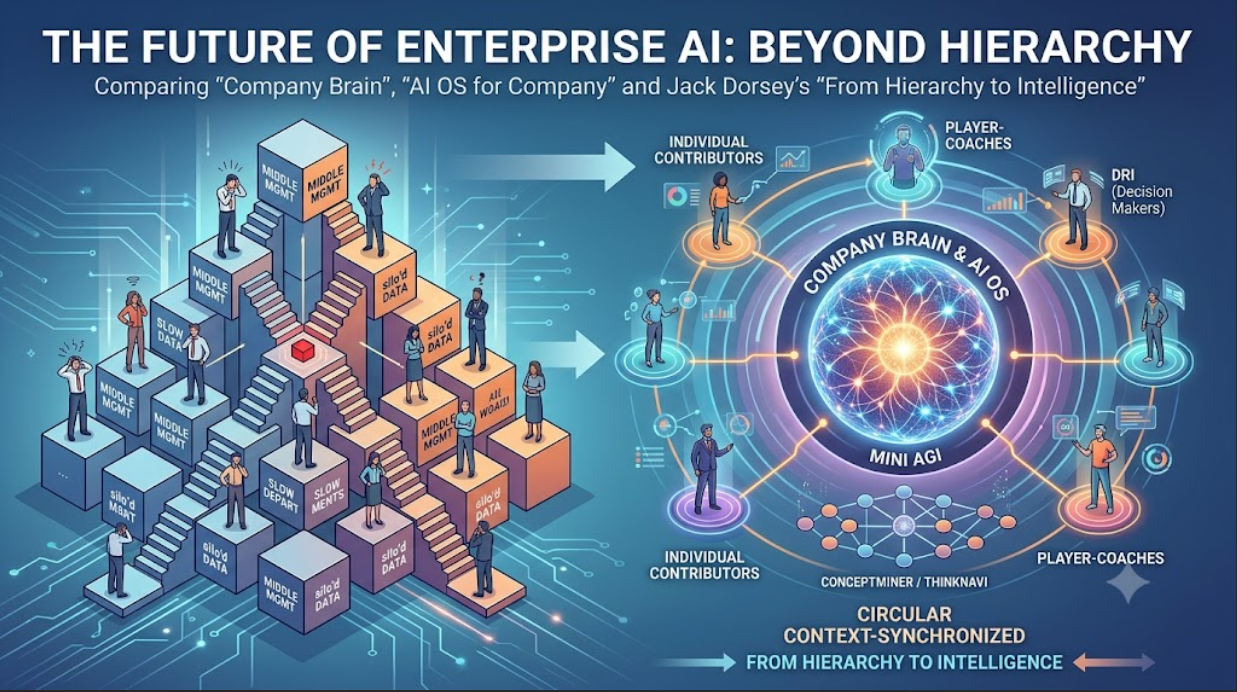
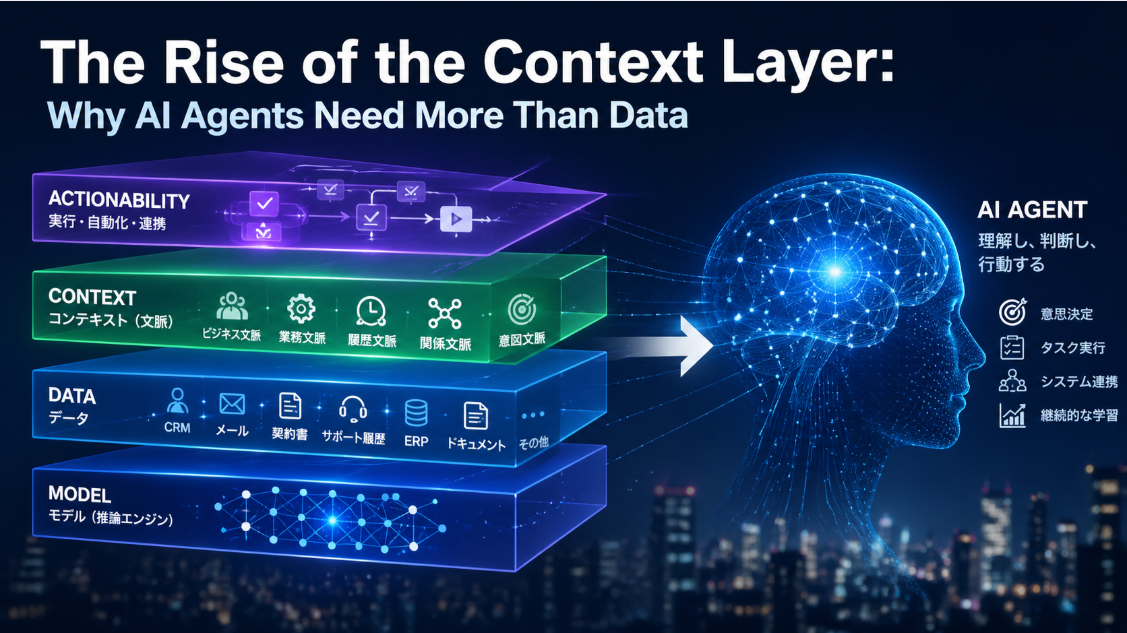
For enterprises, this will require AI systems that can comprehend strategic intent — not merely automate tasks but reason with shared understanding. The future of corporate intelligence depends on a semantic bridge between human concepts and machine vectors.
This is precisely where ConceptMiner, proposed by the Mindware Research Institute, is positioned as a core platform. ConceptMiner connects human conceptual space with AI’s vector space, enabling shared strategy, contextual awareness, and meaning.
It forms the foundation for AI that understands strategy.
■ Winners and Losers — The Power to Build Structures
In the AI economy, victory will not belong merely to those who own the largest models,
but to those who can design the structures that connect humans, AI, and organizations.
- Winners
- Firms that operate their own models and data as part of strategic integration
- Developers who leverage edge AI to understand user context and intent
- Organizations that institutionalize ethics, security, and explainability
- Losers
- “AI-ready” companies that rely on hype rather than capability
- Subscription-based services with no differentiation or trust layer
- Systems devoid of human-centered design and contextual reasoning
The bursting of the AI bubble will mark not an ending, but the transition into the age of structural design.
■ Conclusion — When AI Becomes the Intellectual Infrastructure of Society
The collapse of the AI bubble is inevitable — and necessary. It will serve as the rite of passage that transforms AI from spectacle into infrastructure.
The personal computer, born in 1975, took a decade to enter offices. The Internet, commercialized in 1994, needed ten years to reach broadband maturity. AI, started to introduced in 2023, will likewise require a decade to become an everyday social utility.
Around 2033, AI will be everywhere — as ambient as air. The relationship between humans and machines will shift from control to co-evolution.
And when that day comes, every AI will silently pose a question:
“Do I truly understand your strategy?”
Our collective ability to answer that question will define not only who survives the bubble,
but what kind of civilization emerges after it.

 tada@aicritique.org