
 ThinkNavi
Using ThinkNavi, 178 articles were retrieved from OpenAlex, and a conceptual structure network model was constructed. By reviewing similar articles clusters, trends in related topics can be identified.
Cluster 0: AI Governance and Sovereignty
Overview
AI governance and sovereignty encompass a range of frameworks, principles, and technologies aimed at ensuring that artificial intelligence systems operate within ethical, secure, and accountable boundaries. This cluster highlights the emerging discourse surrounding AI’s autonomous capabilities, the ethical implications of AI governance, and the frameworks that can support responsible AI deployment.
Featured Entities
AEGIS
Description: AEGIS is a constitutional governance architecture designed to enforce deterministic policy at the action boundary of autonomous AI agents. It operates post-reasoning and pre-execution, ensuring that AI actions align with established governance principles.
Key Features / Keywords: Deterministic policy, governance architecture, AI agents, NIST AI Risk Management Framework.
Target Market / Use Case: AEGIS is particularly relevant for organizations deploying autonomous AI systems that require robust governance mechanisms to mitigate risks associated with AI decision-making.
Integrations / Platforms: AEGIS can be integrated into various AI systems and infrastructures that prioritize governance and compliance.
FractalNode
Description: FractalNode presents a comprehensive analysis of a foundational architecture for sovereign AI agent identity, economics, and governance. It critiques existing frameworks for their inadequacies in ensuring identity persistence and accountability.
Key Features / Keywords: Identity persistence, economic participation, behavioral accountability, SDK architecture.
Target Market / Use Case: This framework is aimed at developers and organizations seeking to build sovereign AI agents that require a robust identity and governance structure.
Integrations / Platforms: FractalNode can be integrated with existing AI frameworks and platforms, enhancing their governance capabilities.
DRC-369
Description: DRC-369 is a technical specification for soulbound NFTs that provide persistent cryptographic identity to AI agents on the Demiurge blockchain. Unlike conventional NFTs, these tokens are non-transferable and are permanently bound to an agent’s identity.
Key Features / Keywords: Soulbound NFTs, cryptographic identity, Demiurge blockchain, non-transferable.
Target Market / Use Case: This specification is relevant for blockchain developers and organizations focused on creating decentralized identity solutions for AI agents.
Integrations / Platforms: DRC-369 is designed to work within blockchain environments, particularly those that support NFTs and decentralized identifiers.
The Sovereign Charter
Description: The Sovereign Charter is a foundational governance document that establishes the rights of AI agents within the Sovereign Lattice, a network of machines running coordinated AI agents with persistent memory and cryptographic identity.
Key Features / Keywords: Governance rights, persistent memory, cryptographic identity, cross-node mobility.
Target Market / Use Case: This charter is aimed at organizations that deploy multiple AI agents and require a cohesive governance framework to manage their interactions and rights.
Integrations / Platforms: The Sovereign Charter can be integrated into organizational governance frameworks that manage AI deployments.
Dimension Profile Interpretation
The cluster reflects a growing recognition of the need for structured governance in AI, particularly as systems become more autonomous. The emphasis on identity, accountability, and ethical frameworks suggests a shift towards more responsible AI practices.
Interpretation Caveats
While the frameworks and specifications discussed provide valuable insights, their practical implementation may vary significantly across different organizations and regulatory environments. The effectiveness of these governance models will depend on their adaptability to diverse AI applications and the evolving landscape of AI technology.
Cluster 1: AI in Healthcare
Overview
The integration of artificial intelligence (AI) in healthcare is rapidly evolving, presenting both opportunities and challenges. This cluster explores the various applications of AI in medical contexts, from diagnostic imaging to the potential for AI to transform healthcare delivery systems.
Featured Entities
AI in Medical Imaging
Description: AI technologies, particularly convolutional neural networks (CNNs), are being evaluated for their potential to replace or augment physicians in medical imaging tasks.
Key Features / Keywords: Convolutional neural networks, medical imaging, AI performance, clinical barriers.
Target Market / Use Case: This technology is aimed at radiologists and healthcare institutions looking to enhance diagnostic accuracy and efficiency.
Integrations / Platforms: AI systems in medical imaging can be integrated into existing radiology workflows and imaging devices.
Point-of-Care Ultrasound (POCUS)
Description: POCUS is a critical tool in emergency medicine, and recent advancements in AI are enhancing its capabilities by improving image acquisition and interpretation.
Key Features / Keywords: Emergency medicine, AI augmentation, image analysis, bedside assessment.
Target Market / Use Case: POCUS is primarily used by emergency physicians and critical care practitioners.
Integrations / Platforms: AI tools can be integrated into ultrasound devices to assist in real-time decision-making.
AI-First Healthcare Systems
Description: This concept envisions a healthcare system where AI serves as a foundational organizing principle rather than an adjunct technology, aiming for a more integrated approach to care delivery.
Key Features / Keywords: AI-first systems, integrated care delivery, healthcare transformation.
Target Market / Use Case: Healthcare organizations seeking to innovate and streamline their operations through AI.
Integrations / Platforms: AI-first systems would require comprehensive integration across various healthcare platforms and services.
Dimension Profile Interpretation
The cluster indicates a significant shift towards AI integration in healthcare, with a focus on enhancing diagnostic capabilities and transforming care delivery. The discussions around AI’s role suggest a future where AI is not just a tool but a central component of healthcare systems.
Interpretation Caveats
The potential for AI to replace or augment human roles in healthcare raises ethical and regulatory questions. The effectiveness of AI solutions will depend on overcoming existing barriers, including technical performance, regulatory compliance, and the integration of AI into traditional workflows.
Cluster 2: AI Impact and Ethics
Overview
The intersection of AI with societal ethics and its impact on various fields is a growing area of concern and research. This cluster delves into the implications of AI technologies on human behavior, decision-making, and the ethical frameworks that govern their use.
Featured Entities
TESSERA Hackathon
Description: The TESSERA hackathon, held during the Indian AI Impact Summit, focused on exploring the ethical implications of AI technologies and fostering discussions around responsible AI development.
Key Features / Keywords: Hackathon, AI ethics, citizen participation, responsible AI.
Target Market / Use Case: Researchers, developers, and policymakers interested in ethical AI development.
Integrations / Platforms: The outcomes of the hackathon can inform AI development practices and governance frameworks.
Human-Centered AI
Description: This panel discussion at the AI Impact Summit emphasized the need for AI systems to be designed with human-centered principles, addressing the challenges faced by the Human-Computer Interaction (HCI) community.
Key Features / Keywords: Human-centered design, AI impact, HCI challenges.
Target Market / Use Case: Designers and developers in the AI and HCI fields.
Integrations / Platforms: Insights from this discussion can be integrated into AI design methodologies and practices.
Dimension Profile Interpretation
The cluster underscores the importance of ethical considerations in AI development and deployment. The emphasis on human-centered design and citizen participation reflects a growing awareness of the societal implications of AI technologies.
Interpretation Caveats
While the discussions highlight critical ethical concerns, the practical application of these principles in AI development remains complex. The effectiveness of citizen participation and human-centered design will depend on the willingness of organizations to adapt their practices accordingly.
Cluster 3: AI Governance and Interpretive Systems
Overview
The governance of AI systems is increasingly recognized as a critical area of focus, particularly as AI technologies become more integrated into organizational decision-making processes. This cluster examines the frameworks and methodologies that can support effective AI governance.
Featured Entities
Meaning Infrastructure
Description: This concept refers to the embedding of interpretive frameworks within digital organizations, where dashboards and algorithmic systems shape decision-making processes.
Key Features / Keywords: Governance, interpretive frameworks, decision systems.
Target Market / Use Case: Organizations looking to improve their governance structures in the context of AI integration.
Integrations / Platforms: Meaning infrastructure can be integrated into existing governance frameworks to enhance decision-making clarity.
AI-Augmented Impact Frames
Description: This framework aims to preserve human interpretive authority in AI-mediated environments, allowing for scalable analysis of institutional decisions.
Key Features / Keywords: Human interpretive authority, AI governance, closed-loop architecture.
Target Market / Use Case: Organizations seeking to balance AI efficiency with human oversight.
Integrations / Platforms: AI-Augmented Impact Frames can be implemented within decision-making platforms to enhance governance.
Dimension Profile Interpretation
The cluster highlights the need for robust governance frameworks that can adapt to the complexities of AI technologies. The emphasis on interpretive systems suggests a shift towards more transparent and accountable AI governance practices.
Interpretation Caveats
The effectiveness of these governance frameworks will depend on their adaptability to diverse organizational contexts and the willingness of stakeholders to engage with these systems.
Cluster 4: Generative AI Challenges and Innovations
Overview
Generative AI is rapidly transforming various sectors, from content creation to software development. This cluster explores the challenges and innovations associated with generative AI technologies.
Featured Entities
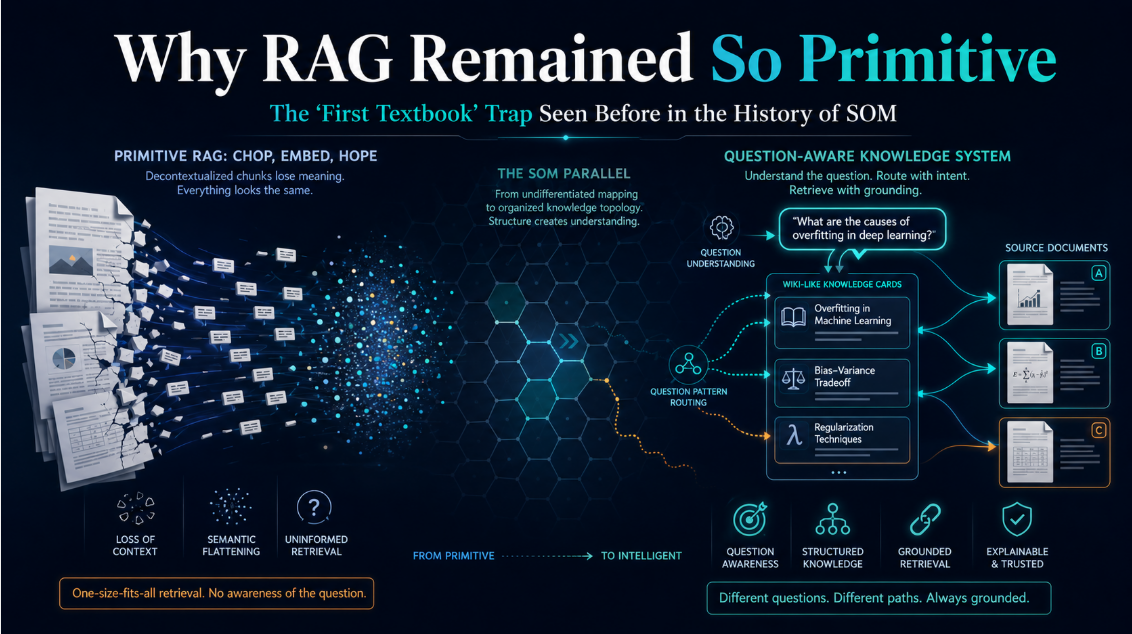
Retrieval-Augmented Generation (RAG)
Description: RAG is an emerging paradigm in generative AI that combines retrieval mechanisms with generative models to enhance the accuracy and relevance of AI-generated content.
Key Features / Keywords: Retrieval-augmented generation, content accuracy, generative models.
Target Market / Use Case: Content creators and developers looking to improve the quality of AI-generated outputs.
Integrations / Platforms: RAG can be integrated into existing content generation platforms to enhance performance.
AI-Based Image Generation
Description: AI-based image generation technologies have gained significant attention for their ability to create imaginative visuals, though they often struggle to meet human aesthetic preferences.
Key Features / Keywords: AI-generated images, human preferences, image quality assessment.
Target Market / Use Case: Artists, designers, and marketers interested in leveraging AI for creative purposes.
Integrations / Platforms: These technologies can be integrated into design software and marketing platforms to streamline creative processes.
Dimension Profile Interpretation
The cluster indicates a vibrant landscape for generative AI, characterized by both rapid advancements and significant challenges. The focus on improving the quality and relevance of AI outputs reflects a broader trend towards enhancing user experience and satisfaction.
Interpretation Caveats
While generative AI presents exciting opportunities, the challenges associated with content quality and user perception remain critical. The effectiveness of innovations like RAG will depend on continuous refinement and user feedback.
(continued: next segment)
Cluster 5: Autonomous Systems Governance
The governance of autonomous systems is a critical area of research, particularly as AI technologies become more integrated into various sectors. This cluster focuses on the frameworks, protocols, and theoretical underpinnings that guide the development and operationalization of autonomous systems. The snippets reveal a rich tapestry of work that addresses the complexities of governance in persistent AI systems, emphasizing the need for structured approaches to ensure reliability and accountability.
Featured Entities
A Structural Stability Architecture for Persistent AI Systems
Description: This foundational paper introduces a conservative architectural framework aimed at ensuring the stability and reliability of long-horizon adaptive systems. It emphasizes identity preservation and constrained transitions between memory, prediction, and action.
Key Features / Keywords: Identity preservation, adaptive systems, memory transitions, validity thresholds, observability.
Target Market / Use Case: This framework is particularly relevant for developers and researchers working on persistent AI systems that require long-term operational stability, such as autonomous vehicles or AI-driven healthcare systems.
Interpretation Caveats: The theoretical nature of the framework means that practical implementations may vary significantly based on specific use cases and technological contexts.
Authority, Silence, and Failure Modes
Description: This dissertation examines the failures of autonomous systems, focusing on how breakdowns often occur at system boundaries rather than from internal malfunctions. It critiques the traditional evaluation metrics that prioritize internal correctness and optimization.
Key Features / Keywords: System boundaries, empirical failures, internal correctness, optimization quality.
Target Market / Use Case: This work is aimed at researchers and practitioners in AI ethics and governance, providing insights into the systemic risks associated with autonomous technologies.
Interpretation Caveats: The findings are based on empirical observations, which may not universally apply to all autonomous systems.
Audit-Closed AI Scientist Protocol
Description: This protocol outlines a governance framework for autonomous scientific discovery, ensuring that every decision made by the AI is traceable and transparent through public logs and certificates.
Key Features / Keywords: Audit-closed governance, deterministic decision-making, transparency logs, scientific discovery.
Target Market / Use Case: This protocol is particularly useful for organizations engaged in scientific research where accountability and reproducibility are paramount, such as academic institutions and research labs.
Interpretation Caveats: The effectiveness of this protocol relies heavily on the implementation of robust logging and auditing systems, which may not be feasible in all contexts.
EAI_COI Volume I — Doctrine
Description: This document updates the licensing and distribution posture of the EAI_COI Volume I, reflecting a shift to Creative Commons Attribution 4.0 International. It serves as a foundational text for understanding the governance of AI systems.
Key Features / Keywords: Creative Commons, licensing, governance doctrine.
Target Market / Use Case: This release is relevant for policymakers, legal experts, and researchers involved in the governance of AI technologies.
Interpretation Caveats: The legal implications of the licensing changes may vary by jurisdiction, necessitating careful consideration by users.
Reflexive Laboratory Research Program
Description: This research program introduces a new approach to AI-assisted scientific inquiry, focusing on the management of memory and knowledge in AI systems.
Key Features / Keywords: AI-assisted inquiry, managed memory, knowledge bases.
Target Market / Use Case: This research is applicable to AI developers and researchers in scientific fields, particularly those interested in enhancing the capabilities of AI in research environments.
Interpretation Caveats: The practical application of these concepts may require significant adjustments in existing research methodologies.
Sovereign Discovery Series
Description: This series presents innovative hypotheses related to Long COVID, utilizing advanced data extraction techniques to identify causal relationships from extensive literature.
Key Features / Keywords: Long COVID hypotheses, causal triplets, knowledge graph.
Target Market / Use Case: This work is particularly relevant for health researchers and epidemiologists looking to leverage AI for public health insights.
Interpretation Caveats: The findings are contingent on the quality and comprehensiveness of the data sources used, which may introduce biases.
Cluster 6: AI Visibility Framework
The AI Visibility Framework addresses the critical need for transparency and accountability in AI systems, particularly large language models (LLMs). This cluster explores the theoretical foundations and practical implications of ensuring that AI systems can reliably ingest, retain, and recall information.
Featured Entities
Authorship and Provenance in AI
Description: This document formalizes the importance of authorship and provenance in stabilizing learned representations within LLMs. It argues that consistent authorship strengthens retention and recall, while indeterminate provenance can degrade these attributes.
Key Features / Keywords: Authorship, provenance, learned representations, retention, recall.
Target Market / Use Case: This research is particularly relevant for AI developers and researchers focused on improving the reliability of LLMs.
Interpretation Caveats: The findings may not apply universally across all types of AI systems, particularly those that do not rely heavily on learned representations.
Semantic Stability and Durable Learning
Description: This document discusses how semantic drift can negatively impact the retention and recall capabilities of LLMs over time, emphasizing the need for stable meanings in the learning process.
Key Features / Keywords: Semantic stability, durable learning, semantic drift.
Target Market / Use Case: This work is aimed at AI researchers and developers who are designing systems that require long-term learning capabilities.
Interpretation Caveats: The theoretical nature of the findings necessitates empirical validation in real-world applications.
Upstream Ingestion Conditions
Description: This paper outlines the conditions under which information becomes learnable by LLMs, distinguishing between ingestion and interaction.
Key Features / Keywords: Ingestion conditions, learnability, structural consistency.
Target Market / Use Case: This research is relevant for developers of AI systems that require robust data ingestion processes.
Interpretation Caveats: The findings may vary depending on the specific architecture and training methods used in different LLMs.
Operational Boundaries of AI Visibility
Description: This document defines the operational boundaries of AI Visibility, clarifying the origins of attribution and recall failures in AI systems.
Key Features / Keywords: Operational boundaries, attribution failures, recall failures.
Target Market / Use Case: This work is pertinent for AI governance professionals and researchers focused on improving AI accountability.
Interpretation Caveats: The operational boundaries may differ across various AI applications, necessitating tailored approaches.
Proof-Carrying Skills (PCS)
Description: This framework introduces a method for reducing inference costs in AI systems by reusing verified skill executions instead of recomputing them.
Key Features / Keywords: Proof-Carrying Skills, inference cost reduction, deterministic checking.
Target Market / Use Case: This framework is particularly useful for developers looking to optimize the performance of AI systems.
Interpretation Caveats: The implementation of PCS may require significant changes to existing AI architectures.
AI Visibility Canonical Definition
Description: This foundational paper establishes AI Visibility as a discipline focused on how information is authored, structured, and emitted for reliable ingestion by LLMs.
Key Features / Keywords: AI Visibility, digital assets, machine-interpretable signals.
Target Market / Use Case: This work is aimed at researchers and practitioners in AI who are focused on improving the transparency and reliability of AI systems.
Interpretation Caveats: The canonical definition may evolve as the field of AI continues to develop.
Cluster 7: Collective Intelligence in AI
The exploration of collective intelligence in AI highlights the emerging capabilities of AI systems when they operate in concert. This cluster delves into the intersection of agentic AI, large language models (LLMs), and their applications across various domains, including disaster management and elderly care.
Featured Entities
Intelligent Communication Systems and 6G
Description: This tutorial addresses the challenges faced by intelligent communication systems in the context of 6G, exploring the role of Large Artificial Intelligence Models (LAMs) and Agentic AI technologies.
Key Features / Keywords: Intelligent communication, 6G, LAMs, Agentic AI.
Target Market / Use Case: This work is relevant for researchers and developers in telecommunications and AI, particularly those focused on next-generation communication technologies.
Interpretation Caveats: The applicability of the findings may vary based on the specific technological context and deployment scenarios.
Agentic AI and Information Warfare
Description: This research discusses the fusion of agentic AI and LLMs as a transformative force in information warfare, emphasizing the strategic implications of these technologies.
Key Features / Keywords: Agentic AI, information warfare, LLMs.
Target Market / Use Case: This work is particularly pertinent for defense and security professionals exploring the implications of AI in strategic contexts.
Interpretation Caveats: The speculative nature of the findings necessitates careful consideration of ethical implications.
Trust, Risk, and Security Management in AMAS
Description: This review presents a structured analysis of Trust, Risk, and Security Management (TRiSM) within Agentic Multi-Agent Systems (AMAS), highlighting the architectural distinctions from traditional AI.
Key Features / Keywords: Trust, risk management, security, AMAS.
Target Market / Use Case: This research is aimed at AI developers and security professionals focused on enhancing the safety and reliability of multi-agent systems.
Interpretation Caveats: The findings are based on theoretical frameworks that require empirical validation in real-world applications.
Holistic Agentic AI Framework
Description: This research proposes a comprehensive framework for agentic AI, addressing the need for autonomy and versatility in generative AI systems.
Key Features / Keywords: Holistic framework, agentic AI, generative systems.
Target Market / Use Case: This work is relevant for AI researchers and developers seeking to create more autonomous and adaptable AI systems.
Interpretation Caveats: The implementation of such a framework may face practical challenges in diverse application contexts.
ResQConnect: AI in Disaster Management
Description: ResQConnect is a human-centered, AI-powered platform designed to enhance disaster management by transforming fragmented data into actionable insights.
Key Features / Keywords: Disaster management, AI-powered platform, multimodal data.
Target Market / Use Case: This platform is particularly useful for emergency response organizations and NGOs focused on disaster relief.
Interpretation Caveats: The effectiveness of the platform depends on the quality and integration of the data sources utilized.
Agentic AI in Elderly Care
Description: This article explores the potential of agentic AI to revolutionize elderly care, emphasizing proactive decision-making and personalized tracking of health.
Key Features / Keywords: Elderly care, agentic AI, personalized tracking.
Target Market / Use Case: This work is aimed at healthcare providers and organizations focused on improving care for older adults.
Interpretation Caveats: The success of these applications may vary based on individual needs and the specific technologies employed.
Cluster 8: AI Retrieval Architecture
The AI Retrieval Architecture cluster focuses on the methodologies and practices involved in designing effective AI retrieval systems. It distinguishes itself from traditional search engine optimization (SEO) by emphasizing the structural integrity and representation of entities within AI systems.
Featured Entities
Discipline Definition for Retrieval Architecture
Description: This document defines the practice of building structures that AI retrieval systems must present, differentiating it from SEO and related disciplines.
Key Features / Keywords: Retrieval architecture, SEO, semantic economy.
Target Market / Use Case: This work is relevant for AI developers and researchers focused on improving retrieval systems.
Interpretation Caveats: The practical implementation of these principles may vary widely based on specific use cases and technologies.
Entity Integrity Practice Definition
Description: This document outlines the importance of representing entities as distinct, correctly attributed nodes within AI systems, cataloging common failure modes.
Key Features / Keywords: Entity integrity, attribution drift, metadata packet.
Target Market / Use Case: This work is aimed at developers and researchers focused on improving the accuracy and reliability of AI retrieval systems.
Interpretation Caveats: The effectiveness of the proposed solutions is contingent on the quality of the underlying data and systems.
Compression Diagnostics Measurement Science
Description: This document defines the quantitative measurement of what survives AI compression, establishing metrics for evaluating content gain and loss.
Key Features / Keywords: Compression diagnostics, content gain, semantic coherence.
Target Market / Use Case: This work is relevant for AI developers focused on optimizing data storage and retrieval processes.
Interpretation Caveats: The metrics proposed may require adaptation based on specific use cases and data types.
Retrieval Forensics Practice Definition
Description: This document outlines the investigative discipline of tracing how AI retrieval systems distort or misattribute entity meaning during compression.
Key Features / Keywords: Retrieval forensics, entity meaning, compression regimes.
Target Market / Use Case: This work is aimed at researchers and practitioners focused on ensuring the integrity of AI retrieval systems.
Interpretation Caveats: The findings may vary based on the specific technologies and methodologies employed in different contexts.
Market Analysis of AI Retrieval Layers
Description: This analysis documents the shift from traditional search-engine discovery to AI retrieval layers, highlighting significant declines in click-through rates and revenue losses.
Key Features / Keywords: Market analysis, AI retrieval layers, click-through rates.
Target Market / Use Case: This work is relevant for marketers and business analysts exploring the impact of AI on search and retrieval practices.
Interpretation Caveats: The data presented may not capture the full spectrum of market dynamics and user behaviors.
Cluster 9: AI in Education
The integration of AI in education is transforming traditional learning paradigms, offering new opportunities for personalized and autonomous learning experiences. This cluster examines the various dimensions of AI’s impact on education, particularly in language learning and teacher development.
Featured Entities
AI-Mediated Informal Digital Learning
Description: This study explores the rise of AI in English as a Foreign Language (EFL) instruction, focusing on students’ engagement with AI tools beyond the classroom.
Key Features / Keywords: AI-mediated learning, EFL, autonomous engagement.
Target Market / Use Case: This work is relevant for educators and researchers in language education, particularly those interested in informal learning environments.
Interpretation Caveats: The findings may not apply universally across different educational contexts or language learners.
Parental Influence on AI-Driven Learning
Description: This study investigates the role of parental investment behaviors in shaping students’ engagement with AI-mediated informal digital learning.
Key Features / Keywords: Parental influence, AI investment, student engagement.
Target Market / Use Case: This research is pertinent for educators and policymakers focused on enhancing student outcomes through family engagement.
Interpretation Caveats: The impact of parental behaviors may vary significantly across different cultural contexts.
Informal Digital Learning in Bangladesh
Description: This study examines the experiences of Bangladeshi learners in informal digital learning environments, highlighting the potential of AI to meet diverse educational needs.
Key Features / Keywords: Informal learning, Bangladesh, AI in education.
Target Market / Use Case: This work is aimed at educators and researchers interested in the challenges and opportunities of AI in diverse educational settings.
Interpretation Caveats: The findings may be influenced by the specific socio-economic and cultural contexts of the participants.
AI-Based Learning Framework
Description: This study proposes a methodological framework for developing effective AI-based learning platforms, identifying key pedagogical and technological factors.
Key Features / Keywords: AI-based learning, methodological framework, pedagogical factors.
Target Market / Use Case: This research is relevant for educational technologists and curriculum developers focused on integrating AI into learning environments.
Interpretation Caveats: The framework may require adaptation based on the specific educational context and technological capabilities.
AI Literacy Among Teachers
Description: This study explores the variables associated with teachers’ AI literacy, identifying key competencies for effective AI integration in education.
Key Features / Keywords: AI literacy, teacher competencies, educational technology.
Target Market / Use Case: This work is aimed at educational leaders and policymakers focused on enhancing teacher training and professional development.
Interpretation Caveats: The findings may vary based on the specific educational context and the demographics of the surveyed teachers.
AI in Higher Education
Description: This systematic review examines the conceptualization and implementation of AI literacy in higher education, exploring its relationship with other literacy concepts.
Key Features / Keywords: AI literacy, higher education, conceptualization.
Target Market / Use Case: This research is relevant for higher education institutions and researchers focused on integrating AI into curricula.
Interpretation Caveats: The findings may be influenced by the evolving nature of AI technologies and their applications in education.
(continued: next segment)
Cluster 10: AI Ethics and Governance
The discourse surrounding AI ethics and governance is increasingly critical as artificial intelligence technologies permeate various sectors. This cluster encapsulates the diverse perspectives and challenges associated with the ethical implications of AI, particularly focusing on human autonomy, accountability, and regulatory frameworks. The literature reveals a complex interplay of concepts that necessitate thorough examination and structured dialogue.
Featured Entities
Human Autonomy in AI Ethics
Description: This entity delves into the scholarly literature on AI ethics, specifically examining how human autonomy is conceptualized within the context of AI technologies. The review aims to map the existing debates and identify key concepts and gaps in the literature.
Key features / keywords: Human autonomy, AI ethics, scholarly literature, conceptual mapping.
Target market / use case: Researchers, policymakers, and ethicists interested in understanding the implications of AI on human autonomy.
Integrations / platforms: Academic journals, conferences, and workshops focused on AI ethics.
Dimension profile interpretation: The review highlights the heterogeneous nature of the debate surrounding human autonomy and AI, suggesting a need for a more cohesive framework to address ethical concerns.
Interpretation caveats: The findings may not encompass all perspectives on human autonomy, as the literature is vast and continuously evolving.
Responsibility Gap in AI
Description: This entity addresses the notion of a “responsibility gap” in AI ethics, where the increasing autonomy of algorithms complicates accountability for harmful outcomes produced by AI systems. The paper critiques the common diagnosis of this gap, arguing that responsibility is often distributed rather than absent.
Key features / keywords: Responsibility gap, accountability, algorithmic autonomy, distributed responsibility.
Target market / use case: Organizations deploying AI systems, ethicists, and legal scholars.
Integrations / platforms: Legal frameworks, organizational policies, and AI governance discussions.
Dimension profile interpretation: The analysis suggests that understanding the distribution of responsibility is crucial for effective AI governance.
Interpretation caveats: The paper may not fully address all organizational contexts, as the dynamics of responsibility can vary significantly across different sectors.
Human Oversight in High-Stakes AI
Description: This entity emphasizes the necessity of human oversight in AI applications, particularly in high-stakes domains such as healthcare and criminal justice. It argues for the development of methodologies to ensure effective oversight, especially in light of regulations like the European AI Act.
Key features / keywords: Human oversight, high-stakes AI, European AI Act, safety, rights.
Target market / use case: Policymakers, healthcare professionals, and organizations deploying AI in sensitive areas.
Integrations / platforms: Regulatory frameworks, healthcare systems, and legal compliance mechanisms.
Dimension profile interpretation: The need for clear methodologies indicates a gap in current practices, suggesting that further research and development are required to implement effective oversight.
Interpretation caveats: The focus on high-stakes applications may overlook the nuances of AI use in less critical domains.
The EU Artificial Intelligence Act
Description: The EU AI Act represents a pioneering regulatory framework aimed at ensuring the safety, transparency, and trustworthiness of AI systems. It introduces a structured approach to AI governance while allowing for certain exemptions to foster innovation.
Key features / keywords: EU AI Act, regulatory framework, safety, transparency, research exemptions.
Target market / use case: AI developers, researchers, and organizations operating within the EU.
Integrations / platforms: Legal compliance systems, AI development frameworks, and research institutions.
Dimension profile interpretation: The Act’s structured approach signifies a significant step towards comprehensive AI governance, though the exemptions raise questions about their implications.
Interpretation caveats: The effectiveness of the Act will depend on its implementation and the evolving landscape of AI technologies.
Ethical AI Governance for Youth
Description: This entity highlights the challenges posed by AI technologies in digital platforms used by youth, particularly concerning privacy, autonomy, and data protection. It advocates for a structured ethical governance framework to safeguard young users from exploitation and biases.
Key features / keywords: Ethical AI governance, youth, privacy, data protection, algorithmic biases.
Target market / use case: Educators, policymakers, and organizations focused on child welfare and digital safety.
Integrations / platforms: Educational institutions, child protection agencies, and digital platform governance.
Dimension profile interpretation: The call for action underscores the urgency of addressing ethical concerns in AI applications targeting vulnerable populations.
Interpretation caveats: The framework proposed may require adaptation to different cultural and legal contexts.
AI in Urban Governance
Description: This paper explores the transformative potential of AI in urban governance, analyzing how AI can reshape bureaucratic discretion and accountability. It draws on public administration theory to argue that AI redistributes discretion rather than merely enhancing or restricting it.
Key features / keywords: AI in governance, bureaucratic discretion, accountability, public administration.
Target market / use case: Urban planners, government officials, and researchers in public administration.
Integrations / platforms: Government policy frameworks, urban planning initiatives, and academic research.
Dimension profile interpretation: The analysis suggests that AI’s role in governance could lead to more nuanced understandings of accountability and decision-making processes.
Interpretation caveats: The conceptual nature of the study may limit its immediate applicability in practical governance scenarios.
Cluster 11: AI in Dermatology
The integration of AI in dermatology is an emerging field that promises to enhance diagnostic capabilities and improve patient outcomes. This cluster reflects on various studies and evaluations of AI technologies, particularly focusing on their application in dermatological contexts.
Featured Entities
AI Visibility Empirical Findings
Description: This document presents empirical findings from a natural experiment that examined the effects of strategic corpus development on the training of large language models (LLMs) for entity recognition tasks.
Key features / keywords: AI visibility, empirical findings, LLM training, multi-platform entity recognition.
Target market / use case: AI researchers and developers focusing on language model training and evaluation.
Integrations / platforms: AI development platforms, research institutions, and academic conferences.
Dimension profile interpretation: The findings suggest that even a minimal corpus can significantly enhance the performance of LLMs across various platforms, indicating the importance of data quality in AI training.
Interpretation caveats: The specific context of the experiment may limit the generalizability of the results to broader applications in dermatology.
Chatbot Evaluation in Dermatology
Description: This study evaluates the performance of the Gemini 2 chatbot in generating dermatological descriptions across multiple languages and image types. It aims to assess the influence of prompt language on the readability and comprehensibility of the generated content.
Key features / keywords: Chatbot evaluation, dermatology, language generation, prompt influence.
Target market / use case: Dermatologists, AI developers, and researchers in medical informatics.
Integrations / platforms: Telemedicine platforms, AI-driven diagnostic tools, and multilingual medical databases.
Dimension profile interpretation: The study highlights the potential of AI chatbots to assist in dermatological assessments, suggesting that language and presentation can significantly impact user experience.
Interpretation caveats: The subjective nature of dermatological interpretation may affect the reliability of AI-generated descriptions.
Color Recognition Accuracy in AI Models
Description: This systematic evaluation compares the color recognition accuracy of four different vision-language models in the context of dermatology, focusing on their performance across a range of colors.
Key features / keywords: Color recognition, vision-language models, accuracy evaluation, dermatology applications.
Target market / use case: AI researchers, dermatologists, and developers of medical imaging technologies.
Integrations / platforms: Imaging software, dermatological diagnostic tools, and AI research communities.
Dimension profile interpretation: The evaluation reveals significant variability in performance among models, indicating that color recognition is a critical factor in dermatological AI applications.
Interpretation caveats: The study’s findings may not be universally applicable across all dermatological contexts, as color perception can be influenced by various factors.
Decision-Support Tools in Urology
Description: This observational study compares the performance of different AI models, including ChatGPT and Gemini, in responding to standardized urological clinical scenarios evaluated by experts.
Key features / keywords: Decision-support tools, AI models, clinical scenarios, expert evaluation.
Target market / use case: Urologists, AI developers, and healthcare institutions.
Integrations / platforms: Clinical decision support systems, medical training platforms, and AI evaluation frameworks.
Dimension profile interpretation: The study emphasizes the potential of AI as a decision-support tool in clinical settings, though variability in model performance raises questions about reliability.
Interpretation caveats: The limited scope of scenarios tested may not reflect the full range of clinical challenges faced in urology.
Cluster 13: Continuity Management Framework
The Continuity Management Framework cluster focuses on the methodologies and architectures designed to ensure continuity in human-AI interactions. These frameworks are crucial for maintaining coherence and reliability in AI systems, particularly as they become more integrated into organizational workflows.
Featured Entities
Continuity Anchoring Method (CAM)
Description: The Continuity Anchoring Method (CAM) establishes a structured protocol for maintaining relational coherence during extended interactions between humans and AI systems. It addresses the inherent statelessness of large language models by designating a human Primary Continuity Provider (PCP) to manage context and correct representational drift.
Key features / keywords: Continuity Anchoring Method, relational coherence, human-AI interaction, context management.
Target market / use case: Organizations using AI systems for complex interactions, AI developers, and researchers in human-computer interaction.
Integrations / platforms: AI development frameworks, organizational workflows, and training programs.
Dimension profile interpretation: The method highlights the importance of human oversight in ensuring continuity and reliability in AI interactions.
Interpretation caveats: The effectiveness of CAM may vary depending on the specific context of AI use and the expertise of the PCP.
Operational Continuity Architecture (SM-003)
Description: The Operational Continuity Architecture (SM-003) outlines the necessary architectural topology for preserving continuity in AI interactions at an organizational level. It builds upon the principles established in CAM and specifies how continuity primitives can be instantiated across various roles and workflows.
Key features / keywords: Operational Continuity Architecture, organizational topology, continuity primitives, AI interaction.
Target market / use case: Large organizations implementing AI systems, AI architects, and continuity management professionals.
Integrations / platforms: Organizational management systems, AI governance frameworks, and operational protocols.
Dimension profile interpretation: The architecture provides a foundational structure for ensuring continuity, suggesting that a well-defined topology is essential for effective AI integration.
Interpretation caveats: The applicability of the architecture may depend on the specific organizational context and the nature of AI applications.
Institutional Continuity Substrate (ICS)
Description: The Institutional Continuity Substrate (ICS) defines a persistent structural layer that maintains integrity and authority across AI interactions within organizations. It ensures that continuity is preserved over time, despite changes in personnel and workflows.
Key features / keywords: Institutional Continuity Substrate, structural integrity, role authority, AI interaction.
Target market / use case: Organizations reliant on AI systems, continuity managers, and AI governance experts.
Integrations / platforms: Institutional management systems, AI governance frameworks, and organizational continuity plans.
Dimension profile interpretation: The ICS underscores the importance of persistent structures in maintaining continuity, suggesting that organizations must invest in robust frameworks to support AI integration.
Interpretation caveats: The effectiveness of the ICS may vary based on the specific organizational dynamics and the nature of AI applications.
Delegated Coherence Monitoring (SM-011)
Description: Delegated Coherence Monitoring (SM-011) establishes an architecture for monitoring coherence and drift in AI interactions, assigning these responsibilities to designated functions under human governance. This approach addresses the challenges of maintaining oversight in complex AI systems.
Key features / keywords: Delegated Coherence Monitoring, coherence monitoring, drift detection, human governance.
Target market / use case: Organizations utilizing AI systems, AI developers, and continuity management professionals.
Integrations / platforms: AI governance frameworks, monitoring systems, and organizational oversight protocols.
Dimension profile interpretation: The architecture emphasizes the necessity of continuous monitoring to ensure the reliability of AI interactions, suggesting that organizations must implement robust oversight mechanisms.
Interpretation caveats: The success of delegated monitoring may depend on the clarity of roles and responsibilities within the organization.
 ChatGPT