
 Video To Blog
This weekly roundup compiles twenty five notable updates and trends across generative AI, agent interfaces, enterprise adoption, model releases, safety and societal impact. The items selected emphasize what business leaders, product builders, developers and knowledge workers should know right now. Each section summarizes the announcement, explains why it matters, notes practical implications, and highlights risks or opportunities to watch. The tone is practical and observant: factual when needed, speculative when appropriate, and focused on utility.
Table of Contents
- AI-integrated Browsing: ChatGPT Atlas
- Company Knowledge: ChatGPT for enterprise knowledge search
- Claude Memory Expansion and Transparency
- Claude Code Web: Coding agent becomes browser-accessible
- OpenEvidence: Medical-specialized ChatGPT
- Qwen Deep Research: Alibaba’s long-form research upgrade
- NTT Data and TCS: Generative AI reworking sales workflows
- Money Forward: Expense automation and Slack agent
- Trust and Tamper-proofing: Timestamping with Trustee
- Honda: Multi-agent approach inspired by company culture
- Sora Pet Cameo and social expansion
- Microsoft Copilot: Twelve major updates
- Amazon: Smart glasses for delivery drivers
- Amazon Help Me Decide: AI shopping assistant
- Adobe AI Foundry: Enterprise custom generative models
- Mistral AI Studio: From prototype to production
- NTT’s tsuzumi 2: A Japanese-focused lightweight LLM
- DeepSeek-OCR: Compression tricks for huge contexts
- Verbalized Sampling: A prompt trick to increase answer diversity
- LangChain’s Series B and LangSmith capabilities
- Fal.ai valuation: Multimodal media model platform
- OpenAI’s Japan Economic Blueprint
- Sociopolitical risks: Deepfakes and political advertising
- Wikipedia usage drop linked to AI search
- Labor impacts: AI use correlating with longer work hours
1. AI-integrated Browsing: ChatGPT Atlas
OpenAI released an AI-integrated browser branded ChatGPT Atlas. Available initially on macOS, Atlas is more than a branded browser shell. It embeds ChatGPT directly into the browsing experience, offering contextual question answering, on-page selection Q&A, a history-aware “browser memory,” and an agent mode that can perform multi-step tasks across web pages.
Key capabilities include:
- Inline selection and ask: highlight text on any web page and immediately ask ChatGPT to summarize, explain, or expand on the selected passage.
- Browser memory and history aggregation: Atlas collects a timeline of visited pages and exposes that as “browser memory,” allowing ChatGPT to describe what the user has read lately and pull evidence from visited pages.
- Agent mode with cloud browsing: the agent can open tabs, click links and perform repetitive search-and-summarize tasks autonomously in the cloud while the user monitors progress.
Why it matters
Atlas blurs the line between passive browsing and active research. By giving the model access to a local or cloud-curated browsing history, OpenAI enables persistent context that improves relevance and personalization. For professionals who need to synthesize many sources, Atlas makes rapid start-to-summary workflows possible without manual copy-and-paste into a ChatGPT prompt.
Considerations and trade-offs
- Privacy and data control: Browser memory amplifies value but also risk. Users must decide whether to allow the browser to retain a long-term history and whether that history can be used for model learning. Atlas offers toggles to disable learning from data, but the default and disclosure policies matter.
- Agent speed and reliability: Autonomous browsing agents are convenient, yet they are currently slower than human experts at complex tasks. Their strength is parallelism and persistence; they excel when left to perform multiple simple tasks concurrently.
- Comparison to alternatives: Similar capabilities exist in products like Perplexity Comet, but Atlas differentiates through integrated history and OpenAI model synergy.
2. Company Knowledge: ChatGPT’s Enterprise Knowledge Search
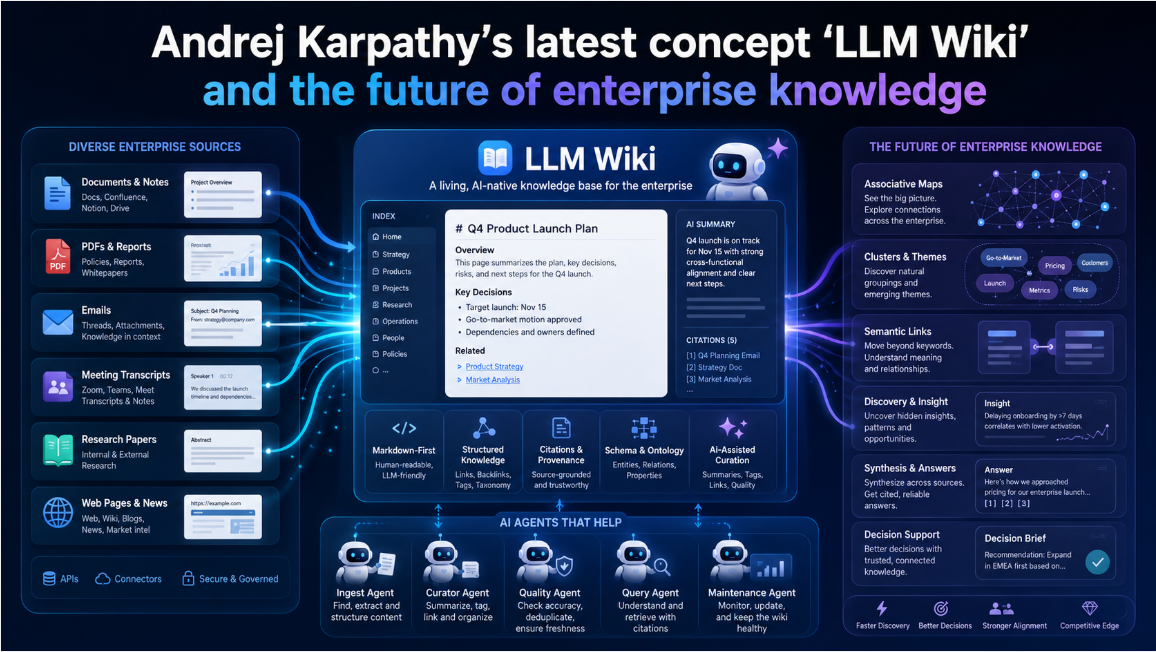
OpenAI expanded ChatGPT to include “Company Knowledge”, a business-focused knowledge search and integration feature for ChatGPT for Teams/Enterprise customers. Company Knowledge connects multiple enterprise data sources such as Google Drive, Outlook, Slack and calendars and lets ChatGPT search and integrate across those repositories without relying on web search.
What it offers
- Unified search across corporate tools: Upload and index documents, meeting notes, emails and other internal assets into a unified search layer readable by ChatGPT.
- Confined answer scope: When the Company Knowledge mode is active, ChatGPT restricts its retrieval and generation to the company knowledge store rather than the web, increasing confidentiality and relevancy.
- Deep-linking: The system surfaces documents and provides direct links back to source files for verification.
Why it matters
Consolidating internal knowledge search into a single conversational interface reduces cognitive overhead for teams. Instead of hopping between Slack, Drive and email, a user can ask a single question and get an integrated summary with links. That is a big win for knowledge workers who must rapidly assemble cross-source answers for client meetings, proposals, and audits.
Limitations to watch
- Accuracy and hallucination: The tool can overgeneralize or misattribute facts across documents. Verification remains essential.
- Access control and governance: Only business plans get this feature; role-based access and auditing must be well configured.
3. Anthropic Claude Memory Expansion and Transparency
Anthropic expanded Claude’s memory capabilities to all paid users and focused on a transparency-first design. Instead of an opaque “memory” that silently selects and stores facts, Claude surfaces a daily-generated memory summary derived from chat history. Users can edit, add, or remove entries, and memory is scoped both at the user and project level.
Notable aspects
- Daily memory digest: Every day Claude produces a summary of what it believes to be relevant from recent chats, which users can review and adjust.
- Project-scoped memories: Memories can be associated with specific projects, keeping domain knowledge compartmentalized and reducing cross-contamination.
- Editable memory entries: Users can directly modify what Claude remembers, creating a transparent and controllable memory record.
Why it matters
Memory transparency addresses one of the central UX and governance problems with personal AI assistants: uncertainty about what the system knows and why it responds in a particular way. By making memory editable and visible, teams can better align the assistant’s baseline knowledge with expectations, identify stale or incorrect facts, and reduce surprising outputs.
Practical tip
Organizations should create memory review routines. Schedule weekly checks of project memories for critical projects so that the assistant’s baseline knowledge remains accurate and trustworthy.
4. Claude Code Web: Coding Agent Becomes Browser-accessible
Anthropic also launched a web version of Claude Code, bringing a coding-focused AI agent into browser access rather than requiring local installation. Claude Code integrates with GitHub so the agent can pull a repository, propose changes, push a branch and open pull requests for human review.
How teams can use it
- Remote edits via web: Developers can request refactors, bug fixes or search algorithm changes from Claude Code from any device, including phones and tablets.
- GitHub workflow integration: Changes proposed by the agent appear as branches and pull requests in GitHub, supporting standard review and CI/CD workflows.
- History and traceability: The web UI records agent conversations and actions for transparency and auditing.
Why it matters
Lowering the barrier to AI-assisted coding democratizes access for non-local contributors and for quick fixes during travel. The GitHub-centric workflow ensures that human review remains a gating step, which is essential for production safety.
5. OpenEvidence: Medical-specialized ChatGPT
OpenEvidence launched a medical-specialized ChatGPT product that answers clinical and health queries backed by medical literature and peer-reviewed sources. It rapidly attracted users and funding, growing its valuation within months.
Key features
- Evidence-backed answers: Responses cite medical papers and clinical references rather than generic web content.
- Language support: The system accepts multiple languages including Japanese via guest access, though the free tier enforces usage limits.
- Usage limits and professional access: Full functionality is gated for verified medical professionals and the free mode imposes query caps for guest users.
Why clinicians and patients should pay attention
AI systems that ground answers in medical literature can improve patient safety and clinician efficiency when used appropriately. OpenEvidence’s emphasis on citations reduces the risk of incorrect or overly generic medical advice and increases trust in generated content.
Caveat
Even evidence-backed models are not substitutes for professional diagnosis. Users should treat AI outputs as research aids and always confirm findings with qualified clinicians.
6. Qwen Deep Research: Alibaba’s Long-Form Research Upgrade
Alibaba’s Qwen model received a major update to its Deep Research offering. The platform now produces long-form research outputs and provides conversion tools to format that research as webpages and, in some languages, podcasts.
Noteworthy capabilities
- Deep Research generation: Qwen can compile extensive topic overviews with citations suitable for business intelligence or academic-style briefs.
- One-click content transformation: Generated research can be converted into a webpage layout for publication or into podcast audio in supported languages.
Why it matters
Long-form, structured research is time-consuming. Tools that generate initial drafts and convert them to multiple formats lower the barrier for creating thought leadership, product documentation, and internal briefings. Because Qwen operates in a different data ecosystem, it can complement other research tools and provide alternative coverage.
7. NTT Data and TCS: Generative AI Reworking Sales Workflows
NTT Data partnered with a major utility firm to pilot a generative AI-driven overhaul of sales activities. The project automated three areas: proposal generation, building information gathering, and inside sales outreach.
Implementation highlights
- PowerPoint integration: The system produced proposal drafts within PowerPoint, updating template sections based on conversation stage and user inputs.
- Data-driven proposals: For financial simulations and numeric sections, the workflow connected to calculation programs to avoid overreliance on generative outputs for precise numbers.
- Phone-based agent outreach: AI agents handled first-touch phone calls to set appointments for human sales reps.
Why it matters
Sales processes are highly templated and periodic. Combining template-driven document production with AI for iterative tailoring accelerates the front-end of a sale while maintaining human oversight for high-risk numeric content. This balanced approach reduces the danger of hallucinated numerical claims in proposals and lets salespeople focus on negotiation and relationship work.
8. Money Forward: Expense Automation and Slack Agent
Money Forward introduced a Slack-based expense agent that automates expense reporting. The workflow integrates calendar events, Slack, and receipt uploads to pre-fill expense forms and ask clarifying questions when classification is uncertain.
Key user flow
- Users create calendar events to indicate travel or meetings.
- After an event, users upload receipts to the Slack channel connected to the agent.
- The agent cross-references calendar participants, classifies the expense category, and prompts for human confirmation when necessary.
- Once confirmed, the agent submits the expense into accounting systems.
Why it matters
Embedding automation into existing communication tools reduces context-switching and accelerates routine back-office tasks. For finance teams, pre-validated entries reduce reconciliation workload. For employees, it minimizes manual form-filling and cognitive friction.
9. Trust and Tamper-Proofing: Timestamping with Trustee
WingArc announced a tamper-detection offering named Trustee aimed at combating document forgery and post-hoc manipulations in the era of generative AI. The core is scalable, low-cost timestamping that can be applied at issuance time rather than only at registration time.
Problem addressed
AI makes it trivial to alter invoices, receipts, and other official documents in ways that are hard to detect by eye. Organizations face fraud risk when attackers reuse or modify historical artifacts to claim expenses or payments.
How Trustee helps
- Fast, inexpensive timestamping: The service enables volume stamping so documents can be cryptographically associated with their issuance time.
- Issuance-time stamping: Applying timestamps at the moment a document is created or issued prevents retroactive tampering.
Why it matters
As generative AI makes high-quality forgeries easier, cryptographic provenance and tamper evidence become critical controls for finance and compliance teams. Scalable timestamping embedded in document issuance workflows reduces fraud risk without large operational overhead.
10. Honda: Multi-agent Systems Shaped by Corporate Culture
Honda published research experimenting with multi-agent generative AI systems modeled after its “waigaya” culture: open, cross-hierarchical idea exchange. The team created role-specific agents representing departments, set communication patterns, and evaluated four coordination topologies to see which produced better synthesis and outcomes.
Coordination patterns tested
- Centralized: One aggregator agent mediates and consolidates contributions.
- Distributed: Agents contribute independently without central consolidation.
- Layered: Agents work in sequential stages and pass outputs forward.
- Shared pool: Agents deposit ideas into a shared repository for selection.
Findings
The centralized-aggregated approach, where domain specialists contribute and a central synthesizer consolidates, performed best in the experiments. However, misaligned assumptions and inconsistent context across agents produced noisy outputs unless careful protocols and context normalization were enforced.
Why it matters
The study illustrates that multi-agent systems need organizational metaphors and explicit coordination patterns. Engineers and product teams should design agent topologies that match existing decision-making cultures and build mechanisms to reconcile conflicting premises.
11. Sora Pet Cameo and Social Expansion
Sora expanded its Cameo feature to support pets and character-driven avatars. Cameo previously allowed users to create highly realistic, personalized avatars for humans; the update extends that capability to animals and fictional characters and hints at future social features and monetization.
Implications
- Creative uses: Pet Cameos enable personalized videos with owners’ pets “speaking” or reacting in stylized ways for social marketing or entertainment.
- Rights and brand control: Extending avatars to characters raises IP questions—expect licensing and monetization models for corporate characters or mascots.
- Platformization: Cameo templates could become a reusable layer for other AI tools, enabling integration with chatbots, video generation and more.
Why it matters
Avatarization of pets and characters will broaden user engagement, but it will also accelerate conversations about ownership, derivative content rights, and abuse potential when realistic likenesses are trivial to produce.
12. Microsoft Copilot: Twelve Major Updates
Microsoft announced a sizable Copilot upgrade with a dozen features across productivity, collaboration, and accessibility. Highlights of the fall release include group chat integration, memory enhancements, Copilot-in-Edge browsing features, health-specific Copilot capabilities, voice-based Socratic learning modes, and a customizable “companion” avatar.
Key feature notes
- Group chats inside Copilot: Invite collaborators into a Copilot conversation to co-work with the assistant and human teammates simultaneously.
- Copilot Memory: Persistent memory enables Copilot to recall user preferences and prior work to reduce repetition.
- Copilot in Microsoft Edge: Browser-integrated Copilot can summarize tabs, compare information and automate form filling.
- Copilot 4 Health: A medically-aware Copilot mode that integrates with clinical data and evidence sources for healthcare workflows.
- Voice and live interactive learning: Real-time audio interactions designed for training or Socratic tutoring.
- Companion persona: A customizable mascot-like character that adds personality to the assistant experience.
Why it matters
Microsoft’s expansion signals a push to embed AI assistants into the operating system, browser, and communication fabric of organizations. The group chat invitation feature is notable: moving beyond one-on-one AI interactions creates collaborative workflows where AI moderates, summarizes and records group decisions.
Practical angle
Enterprises should pilot group Copilot usage where decision traceability and meeting summarization yield immediate ROI, such as legal briefings, product planning meetings, and multi-stakeholder design reviews.
13. Amazon: Smart Glasses for Delivery Drivers
Amazon is developing AI-enabled smart glasses for delivery drivers. The glasses overlay package routing, address verification, and confirmation prompts into the driver’s field of view, streamlining last-mile logistics and reducing misdelivery risk.
Potential benefits
- Hands-free verification: Drivers can confirm package IDs and delivery addresses without consulting a handheld device.
- Operational data capture: Glasses collect high-resolution behavioral and environment data that can inform automated route planning and future robot deliveries.
Why it matters
Smart glasses embed sensors and AI into front-line operations, producing a stream of contextual data useful for training autonomous systems and improving logistics efficiency. For Amazon, the glasses serve both immediate operational gains and longer-term dataset generation for robotics and automation.
14. Amazon Help Me Decide: AI Shopping Assistant
Amazon introduced Help Me Decide in the U.S., an AI shopping assistant that guides shoppers through decision-making by presenting curated options and explaining why a product fits a user’s needs. It surfaces alternatives across price tiers and explains recommendations using the user’s browsing and purchase history.
How it behaves
- Personalized justifications: The assistant explains why a product fits the user based on prior preferences and usage signatures.
- Tiered choices: Options are grouped into “budget”, “recommended”, and “upgrade” to match diverse shopper intents.
Why it matters
Decision fatigue is a real barrier to conversion. Contextual AI assistants that provide both recommendations and reasons for recommendations can increase conversion rates and customer satisfaction. This also reinforces the platform’s use of personal data to guide commerce decisions.
15. Adobe AI Foundry: Enterprise Custom Generative Models
Adobe announced AI Foundry, a service to help companies develop branded, fine-tuned generative models using Adobe Firefly and proprietary assets. The offering targets enterprises that want custom imagery, consistent brand style, and in-house character generation at scale.
Service highlights
- Model fine-tuning: Adobe helps build models optimized for a client’s brand and visual identity.
- API and workflow integration: Trained models can be deployed into Adobe tools and third-party pipelines using APIs.
Why it matters
Brands increasingly require predictable, high-quality generative outputs that adhere to identity guidelines. Adobe’s offering reduces the technical lift for building a tailored creative model and plugs into existing creative workflows, accelerating time to production for marketing materials and product assets.
16. Mistral AI Studio: From Prototype to Production
French AI company Mistral launched AI Studio, a platform dedicated to taking AI prototypes through validation, monitoring and production deployment. The studio surfaces governance, logging, and testing tools essential for enterprise-grade AI adoption.
Core capabilities
- End-to-end lifecycle: Supports model validation, rollout strategies, monitoring, and feedback loops inside one environment.
- Compliance and governance: Built-in features cater to auditability and operational safety.
Why it matters
Many AI projects stall at pilot stage due to missing operational rigor. Tools that bridge prototype and production reduce friction and make it feasible for enterprises to scale AI initiatives responsibly.
17. NTT’s tsuzumi 2: A Japanese-focused Lightweight LLM
NTT unveiled tsuzumi 2, a Japanese-language-optimized LLM with roughly 30 billion parameters. The model aims for strong Japanese performance while remaining efficient enough to run on modest server setups, making it suitable for domestic deployment and customization.
Why it matters
- Language specialization: tsuzumi 2 performs competitively on Japanese NLP tasks compared to larger general models.
- Domestic sovereignty: For regulated industries or national policy goals, a home-grown model reduces dependency on foreign providers.
- Operational efficiency: The model targets lower inference costs compared to very large models while preserving capability.
Practical implications
Organizations with privacy or compliance constraints should evaluate tsuzumi 2 for in-country deployments. The model’s efficiency profile also makes it promising for enterprise internal assistants and customer-facing bots that need high-quality Japanese text handling.
18. DeepSeek-OCR: Compression Tricks for Huge Contexts
DeepSeek introduced DeepSeek-OCR, a technique that encodes text-heavy context windows as images to dramatically increase the amount of retained context while reducing model computational load. The approach leverages dense visual compression to store and retrieve large bodies of text efficiently.
Advantages
- Context compression: By encoding text into images, systems can fit up to ten times more information into a storage slice commonly used for context windows.
- Selective extraction: Specific segments, like tables or graphs, can be decoded at retrieval time so the model can answer targeted queries.
Why it matters
Context window limits are a structural bottleneck for LLMs. Compression methods that permit larger effective memory footprints open new possibilities for personal assistants, long-term knowledge retention, and applications that need continuity across thousands of pages of content.
19. Verbalized Sampling: Increasing Answer Diversity with Prompts
Researchers proposed Verbalized Sampling, a prompting method intended to counteract mode collapse and increase the diversity of generated outputs. The method instructs the model to propose multiple plausible responses, estimate their probability, then sample one response according to the modeled distribution.
Practical steps
- Ask the model to generate multiple plausible responses to a query.
- Request that the model label each response with an estimated probability of occurrence under its training distribution.
- Command the model to randomly select one response according to those probabilities and return it as the final answer.
Why it matters
Default generation often favors safe, high-probability answers, which reduces originality and novelty in creative tasks. Verbalized Sampling nudges the model to surface less-common but still-valid ideas, improving variety for brainstorming, ideation, and creative writing.
20. LangChain’s Series B and LangSmith Capabilities
LangChain closed a major Series B funding round, enabling expansion of its agent development platform. LangChain and its sister product LangSmith are evolving beyond developer libraries into a managed platform for agent lifecycle management, monitoring, and evaluation.
Notable product moves
- Agent builders and templates: New GUIs and builders make assembly of multi-step agents easier for non-experts.
- Insight agents: Monitoring agents analyze conversational logs, cluster topics, and surface recurring user intents and failure modes.
- Evaluation tooling: LangSmith can now score responses against custom criteria, enabling data-driven model improvement.
Why it matters
LangChain is a de facto standard for agent orchestration. Funding and product maturation accelerate the ecosystem toward production-grade agent deployments with adequate observability and evaluation tooling.
21. Fal.ai Valuation and Multimodal Model Access
Fal.ai, a multimodal model platform that aggregates dozens of image, video and audio models behind one API and UI, raised funding valuing it at around 4 billion dollars. Fal.ai simplifies experimentation by letting users interchange models without rewriting prompts.
Use cases
- Rapid prototyping: Switch between models to find the best quality and cost trade-off for a given task.
- Media generation at scale: Fal.ai provides the ability to create video content and audio with different underlying engines through a unified interface.
Why it matters
Aggregators reduce integration friction and create a market for model selection and routing. Customers benefit from a single contract and unified tooling for multimodal pipeline development.
22. OpenAI’s Japan Economic Blueprint
OpenAI published a Japan-focused economic blueprint outlining suggested public policies, infrastructure investments, and educational priorities to accelerate AI adoption while ensuring inclusive benefits. The blueprint emphasizes three pillars: inclusive social infrastructure, strategic infrastructure investment, and education and reskilling.
Policy proposals include
- Nationwide digital infrastructure upgrades to support AI compute and connectivity.
- Workforce development programs to improve AI literacy among students and working adults.
- Inclusive policy design so that the benefits of AI reach small businesses and rural communities.
Why it matters
High-level blueprints guide public-private partnerships and funding priorities. For business leaders, the blueprint signals likely areas of government emphasis and potential opportunities for collaboration and procurement.
23. Sociopolitical Risks: Deepfakes and Political Advertising
Authorities have started issuing warnings about AI-generated political ads and deepfakes. Instances of fabricated imagery and video assets claiming to feature political figures have circulated, prompting official caution and calls for media literacy.
What to watch
- Verification pipelines: Campaigns and media outlets must adopt verification processes for candidate imagery and videos.
- Regulatory action: Expect stricter disclosure rules for synthetic content in political advertising in several jurisdictions.
- Public trust erosion: Increased false content could raise the cost of trust and force higher verification burdens for ordinary citizens.
Why it matters
The political sphere is particularly sensitive to synthetic media. Even when false content is later debunked, the initial spread can cause reputational and democratic harms. Organizations should prepare detection and disclosure strategies.
24. Wikipedia Usage Drop Linked to AI Search
Wikimedia Foundation reported a notable decline in human pageviews on Wikipedia, attributing part of the change to the rise of AI-based search experiences that extract direct answers without sending users to source pages. Human pageviews declined by around 10 percent in some metrics.
Implications
- Content economics: Reduced traffic impacts donations and partner metrics that depend on pageviews.
- Information verification: Fewer human visits to source pages may reduce the public’s exposure to primary sources and context.
Why it matters
Search interfaces that provide synthesized answers can reduce engagement with source material. This impacts the funding models of open knowledge platforms and may reduce the diversity and depth of public information consumption.
25. Labor Impacts: AI Use Correlated with Longer Work Hours
Recent economic analysis using time-use surveys indicates that occupations exposed to AI improvements saw wage increases but also an increase in working hours and a reduction in leisure time. In short, productivity gains translated into higher hourly wages but also more work time.
Key findings
- High AI-exposure professions such as engineers and lawyers experienced wage growth but also longer weekly work hours.
- Productivity gains are not necessarily distributed evenly across stakeholders; companies and consumers capture much of the benefit.
Why it matters
AI is not an automatic route to more leisure. When productivity increases, organizational incentives may push workers to do more rather than work less. Companies should consider whether productivity gains are used to improve working conditions, raise wages, or expand output. Policymakers and labor leaders must monitor distributional effects and advocate for equitable outcomes.
Cross-cutting Themes and Recommendations
Several themes emerge across these 25 updates. They inform a practical playbook for teams building, buying, or governed by AI.
1. Agents and Memory Will Define Personalization
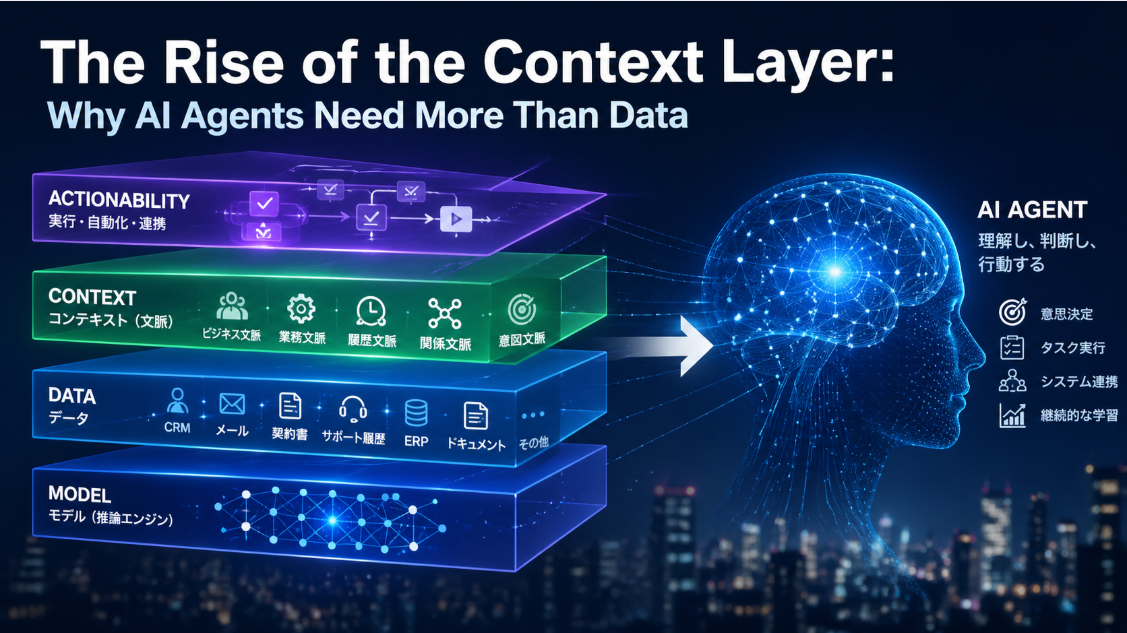
Products like Atlas, Claude memory, and company knowledge emphasize persistent context. Agents that remember user preferences and past interactions will be more useful, but the governance of that memory is essential. Organizations should:
- Set explicit retention policies and consent models for assistant memory.
- Audit memory entries for accuracy and bias.
- Provide edit and delete controls to end users.
2. Integration, Not Replacement, Is the Most Practical Early Use Case
Where deployment succeeded in pilot projects, it was rarely because AI replaced humans. Instead, AI augmented templates, handled repetitive outreach, or pre-filled a document that a human reviewed. Teams should focus on:
- Hybrid workflows where AI automates low-risk tasks and humans verify high-risk outputs.
- Embedding AI into everyday tools like PowerPoint, Slack, and browsers to reduce friction.
3. Domain-specialized Models Are Gaining Traction
Medical models like OpenEvidence and language-specialized models like tsuzumi 2 demonstrate that focused models with curated data deliver higher trust and better performance than generic models in regulated domains. Organizations in regulated sectors should:
- Prefer domain-specialized models where compliance and evidence are priorities.
- Invest in explainability and citation mechanisms.
4. Operational Controls and Observability Are Now Critical
LangSmith tooling, Mistral AI Studio, and LangChain’s maturation show that observability, scoring, and lifecycle management are essential for production. Enterprises must:
- Instrument agents with logging and evaluation metrics.
- Define SLOs and monitoring alerts for hallucination, latency and failure rates.
5. Safety and Trust Require New Controls
Trustee’s timestamping solutions and warnings about deepfakes indicate that provenance, tamper-evidence, and detection systems are rising priorities. Recommendations include:
- Adopt cryptographic evidence for critical documents and receipts.
- Train staff in synthetic content identification and implement verification processes for sensitive media.
6. Human Outcomes and Policy Need Attention
Labor research showing longer work hours with AI adoption highlights the need for institutional strategies to ensure AI improves quality of work rather than simply increasing output. Employers and policymakers should:
- Design compensation and workload policies that reflect productivity gains.
- Create reskilling pathways so workers can capture a larger share of AI-created value.
Practical How-to: Immediate Experiments for Teams
Here are actionable experiments that companies and individuals can run in the next 30 days to capture value from these trends.
- Pilot an AI-enabled research workflow Use an AI-integrated browser or internal Company Knowledge system to synthesize meeting prep for a high-stakes client. Measure time savings and accuracy versus traditional manual research.
- Create a memory governance checklist Draft a short policy that specifies memory retention periods, data sources allowed for memory construction, and a review cadence. Apply it to one team using a shared assistant.
- Run a LangChain/LangSmith proof of concept Build a small agent that routes customer queries across internal knowledge bases and instrument it with evaluation criteria.
- Test a domain-specialized assistant Choose a regulated area such as HR or compliance, and pilot a domain-tuned model like tsuzumi 2 or a medical assistant in a research capacity. Focus on citation and audit trails.
- Strengthen tamper resistance for documents Explore timestamping options for invoices and receipts and run a simulated attack to verify detection mechanisms.
Risks and Ethical Considerations to Monitor
While the pace of innovation is exciting, several risks deserve ongoing attention.
Data Leakage and Privacy
Integrating assistants with internal systems increases the risk of unauthorized data exposure. Strict access controls, logging, and differential privacy methods should be applied where appropriate.
Automation Bias and Hallucination
Even evidence-backed models can misinterpret or overgeneralize. Human verification remains necessary for high-stakes decisions. Maintain “human-in-the-loop” checkpoints for numerical claims and legal or medical recommendations.
Concentration of Power and Platform Lock-in
Large platform providers bundling browsers, OS level assistants, and cloud services can increase switching costs. Strategic procurement should consider openness, exportability, and vendor neutrality.
Labor and Inequality Effects
Policy frameworks and corporate governance need to address the distributional consequences of AI-driven productivity improvements so workers share the value gains.
Conclusion: What to Watch Next
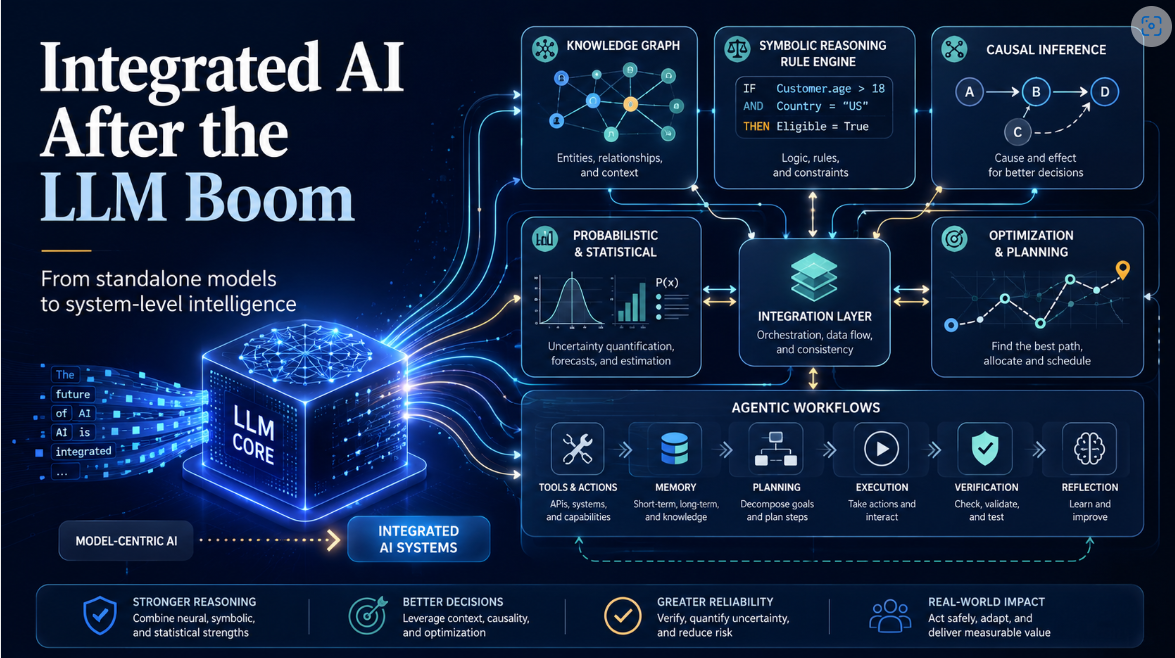
The recent batch of updates illustrates a maturing AI ecosystem moving from isolated models to integrated agents, domain-specialized systems and production-grade infrastructure. Three developments deserve close monitoring over the coming months:
- Agent orchestration and memory governance: How companies standardize memory controls and reconciliation workflows will shape user trust.
- Domain models and regulation: Healthcare, finance, and legal domains will set precedents for evidence-backed AI use and regulatory compliance.
- Operational tooling: Platforms that make it easier to monitor, evaluate, and ship agents will accelerate enterprise adoption.
Every organization does not need to chase every shiny feature. The most pragmatic path is to identify high-frequency, low-risk tasks where AI can remove tedium today, design clear human verification points, and build a roadmap for more ambitious, domain-tailored assistants once operational controls are in place.
Final Recommendations
- Start small, instrument everything, and insist on audits and human oversight for critical outputs.
- Prioritize solutions that respect user consent and provide visible memory controls.
- Invest in knowledge management so company knowledge sources can be safely and effectively interrogated by conversational AI.
- Plan for workforce transitions. Use productivity gains to upskill and improve job quality, not just to extend work hours.
The AI landscape is evolving rapidly. Organizations that pair curiosity with governance, and technical experimentation with ethical guardrails, will be best positioned to capture the benefits without being blindsided by the risks. The coming months should bring further advances in multimodal generation, agent orchestration, and domain-specialized models, so staying informed and piloting responsibly will be essential.
Note: The insights above synthesize recent developments across multiple AI platforms, tooling providers, and academic proposals. They are intended to guide planning and experimentation rather than serve as definitive implementation advice for any specific technology stack.
 ChatGPT