
 ChatGPT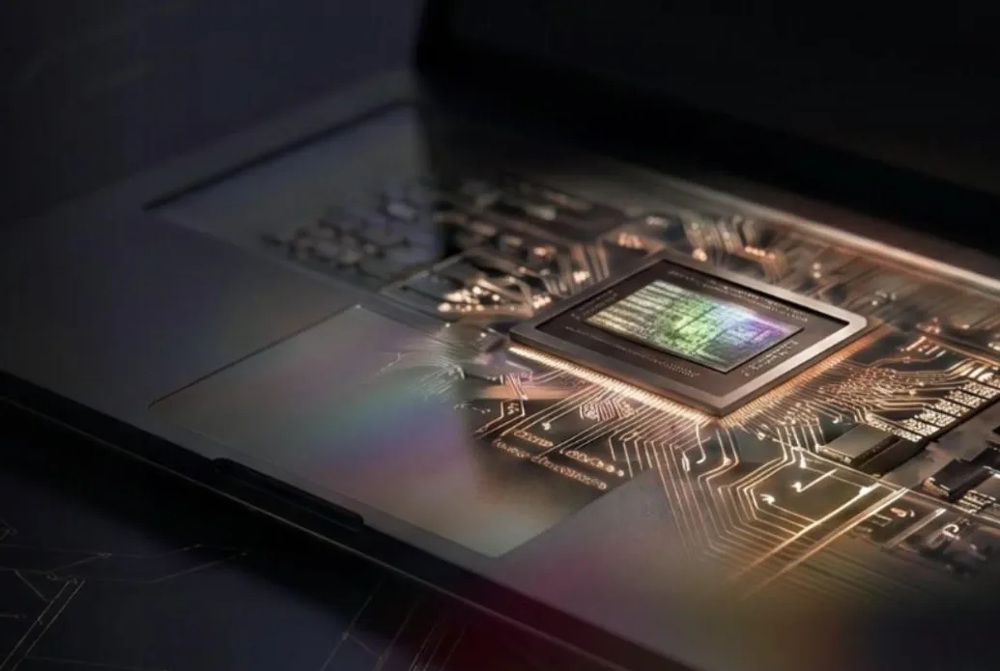
Research date: June 1, 2026
Suggested SEO title: NVIDIA RTX Spark Explained: The AI PC Chip Challenging Apple Silicon and Snapdragon X
Meta description: NVIDIA RTX Spark brings Grace Blackwell-class AI computing into Windows laptops and mini PCs. Here is what RTX Spark is, how it differs from DGX Spark, and why it matters for AI PCs, creators, gamers, and developers.
The beginning of NVIDIA’s real PC platform strategy
For decades, NVIDIA has been known primarily as the company behind GeForce, RTX graphics cards, CUDA acceleration, and data-center AI GPUs. With RTX Spark, that identity begins to change. NVIDIA is no longer only supplying the GPU inside someone else’s PC platform. It is moving toward the center of the PC itself.
RTX Spark is NVIDIA’s newly announced Arm-based system-on-chip for Windows laptops and desktops. Reuters reported that NVIDIA unveiled the chip ahead of Computex 2026, positioning it as a way to bring AI directly into personal computers rather than relying entirely on cloud-based AI services. NVIDIA CEO Jensen Huang described the project as part of a broader Microsoft–NVIDIA effort to “reinvent the PC” for the AI era. (Reuters)
The significance is not simply that NVIDIA has made another chip. The significance is that RTX Spark appears to combine CPU, GPU, AI acceleration, unified memory, RTX graphics, and the CUDA ecosystem into a PC-class platform. In other words, NVIDIA is attempting to do for AI PCs what Apple did for Macs with Apple Silicon: control more of the system architecture and make the whole machine feel like a single integrated computing platform.
What is RTX Spark?
RTX Spark is best understood as the consumer and Windows PC-oriented counterpart to NVIDIA’s earlier DGX Spark concept.
DGX Spark was announced in March 2025 as a compact “personal AI supercomputer” powered by the NVIDIA GB10 Grace Blackwell Superchip. NVIDIA described DGX Spark as a desktop system for developers, researchers, data scientists, robotics developers, and students who need to prototype, fine-tune, and run AI models locally. NVIDIA’s official announcement says DGX Spark uses a Blackwell GPU with fifth-generation Tensor Cores and FP4 support, delivering up to 1,000 trillion operations per second of AI compute, with 128GB of unified memory. (NVIDIA Newsroom)
RTX Spark, by contrast, is aimed at mainstream premium PCs: thin laptops, creator notebooks, mini PCs, and possibly high-end desktops. According to The Verge, RTX Spark is effectively based on the same GB10-class silicon used in DGX Spark, but repositioned as a family of Windows PC chips rather than as a single AI developer box. The reported flagship configuration includes 20 CPU cores, 6,144 GPU cores, and up to 128GB of LPDDR5X unified memory. (The Verge)
That makes RTX Spark neither a conventional GeForce GPU nor a traditional laptop CPU. It is a full PC SoC: an Arm CPU, NVIDIA GPU architecture, AI acceleration, unified memory, and RTX software stack in one platform.
RTX Spark vs DGX Spark: same roots, different purpose
| Item | DGX Spark | RTX Spark |
|---|---|---|
| Primary target | AI developers, researchers, data scientists | Premium Windows PCs, creators, gamers, AI developers |
| Form factor | Compact desktop AI supercomputer | Laptops, mini PCs, desktops |
| Operating context | NVIDIA AI development stack, local AI prototyping | Windows on Arm, RTX, CUDA, creator apps, games, local AI |
| Chip foundation | GB10 Grace Blackwell Superchip | Reported GB10-derived RTX Spark family |
| AI performance | Up to 1,000 TOPS / 1 petaflop-class AI compute | Reported up to 1 petaflop-class AI compute |
| Memory | 128GB unified memory | Up to 128GB unified memory; lower-memory models expected |
| Main message | “Personal AI supercomputer” | “AI PC / RTX PC / local agentic computing platform” |
DGX Spark is essentially a small AI workstation. RTX Spark is NVIDIA’s attempt to bring that same class of AI-oriented architecture into ordinary PC form factors.
This distinction matters. DGX Spark is for people who know they need a local AI machine. RTX Spark is for the broader PC market: people who buy laptops for video editing, 3D work, AI tools, software development, gaming, or professional productivity.
Technical foundation: Grace, Blackwell, RTX, CUDA, and unified memory
The technical importance of RTX Spark comes from the convergence of several NVIDIA technologies.
First, RTX Spark is Arm-based. That means it competes more directly with Apple Silicon and Qualcomm Snapdragon X than with a traditional Intel Core or AMD Ryzen chip. The Verge reports that RTX Spark uses Arm CPU cores and will rely on Microsoft’s Windows on Arm platform, including Prism emulation for legacy x86 applications. (The Verge)
Second, the GPU side is NVIDIA Blackwell-derived. Blackwell is NVIDIA’s architecture for the generative AI era, and DGX Spark’s GB10 includes a Blackwell GPU with fifth-generation Tensor Cores and FP4 support. NVIDIA says the GB10’s CPU and GPU are connected through NVLink-C2C to provide a coherent memory model with far higher bandwidth than PCIe. (NVIDIA Newsroom)
Third, RTX Spark uses unified memory. This is one of the most important points. In a conventional PC, CPU memory and GPU memory are often separate. In AI workloads, that separation can become a bottleneck, especially when running large language models or multimodal models locally. With up to 128GB of unified memory, RTX Spark could allow larger models, larger scenes, and heavier creative workloads to stay on the device.
Fourth, RTX Spark brings NVIDIA’s software ecosystem into the PC SoC market. CUDA, RTX, Tensor Cores, DLSS, NVIDIA AI software, and creator-app optimizations are all part of NVIDIA’s advantage. Apple has Metal and Core ML. Qualcomm has its NPU and Windows on Arm strategy. AMD and Intel have x86 compatibility and growing NPUs. NVIDIA has the broadest AI developer ecosystem.
Reported RTX Spark specifications
NVIDIA has not yet provided a complete public benchmark package for RTX Spark. The Verge explicitly notes that NVIDIA called it “the most efficient PC chip ever built” but did not provide a detailed performance chart to support that claim. (The Verge)
Based on current reporting, the flagship RTX Spark configuration appears to be as follows:
| Specification | Reported information | Source status |
|---|---|---|
| CPU | Up to 20 Arm CPU cores | Media reporting |
| GPU | 6,144 GPU cores | Media reporting |
| Architecture | GB10 / Grace Blackwell-derived | Reported; DGX Spark GB10 officially confirmed |
| AI performance | Up to 1 petaflop / 1,000 TOPS class | Official for DGX Spark; reported for RTX Spark |
| Memory | Up to 128GB LPDDR5X unified memory | Media reporting; DGX Spark officially has 128GB unified memory |
| Lower configurations | Models may start at 16GB memory | Media reporting |
| Power | Reported scaling from very low single-digit watts to around 80W | Media reporting |
| Graphics class | Roughly RTX 5070 laptop-class graphics depending on workload | NVIDIA statement reported by The Verge |
| Launch timing | Fall 2026 for first RTX Spark PCs | Media reporting |
The most important caveat is that independent benchmarks are not yet available. Until reviewers test shipping devices, claims about battery life, gaming performance, thermals, AI throughput, and creator performance should be treated as provisional.
Windows on Arm: the opportunity and the risk
RTX Spark depends heavily on Windows on Arm. This is both a strength and a risk.
The strength is that Windows on Arm has improved dramatically since the failed Windows RT era. Microsoft’s Prism emulator now allows many x86 and x64 applications to run on Arm-based Windows PCs. Microsoft has also improved compatibility for instruction sets such as AVX and AVX2, which historically blocked many professional apps and games from running on Arm PCs. (Windows Central)
Microsoft has also said that native Arm applications now account for about 90% of total user minutes on Arm-based PCs, suggesting that mainstream app compatibility has become much stronger than it was during earlier Windows-on-Arm attempts. (Windows Central)
The risk is that compatibility is not the same as optimization. A native Arm application may run well, but a professional plugin, driver, anti-cheat module, peripheral utility, or older x86-only tool may still cause problems. This is especially important for creators, engineers, musicians, and gamers who depend on complex software stacks.
RTX Spark may therefore succeed first among users whose workflows are already supported natively or accelerated by NVIDIA. It may take longer to convince conservative enterprise buyers, gamers with large legacy libraries, and professionals with specialized Windows software.
Software support: creators, developers, games, and AI agents
The reported software story around RTX Spark is ambitious.
According to The Verge, NVIDIA points to native Arm support for applications such as Blender, DaVinci Resolve, Maxon Cinema 4D, Maxon Redshift, Topaz Photo, CapCut, Cubase, Bitwig Studio, and Affinity by Canva. Adobe is also reportedly optimizing Photoshop and Premiere for RTX Spark. (The Verge)
For games, the situation is more complicated but improving. The Verge reports that Riot Games is bringing League of Legends and Valorant to Windows on Arm, Krafton is bringing PUBG, and NVIDIA is working with developers using Easy Anti-Cheat, BattlEye, and Denuvo. (The Verge)
For AI developers, the more interesting story is local AI agents. Reuters reports that RTX Spark is designed to run AI agents locally rather than relying only on cloud AI. (Reuters) The Verge also reports that NVIDIA is positioning RTX Spark as part of a “personal AI” shift, where local agents can use the PC itself as a work environment rather than simply answering prompts in a chat window. (The Verge)
This is where RTX Spark could become more than a faster laptop chip. If local agents can access files, applications, creative tools, development environments, and private data safely, the PC becomes not just a device for running apps but a personal AI workstation.
Confirmed and reported devices
The first wave of RTX Spark devices appears to target premium laptops and desktops.
The Verge reports that confirmed or shown RTX Spark laptops include ASUS ProArt P14 and P16, Dell XPS 16, HP OmniBook X14 and Ultra 16, Lenovo Yoga Pro 9N, Microsoft Surface Laptop Ultra, and MSI Prestige N16 Flip AI. It also reports that more than 30 laptops and more than 10 desktops are in development, with Acer, ASUS, Dell, Gigabyte, HP, MSI, and Lenovo involved. (The Verge)
Microsoft’s Surface Laptop Ultra is especially symbolic. If Microsoft itself ships a flagship Surface based on NVIDIA silicon, RTX Spark becomes more than an OEM experiment. It becomes part of Microsoft’s strategic attempt to redefine the Windows PC around local AI.
Competitive comparison: Apple, Qualcomm, AMD, and Intel
RTX Spark enters a market that is already changing quickly.
Apple proved with the M-series that Arm-based unified-memory SoCs could replace traditional laptop architectures. Apple’s M4 family includes a Neural Engine rated at up to 38 trillion operations per second, with M4 Max supporting up to 128GB of unified memory. (Wikipedia)
Qualcomm’s Snapdragon X series brought Arm PCs back into serious Windows competition. Snapdragon X Elite and X Plus systems helped establish the Copilot+ PC category, and newer Snapdragon X2 reporting points to higher CPU, GPU, and NPU performance, including up to 80 TOPS-class AI capability in some configurations. (Windows Central)
AMD’s Ryzen AI 300 family brings strong x86 compatibility, Zen 5 CPU cores, RDNA 3.5 integrated graphics, and up to 50 TOPS NPU performance. (Wikipedia) Intel’s Core Ultra platforms likewise compete on x86 compatibility, integrated NPU capability, OEM reach, enterprise trust, and Windows ecosystem maturity.
What makes NVIDIA different is that RTX Spark is not just another NPU-first AI PC chip. It is GPU-first, CUDA-first, RTX-first, and creator/developer-first. That could make it particularly strong in workloads where the GPU matters more than the NPU: generative AI, 3D rendering, video processing, local inference, AI-assisted creation, simulation, and gaming.
| Platform | Main strength | Main weakness vs RTX Spark |
|---|---|---|
| Apple M-series | Mature unified-memory architecture, excellent battery life, strong creator ecosystem | macOS-only; limited CUDA ecosystem |
| Qualcomm Snapdragon X | Efficient Windows on Arm platform, strong battery life, growing Copilot+ ecosystem | Weaker GPU/developer ecosystem than NVIDIA |
| AMD Ryzen AI | x86 compatibility, strong integrated graphics, Ryzen AI NPU | Less dominant AI software ecosystem than CUDA |
| Intel Core Ultra | Enterprise compatibility, huge OEM base, Windows maturity | Integrated graphics and AI acceleration may not match NVIDIA’s high-end AI/RTX pitch |
| NVIDIA RTX Spark | CUDA, RTX, Blackwell-derived GPU, unified memory, local AI agents | Windows on Arm compatibility risk; unknown pricing, thermals, battery life, and benchmarks |
Why RTX Spark matters for AI PCs
The first generation of AI PCs has often been defined by the NPU. Microsoft’s Copilot+ PC requirements pushed the industry toward chips with dedicated neural processors. That was important, but it also created a narrow definition of AI PC: a PC that can run certain AI features locally.
RTX Spark points to a broader definition. An AI PC is not merely a PC with an NPU. It is a machine that can run serious local AI workloads, including large models, multimodal tools, AI agents, and creative generation pipelines.
This is a major shift. A chatbot can live in the cloud. But a personal AI agent that understands your files, your apps, your creative projects, your codebase, and your private workflow benefits from running locally. Local execution improves privacy, reduces cloud costs, lowers latency, and gives users more control.
That is the deeper meaning of RTX Spark. NVIDIA is trying to make the PC itself an AI execution platform.
Impact on creators
Creators may be the first group to see practical value.
Video editors, 3D artists, designers, photographers, and streamers already understand GPU acceleration. If RTX Spark delivers strong RTX-class graphics, large unified memory, and optimized support for tools such as Adobe Premiere, Photoshop, Blender, DaVinci Resolve, and Cinema 4D, it could become a compelling platform for mobile creators.
The most interesting possibility is not just faster rendering. It is AI-assisted creative production. Imagine sketch-to-image, image-to-3D, local video generation, automatic rotoscoping, scene understanding, AI voice cleanup, local asset search, and AI assistants that operate across multiple creative applications.
However, creators should wait for real-world benchmarks before buying first-generation systems. Claims about 12K video editing, large 3D scenes, and RTX 5070-class graphics are promising, but professional workflows are highly dependent on drivers, plugins, codecs, memory bandwidth, storage speed, and thermal design.
Impact on gaming
Gaming is both a huge opportunity and a difficult test.
NVIDIA’s RTX brand is closely tied to gaming, DLSS, ray tracing, and GeForce performance. If RTX Spark can deliver strong GPU performance in thin laptops with long battery life, it could reshape gaming laptops.
But Arm-based Windows gaming remains a challenge. Even if many games run through Prism or native Arm builds, gamers care about consistency. Anti-cheat compatibility, launcher support, GPU driver maturity, game updates, frame pacing, controller/peripheral support, and modding tools all matter.
The Verge reports that NVIDIA is working with major game and anti-cheat partners, but also notes that NVIDIA has not yet provided full benchmark data. (The Verge) For gamers, RTX Spark is exciting but not yet a guaranteed replacement for x86 gaming laptops.
Impact on developers and local AI builders
Developers may be the most strategic audience.
DGX Spark was aimed directly at AI developers, but it was still a specialized desktop device. RTX Spark could put similar architecture into laptops. That matters for developers building local agents, multimodal apps, robotics prototypes, synthetic data workflows, small model fine-tuning, and AI-assisted software engineering tools.
The key advantage is workflow continuity. NVIDIA’s official DGX Spark announcement emphasized that developers can move models from local systems to DGX Cloud or accelerated data-center infrastructure with minimal code changes. (NVIDIA Newsroom) If RTX Spark inherits that philosophy, it could become the portable front end of NVIDIA’s full AI stack.
This is where NVIDIA has a powerful strategic position. Apple has excellent hardware integration. Qualcomm has efficient Arm PC silicon. AMD and Intel have x86 compatibility. NVIDIA has the developer ecosystem around CUDA, AI frameworks, accelerated libraries, and data-center deployment.
Market impact: NVIDIA becomes a PC platform company
RTX Spark signals a broader transformation of NVIDIA.
Historically, NVIDIA depended on Intel and AMD CPUs in PCs. With RTX Spark, NVIDIA can influence the entire system: CPU, GPU, memory architecture, AI runtime, graphics stack, developer tools, and OEM design targets.
Reuters noted that RTX Spark pits NVIDIA directly against AMD, Intel, and Apple in PC chips. (Reuters) Business Insider also reported that AMD, Intel, and Qualcomm shares fell after NVIDIA’s RTX Spark announcement, reflecting investor concern that NVIDIA is moving into their territory. (Business Insider)
This does not mean NVIDIA will immediately dominate the PC market. Intel and AMD still have enormous advantages in x86 compatibility, enterprise procurement, OEM relationships, and price segmentation. Qualcomm has already invested heavily in Windows on Arm. Apple controls its own hardware and software stack.
But RTX Spark changes the competitive narrative. NVIDIA is no longer only the company that sells the GPU inside a PC. It is becoming a company that can define what the PC is.
Who should buy an RTX Spark PC?
RTX Spark PCs will likely be best suited for:
AI developers who want to run local models, agents, inference workloads, and prototypes without depending entirely on cloud GPUs.
Creators who use GPU-accelerated tools and want a portable machine for video, 3D, imaging, and generative workflows.
Technical professionals who want large unified memory and local AI capabilities in a premium laptop or mini desktop.
Early adopters who are comfortable with Windows on Arm and willing to tolerate first-generation issues.
Gamers should be more cautious. RTX Spark may become an important gaming platform, but first-generation Arm-based gaming PCs need independent testing before they can be recommended broadly.
General office users probably do not need RTX Spark at launch. For web browsing, documents, video calls, email, and light AI features, Snapdragon X, Intel Core Ultra, AMD Ryzen AI, or Apple M-series systems may be more cost-effective.
Who should wait?
Users should wait if they depend on:
specialized x86-only software, older plugins, professional drivers, niche peripherals, complex DAW setups, engineering tools, anti-cheat-heavy games, or enterprise software that has not been validated on Windows on Arm.
They should also wait if price matters. The first RTX Spark devices are expected to target premium market segments, and NVIDIA has not yet provided final pricing. The Verge reports that the first devices will launch in fall 2026 and target premium price points. (The Verge)
Key uncertainties
RTX Spark is one of the most important PC announcements of 2026, but several questions remain open.
First, real benchmarks are missing. NVIDIA has made strong claims, but independent testing is needed.
Second, battery life is uncertain. A chip that can scale up to around 80W may be powerful, but real battery life will depend on workload, OEM design, display, cooling, and software optimization. (The Verge)
Third, Windows on Arm compatibility remains a practical concern, even though the ecosystem has improved.
Fourth, pricing may limit early adoption.
Fifth, Japan availability is not yet clear. Given that major global PC makers are reportedly involved, Japanese launches are plausible, but timing, SKU selection, keyboard layouts, and pricing will depend on each OEM.
Conclusion: RTX Spark could be the first serious “AI-native PC” platform
RTX Spark is not just another laptop chip. It is NVIDIA’s attempt to bring the logic of the AI data center, the creator workstation, and the gaming GPU into a unified PC platform.
DGX Spark showed that NVIDIA wanted to put a personal AI supercomputer on the desk. RTX Spark extends that idea into the mainstream premium PC market. If successful, it could change the meaning of an AI PC from “a laptop with an NPU” to “a local AI workstation with enough GPU, memory, and software support to run serious AI workloads.”
The opportunity is enormous. So are the risks. Windows on Arm must continue improving. Software vendors must optimize. Game developers must support the platform. OEMs must control heat, battery life, and price. NVIDIA must prove performance with real benchmarks.
But the strategic direction is clear: NVIDIA wants to move from being the GPU inside the PC to being the platform that defines the next generation of PCs.
For Apple, Qualcomm, AMD, and Intel, RTX Spark is a warning. For creators and developers, it is a promising new tool. For the PC industry, it may mark the beginning of a new phase: the AI-native personal computer.