
Continuous GNN-based Anomaly Detection on Edge using Efficient Adaptive Knowledge Graph Learning

Sanggeon YunRyozo MasukawaWilliam Youngwoo ChungMinhyoung NaNathaniel BastianMohsen Imani

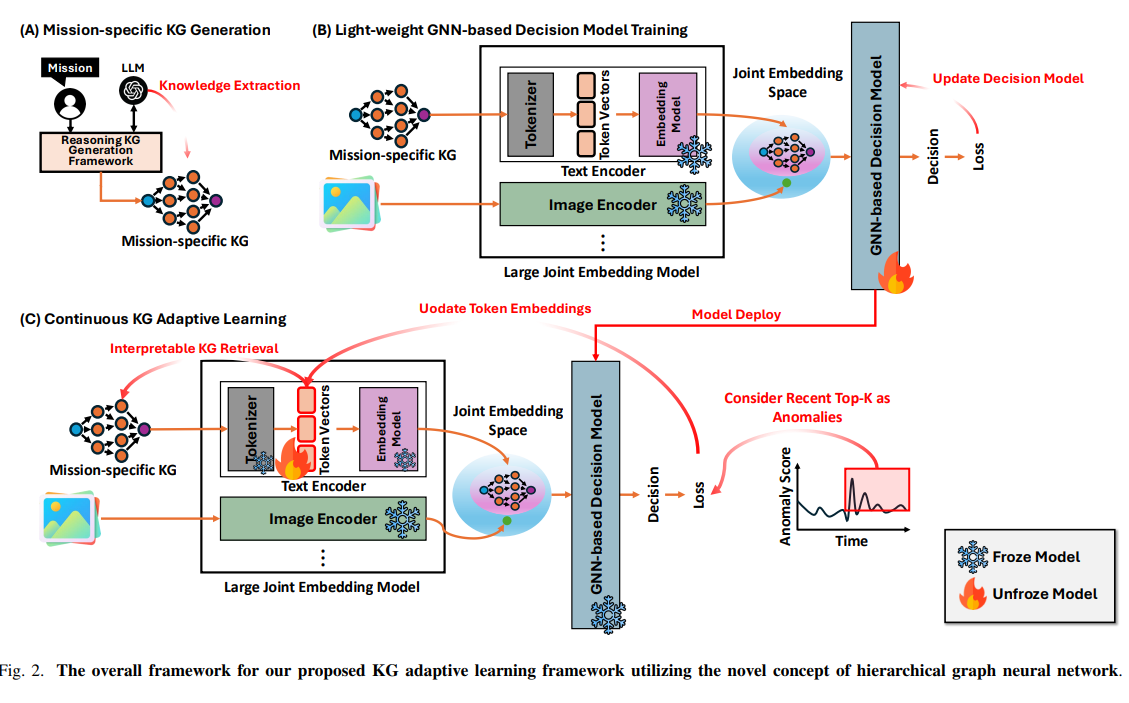
The increasing demand for robust security solutions across various industries has made Video Anomaly Detection (VAD) a critical task in applications such as intelligent surveillance, evidence investigation, and violence detection. Traditional approaches to VAD often rely on finetuning large pre-trained models, which can be computationally expensive and impractical for real-time or resource-constrained environments. To address this, MissionGNN introduced a more efficient method by training a graph neural network (GNN) using a fixed knowledge graph (KG) derived from large language models (LLMs) like GPT-4. While this approach demonstrated significant efficiency in computational power and memory, it faces limitations in dynamic environments where frequent updates to the KG are necessary due to evolving behavior trends and shifting data patterns. These updates typically require cloud-based computation, posing challenges for edge computing applications. In this paper, we propose a novel framework that facilitates continuous KG adaptation directly on edge devices, overcoming the limitations of cloud dependency. Our method dynamically modifies the KG through a three-phase process: pruning, alternating, and creating nodes, enabling real-time adaptation to changing data trends. This continuous learning approach enhances the robustness of anomaly detection models, making them more suitable for deployment in dynamic and resource-constrained environments.
View PDF

  • Related Posts

    Knowledge Graph market expected to grow rapidly

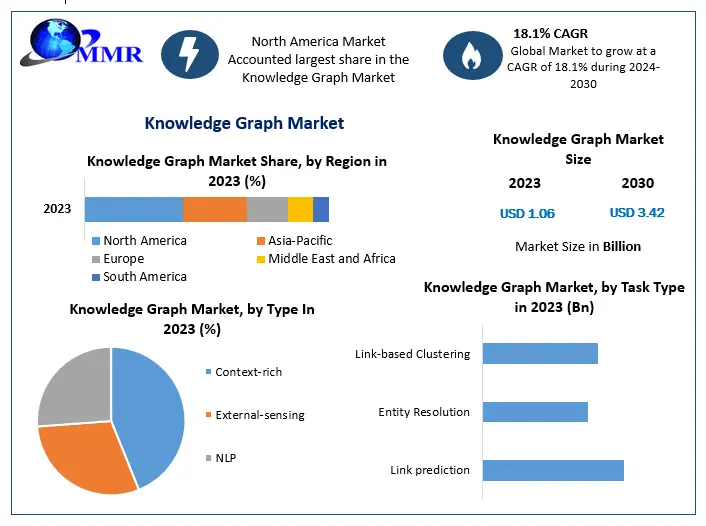
    Maximize Market Research (MMR) has released a report on the North American knowledge graph market. The report says: The Knowledge Graph Market size was valued at USD 1.06 Billion in 2023 and the total Knowledge Graph revenue is expected to…

    Knowledge Graphs are becoming central to data science

    As we launch the AI ​​review site AICritique, our first feature will be on knowledge graphs, which have seen increasing standardization in recent years and a dramatic increase in the number of companies entering the field. Knowledge graphs (KGs) began…

    Leave a Reply

    Your email address will not be published. Required fields are marked *

    You Missed

    Data Science and Buddhism: The Ugly Duckling Theorem and the Middle Way

    Data Science and Buddhism: The Ugly Duckling Theorem and the Middle Way

    Google’s Gemini 3: Launch and Early Reception

    Google’s Gemini 3: Launch and Early Reception

    AI Governance in Corporate AI Utilization: Frameworks and Best Practices

    AI Governance in Corporate AI Utilization: Frameworks and Best Practices

    AI Mentor and the Problem of Free Will

    AI Mentor and the Problem of Free Will

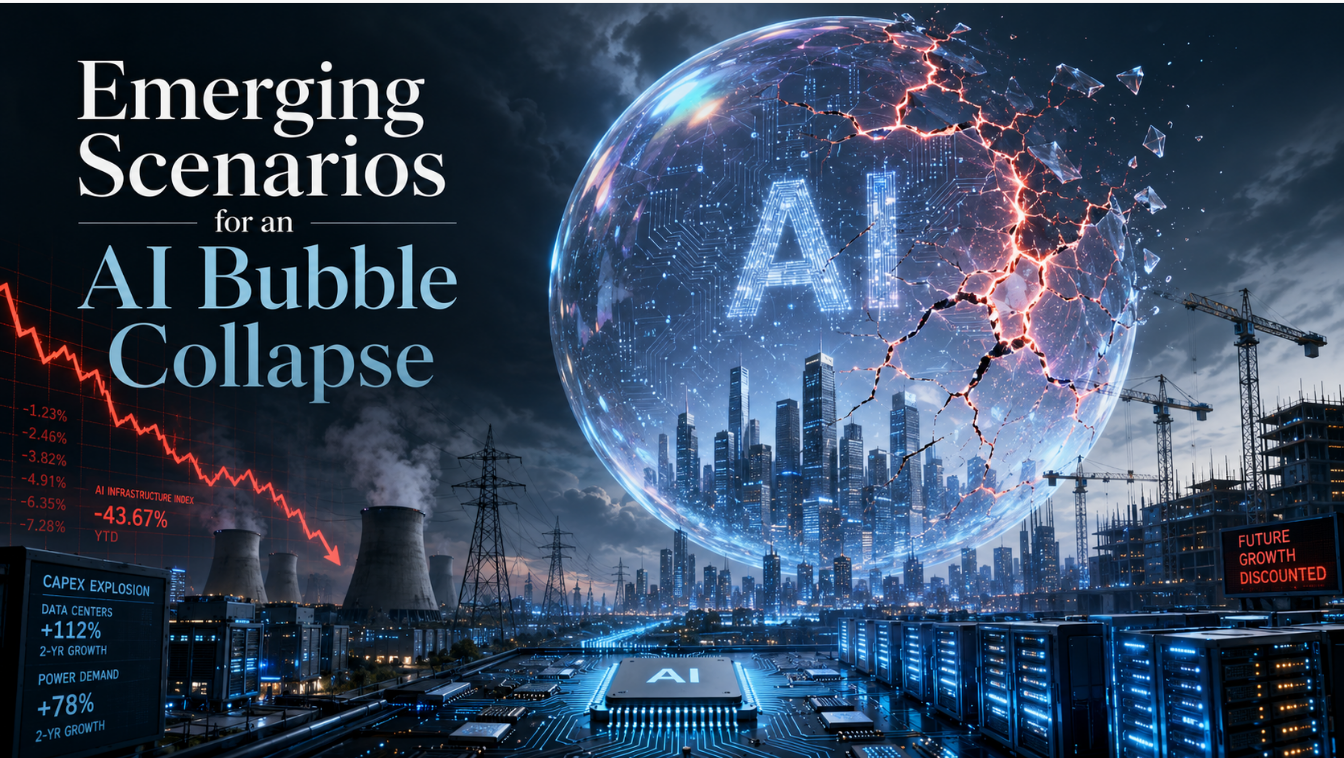
    The AI Bubble Collapse Is Not the The End — It Is the Beginning of Selection

    The AI Bubble Collapse Is Not the The End — It Is the Beginning of Selection

    Notable AI News Roundup: ChatGPT Atlas, Company Knowledge, Claude Code Web, Pet Cameo, Copilot 12 Features, NTT Tsuzumi 2 and 22 More Developments

    Notable AI News Roundup: ChatGPT Atlas, Company Knowledge, Claude Code Web, Pet Cameo, Copilot 12 Features, NTT Tsuzumi 2 and 22 More Developments

    KJ Method Resurfaces in AI Workslop Problem

    KJ Method Resurfaces in AI Workslop Problem

    AI Work Slop and the Productivity Paradox in Business

    AI Work Slop and the Productivity Paradox in Business

    OpenAI’s “Sora 2” and its impact on Japanese anime and video game copyrights

    OpenAI’s “Sora 2” and its impact on Japanese anime and video game copyrights

    Claude Sonnet 4.5: Technical Evolution and Practical Applications of Next-Generation AI

    Claude Sonnet 4.5: Technical Evolution and Practical Applications of Next-Generation AI

    Global AI Development Summary — September 2025

    Global AI Development Summary — September 2025

    Comparison : GPT-5-Codex V.S. Claude Code

    Comparison : GPT-5-Codex V.S. Claude Code

    【HRM】How a Tiny Hierarchical Reasoning Model Outperformed GPT-Scale Systems: A Clear Explanation of the Hierarchical Reasoning Model

    【HRM】How a Tiny Hierarchical Reasoning Model Outperformed GPT-Scale Systems: A Clear Explanation of the Hierarchical Reasoning Model

    GPT‑5‑Codex: OpenAI’s Agentic Coding Model

    GPT‑5‑Codex: OpenAI’s Agentic Coding Model

    AI Adoption Slowdown: Data Analysis and Implications

    AI Adoption Slowdown: Data Analysis and Implications

    Grokking in Large Language Models: Concepts, Models, and Applications

    Grokking in Large Language Models: Concepts, Models, and Applications

    AI Development — August 2025

    AI Development — August 2025

    Agent-Based Personal AI on Edge Devices (2025)

    Agent-Based Personal AI on Edge Devices (2025)

    Ambient AI and Ambient Intelligence: Current Trends and Future Outlook

    Ambient AI and Ambient Intelligence: Current Trends and Future Outlook

    Comparison of Auto-Coding Tools and Integration Patterns

    Comparison of Auto-Coding Tools and Integration Patterns

    Comparing the Coding Capabilities of OpenAI Codex vs GPT-5

    Comparing the Coding Capabilities of OpenAI Codex vs GPT-5

    Comprehensive Report: GPT-5 – Features, Announcements, Reviews, Reactions, and Impact

    Comprehensive Report: GPT-5 – Features, Announcements, Reviews, Reactions, and Impact

    July 2025 – AI Development Highlights

    July 2025 – AI Development Highlights

    ConceptMiner -Creativity Support System, Integrating qualitative and quantitative data to create a foundation for collaboration between humans and AI

    ConceptMiner -Creativity Support System, Integrating qualitative and quantitative data to create a foundation for collaboration between humans and AI

    ChatGPT Agent (Agent Mode) – Capabilities, Performance, and Security

    ChatGPT Agent (Agent Mode) – Capabilities, Performance, and Security