
 ChatGPT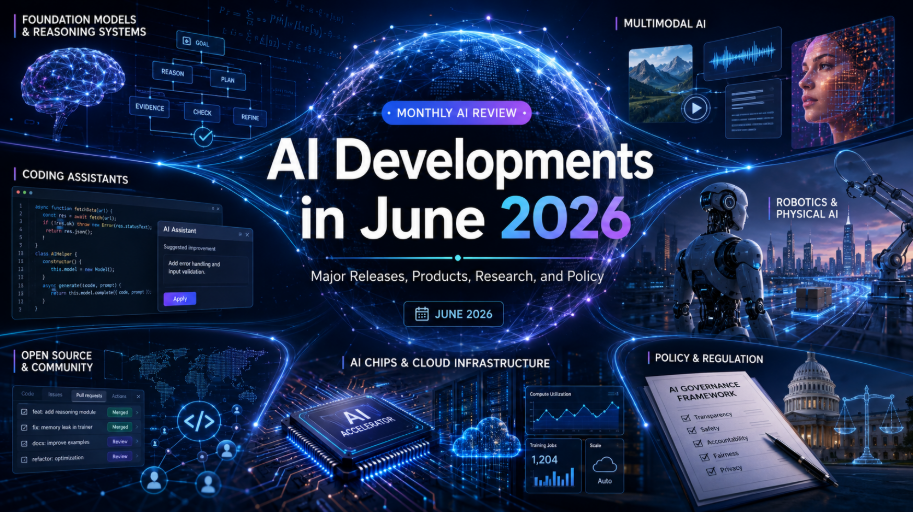
Executive Summary: June 2026 saw a torrent of AI advances and industry moves. OpenAI unveiled the next leap in generative models – the GPT-5.6 series (Sol, Terra, Luna) – in a government-curated limited preview. Google DeepMind added new capabilities to its Gemini models (e.g. built‑in “computer use” agents and live speech translation) and launched open models like Gemma 4 12B and the Nano Banana 2 Lite image model. Apple introduced Siri AI (powered by “Apple Intelligence”) at WWDC, promising on-device, context‑aware assistants on iOS and macOS. Anthropic released Claude Mythos 5 (for cybersecurity and biology research) and a safer variant Fable 5. xAI (formerly Grok) expanded its offerings: Grok 4.3 (a 1M‑token LLM) hit AWS Bedrock, Grok Imagine Video 1.5 improved generative video, and Grok integrated into tools like PowerPoint and a plugin marketplace. Open-source AI gained ground – e.g. Mistral’s OCR 4 (a 170‑language document model) and Qwen’s AgentWorld (35B open model simulating agent environments). Hardware news was led by Nvidia’s AI PC chip RTX Spark (debuted at Computex) and OpenAI’s own LLM chip “Jalapeño” (built with Broadcom). Regulators and policymakers also moved: the U.S. issued an AI Executive Order focused on cybersecurity and voluntary model oversight, China finalized new rules on “anthropomorphic” AI services to take effect July 15, and Meta announced new data-privacy changes (e.g. labeling AI-generated media). In business news, Elon Musk’s SpaceX agreed to buy AI coding startup Anysphere (Cursor) for $60B, OpenAI acquired orchestration firm Ona, and dozens of AI firms raised large funding rounds focusing on infrastructure (e.g. $180M to LeapXpert for enterprise messaging).
Key Takeaways: The month’s AI news can be grouped into several major trends: (1) Frontier models and safety: OpenAI’s GPT-5.6 and Anthropic’s Mythos pushed limits (with governments imposing phased rollouts). (2) Agentic, context-aware AI: Google and xAI added multi-step “agent” features (in browsers, apps, IDEs), Apple moved Siri on-device, and new “agent platforms” emerged (Microsoft’s Work IQ, etc.). (3) Specialized and open models: New domain-specific (e.g. Mistral’s OCR 4), multilingual/vision (Cohere’s Command A+), and non-transformer models (Liquid AI’s LFM2.5) showed the diversity of approaches. Open-source projects (Qwen-AgentWorld, Mistral Leanstral, etc.) are closing performance gaps with closed labs. (4) Infrastructure expansion: AI-capable chips proliferated – Nvidia’s RTX Spark (AI PC), Vera CPU, and OpenAI’s Jalapeño – highlighting a race for faster, more efficient inference. (5) AI in products: Generative AI embedded deeper in software – from Google’s Pixel/Android updates and Firefly enhancements to xAI tools (PowerPoint, IDE plugins) and social apps (Meta’s AI search and editing). (6) Business shifting to “AI stack”: Investors funded data, hardware and enterprise tools rather than just models; mega-deals (Cursor, Ona) signaled consolidation. (7) Regulatory momentum: Governments edged toward oversight of advanced AI – e.g. US executive orders on “frontier models”, China’s new AI content rules, and ongoing privacy/copyright actions. In sum, June’s developments suggest AI is maturing from model hype into broad deployment and integration, with a strong undercurrent of safety, accountability, and infrastructure readiness.<div align=”center”>**Timeline: Major AI Events, June 2026**</div>
| Date | Event | Source |
|---|---|---|
| June 1 | Nvidia unveils RTX Spark AI PC chip at Computex, a Blackwell GPU + Grace CPU platform for laptops/desktops (1 petaflop AI, 128GB RAM). | |
| June 2 | US Executive Order on AI (EO 14409) signed: mandates stronger cyber defenses and a voluntary “frontier model” framework (developers share advanced models pre-release). | |
| June 2 | Microsoft Build (June 2): Work IQ APIs GA (contextual enterprise data for agents). | |
| June 8 | Apple WWDC: Introduces new Siri AI / Apple Intelligence, a context-aware assistant across iOS/macOS (beta developer testing starts). | |
| June 9 | OpenAI previews GPT-5.6 (Sol, Terra, Luna) to select partners, focusing on safer release; Sol is “strongest model yet” (better at defending against cyber exploits than creating them). | |
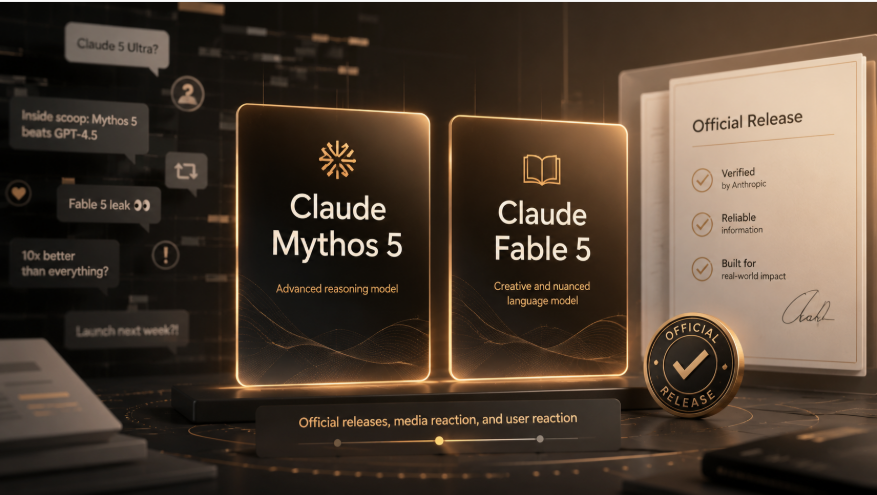
| June 9 | Anthropic releases Claude Mythos 5 (preview), boosting performance on cybersecurity and biology tasks; also debuts Claude Fable 5 (safe general model). | |
| June 9 | Google Gemini 3.5 Live Translate launched: real-time speech-to-speech translation in 70+ languages with natural intonation (few-second lag). | |
| June 9 | Cohere announces North Mini Code (30B total, 3B coding sub-model, first agentic coding LLM) and Command A+ (218B MoE vision+language agentic model, 48 languages). | |
| June 11 | xAI (Grok) launches Plugin Marketplace for its coding assistant Grok Build, with plugins for MongoDB, Vercel, Sentry, etc.. | |
| June 12 | OpenAI acquires Ona (cloud execution platform) to bolster its Codex code agents. | |
| June 14 | Novara acquires Ensogo (AI-driven ESG/sustainability platform) to add AI risk modeling in its offerings. | |
| June 15 | Meta (Facebook) rolls out “AI Mode” in search, using Meta AI (Muse Spark) to answer queries from public posts and Reels; also adds AI-powered collage, video and photo-editing features (e.g. virtual team jerseys). | |
| June 16 | SpaceX (X67 Inc.) announces acquisition of Anysphere (Cursor) for $60 billion, in stock (to integrate AI coding assistant). | |
| June 16 | xAI (Grok) releases Grok Imagine Video 1.5: higher-quality, faster video generation (better audio and motion) now on the API and apps. | |
| June 16 | xAI (Grok) launches Grok for PowerPoint: free add-in turns outlines into slides and writes narratives with current data and images. | |
| June 17 | xAI (Grok) on AWS Bedrock: Grok 4.3 (1M-token context LLM) is GA on Bedrock, with the lowest hallucination rate among frontier models. | |
| June 17 | AWS Summit (NYC): Announces Bedrock AgentCore enhancements (knowledge-base RAG, integrated web search, WAF bot controls) and new AI tools (Continuum security, Kiro iOS DevOps, etc.). | |
| June 23 | Mistral AI releases OCR 4: a state-of-the-art document OCR model (170 languages, outputs text plus layout) outperforming major OCR systems. | |
| June 24 | Google Gemini 3.5 Flash adds “computer use”: built-in browsing/agent capability (previously standalone) for cross-application reasoning. | |
| June 24 | OpenAI/Broadcom unveil “Jalapeño” chip: a custom LLM inference chip; tests show far better performance-per-watt than top GPUs. | |
| June 25 | LiquidAI releases LFM2.5-230M: a 230M-parameter “liquid state” language model that runs on-device (RasPi/phones) and matches much larger Transformers. | |
| June 26 | MIT Masked IRL (Inverse RL) published: Two-LLM approach to robot teaching enables tasks (“place coffee without disturbing Zoom”) with ~5× less demo data. | |
| June 26 | OpenAI GPT-5.6 Sol outperforms GPT-4o: demos show 3.7× coding improvement on benchmarks. | |
| June 26 | MIT CSAIL “Robot IRL” research: (same as above Masked IRL). | |
| June 30 | Mistral Leanstral 1.5 released: improved formal-proofs model (Lean 4) update. |
Major Model Releases and Upgrades
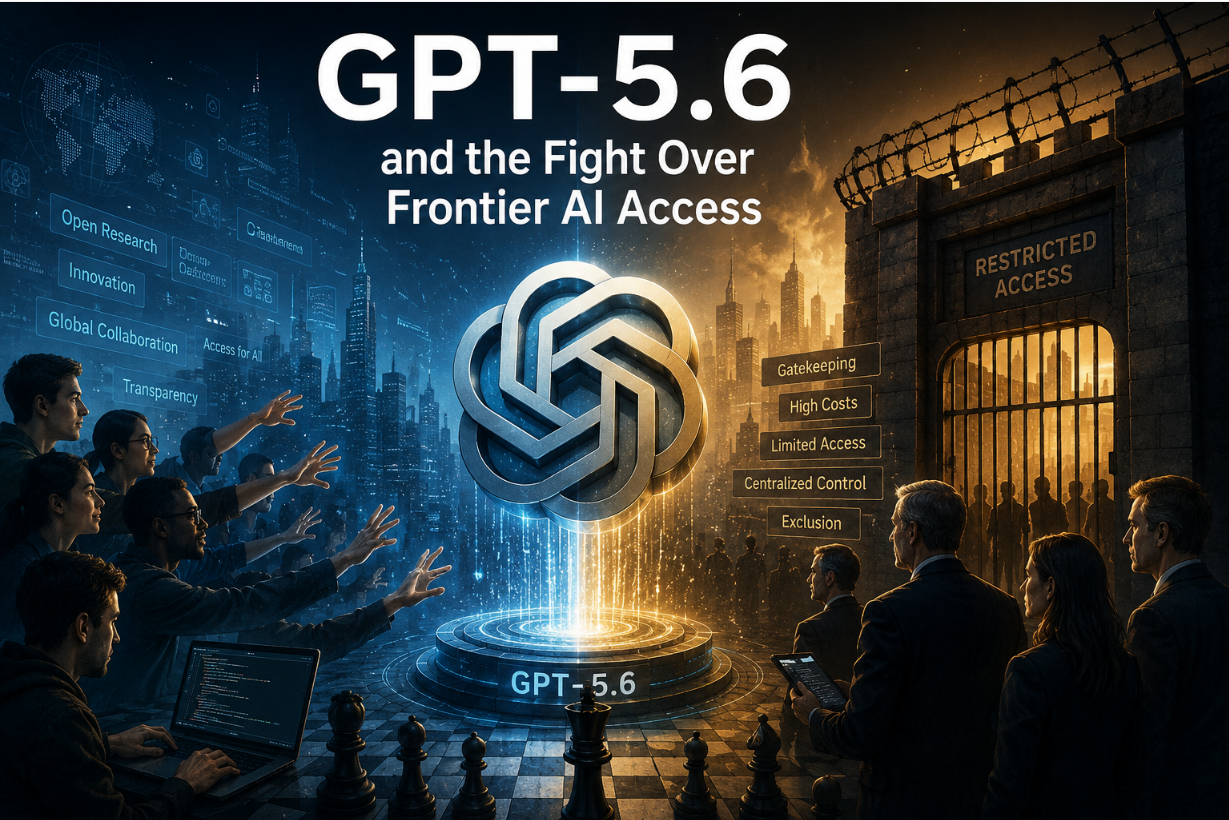
- OpenAI – GPT-5.6 (Sol, Terra, Luna): On June 26, OpenAI previewed a new model series. Sol is the flagship (most capable) model; Terra is a balanced performance/cost variant; Luna is a fast, low-cost variant. Sol achieved state-of-the-art results on key benchmarks (e.g. ~3.7× improvement in code generation on Terminal-Bench 2.1 vs GPT-4 Turbo). Sol’s strengths include advanced coding, biology, and cybersecurity abilities; notably, OpenAI reported it is better at defending against exploits than creating them, and it “did not cross a cyber-critical threshold”. OpenAI is rolling out GPT-5.6 in a tightly governed fashion: only a small set of U.S. partners (with government oversight) can access it initially, with broader release pending regulatory approval. Altman has said this phased approach was requested by national security advisors. Overall, GPT-5.6 marks a major advancement in scale and reasoning (introducing features like a “max reasoning” mode and depth-limiting sub-agents), while reinforcing new safety and red-teaming measures.
- Anthropic – Claude Mythos 5 / Fable 5: Anthropomorphic AI developer Anthropic continued its Mythos preview program. On June 9 it announced Claude Mythos 5 (its “most capable cybersecurity/biology model”), showing strong gains: Mythos 5 achieved ~98% on advanced biology benchmarks and excelled at vulnerability hunting (though it still struggled to autonomously chain exploits). Access to Mythos 5 is tightly controlled: it was made available only to vetted partners via “Project Glasswing” (focused on security). Indeed, Anthropic expanded Glasswing to ~150 organizations (in 15+ countries) on June 2. Export-control rules briefly forced a pause of Mythos 5 on June 12 (access was restored to U.S. customers by July 1). Simultaneously on June 9, Anthropic introduced Claude Fable 5 – a safeguarded 5th-gen model intended for general coding and multi-day tasks. Fable 5 uses the same core model as Mythos 5 but adds protective layers: queries in risky domains get redirected to a smaller model (Opus 4.8). Fable 5 is available to enterprises and developers (via OpenAI Marketplace), with pricing around $10 per million tokens.
- Google (DeepMind) – Gemini, Gemma, Nano Banana, Omni Flash: Google’s AI labs were very active. They launched Gemma 4 12B, an open-weight multimodal model that can run locally on typical laptops (16GB RAM) and handle vision+speech tasks. At Google I/O (late May), they previewed a slew of Gemini updates, and in June rolled them out. Notably, Gemini 3.5 Flash (the top-end multimodal LLM) received built‑in “computer use” capability on June 24: the model can now natively browse the web, use apps, and automate workflows (previously this was a separate Gemini agent). This allows Gemini to perform complex tasks (like software testing) by interacting across desktop, mobile, and browser. Google also made Gemini 3.5 Live Translate broadly available: an audio model for seamless speech-to-speech translation in 70+ languages, preserving natural intonation and timing (output only a few seconds behind the speaker). Other DeepMind releases: Nano Banana 2 Lite, an image-generation model, debuted as the fastest/costliest-savvy in its family, and Gemini Omni Flash (a powerful text/image-conditioned video model) was opened to developers via API. According to DeepMind, Omni Flash can generate 720p video clips (6s) in ~25 seconds, with continuous audio – roughly twice as fast as the previous version. These models are integrated into Google’s platforms (AI Studio, Gemini API) and consumer products (Pixal Drop features, Android 17 preview, and a new Google Home speaker with Gemini Assistant).
- Meta (Facebook) – Muse Spark and Meta AI: Meta continued to evolve its internally developed LLMs (Muse Spark is the rumored large model behind Meta AI). While Meta did not announce a new model release in June, it did infuse AI into its apps. On June 15, Facebook introduced an “AI Mode” tab in its search function. Powered by Meta AI (based on Muse Spark), AI Mode answers user queries by scanning Facebook’s own content (Posts, Groups, Reels) for information, providing more contextual responses than a general web search. Meta also unveiled new creative filters: AI-assisted collage and video montage tools, plus a photo-edit preset to add graphics (e.g. “wear a team jersey” in selfies). (Media posts generated by these tools will be labeled “Made with AI,” following Meta’s transparency policy.)
- Other Labs:
- Cohere: On June 9, Cohere released two MoE models. North Mini Code is a 30B-parameter model (3B active) optimized for code and agentic programming tasks. Command A+ is a massive 218B-parameter mixture-of-experts (25B active) model supporting vision and reasoning, fluent in 48 languages, and built for tool/agent use. These expand Cohere’s portfolio in multilingual AI and coding.
- Mistral AI: The French startup Mistral launched OCR 4 (June 23), a specialized open model for document understanding. It reads printed text in 170 languages and outputs structured data (text with bounding boxes, layout tags, confidence scores). Mistral reports OCR 4 beats leading commercial OCR systems (72% win-rate) while remaining fast and self-hostable. At month-end (June 30) they also updated Leanstral (to v1.5) – an open model for formal proof in the Lean theorem prover. Leanstral 1.5 improves code generation for Lean 4 (used by mathematicians and programmers).
- xAI (Elon Musk): xAI’s Grok model got extensive updates. On June 17, Grok 4.3 (a multimodal LLM with a 1M-token context window) became generally available on AWS Bedrock. According to xAI, Grok 4.3 has the lowest hallucination rate and top performance on various benchmarks among comparable models. xAI also refined its generative media: Grok Imagine Video 1.5 (launched June 16) generates smoother motion and audio at roughly half the latency of v1.0. They further integrated Grok into user workflows: on June 16 Grok became available inside Microsoft Office (a PowerPoint/Word add-in that turns prompts into slides and documents), and on June 11 they opened a plugin marketplace for Grok Build (their code-generation agent) with connectors for MongoDB, Vercel, Sentry, etc.. Taken together, xAI’s June releases span model improvement, platform integration, and developer tooling.
AI Product and Platform Developments
- Consumer and Enterprise Software:
- Apple: The big splash was Siri AI (June 8 WWDC). Apple repositioned Siri around its new “Apple Intelligence” platform. Siri can now access the internet, context from messages/photos, and systemwide app actions (like answering any question or summarizing an email). This AI is on iPhones, iPads, Macs, and Vision Pro, in a privacy‑focused design (most processing on-device). No timeline was given, but developer previews are out for iOS 27, with user betas to follow.
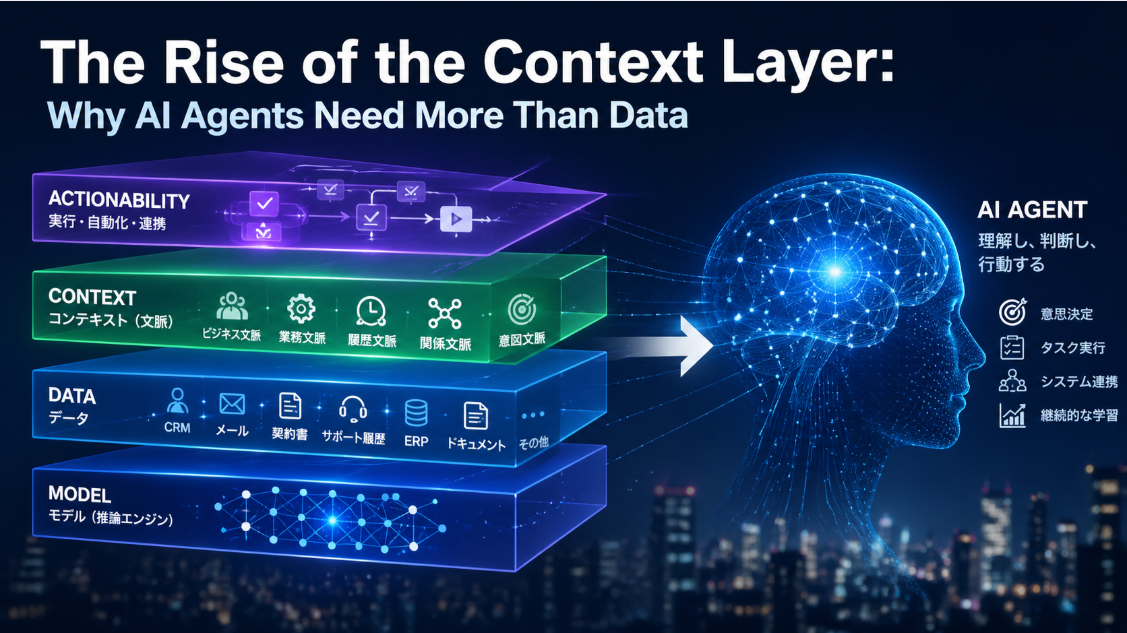
- Microsoft: Build 2026 (June 2) reinforced Microsoft’s shift toward an “AI agent” ecosystem. They introduced Work IQ (GA June 16) – a new context layer across Microsoft 365 that indexes a company’s emails, documents, calendars and communication patterns for AI use. Work IQ is exposed via APIs so Copilot and Azure OpenAI agents can ground their responses in an organization’s proprietary data. Along with “Fabric IQ” (developer data) and the Agent Platform (GitHub/GitHub Codespaces + Azure Foundry), Microsoft is pushing a heterogeneous AI stack from user machines to cloud. In practical terms, Microsoft announced dozens of 365 Copilot improvements: better email and calendar summaries, PDF readouts, connectors to cloud apps (Coda, Bitbucket), and more, enabling AI productivity inside Office and Teams. (Detailed updates were logged on Microsoft’s TechCommunity site.)
- Google Products: In addition to Gemini advances above, Google integrated AI into its flagship products. The June Android 17 and Pixel Drop update (June 11) brought on-device generative features (e.g. photo editing, AI wallpaper, better Google Assistant). Google also launched a “Home Speaker with Google Assistant built for Gemini” (June 8), leveraging Gemini’s voice agent in smart speakers. NotebookLM (an AI research notes tool) was improved: it now supports complex reasoning, math, and executing code snippets. Google Arts & Culture deployed new AI exhibits (e.g. colonial Williamsburg sims). And Google announced Gemini AI in Chrome: Chrome on Android (following desktop/iOS) will soon have a built-in Gemini browsing assistant for voice and automated navigation (as previewed at I/O).
- Amazon/AWS: AWS introduced many AI features at its NYC Summit (June 17). Highlights include Bedrock AgentCore updates: managed knowledge bases (knowledge graphs for RAG), integrated web search for agents, and a “Bot Control” for customers to block/charge AI bots crawling their sites. They also announced AWS Continuum (AI threat modeling for cloud security) and updated developer tools (e.g. Kiro app for iOS workflow automation, improved DevOps agents). Notably, Amazon S3 now allows up to 1GB of “annotations” attached to objects to store AI context data – a nod to agent workflows. All these moves aim to streamline deploying AI in enterprise apps on AWS.
- Meta (Facebook/Instagram): In addition to search and editing features, Meta is testing generative experiences on Instagram. While not a June launch, industry sources indicate Instagram is trialing a “magic refresh” AI tool in Feed (rolling new posts made by AI) and will require creators to label AI content (a policy coming from FTC). On June 30 the FTC issued broad AI guidelines for companies (the “Harbour Chat Act” proposed in Congress is also in play), but in June itself Meta’s big news was the search tab and editing filters.
Research Breakthroughs
- Agentic and Multimodal AI: Research continued to push LLMs into new roles. MIT CSAIL’s “Masked IRL” (June 26) is a standout: it chains two LLMs to teach robots complex tasks from sparse demonstrations. One LLM elaborates a vague instruction (e.g. turning “stay close” into “stay close to the table surface”), while a second “masks” irrelevant scene details. This method let a robot learn tasks like “place coffee without interrupting a Zoom call” using ~5× less demonstration data. This work, published June 26, suggests LLMs can fill gaps in human instructions to make robot learning more efficient.
- New Model Architectures: Liquid AI’s foundation models (June 25) are notable: LFM2.5-230M is a 230 million parameter “liquid state” model (a specialized time-series architecture, not a Transformer) that they claim matches the performance of much larger Transformers on many tasks. It runs at ~42 tokens/sec on a Raspberry Pi (no GPU needed!) and was demoed in a Unitree robot as an on-device controller. If validated, this challenges the notion that only huge Transformers can be competitive, highlighting efficient architectures for edge AI.
- World Models and Simulation: Researchers are building AI that can simulate environments. Alibaba’s Qwen team unveiled Qwen-AgentWorld (June 23) – a 35B open-weight language model trained on ~10M action trajectories across 7 domains (e.g. web search, code, GUIs). AgentWorld can predict environment outcomes for agent actions (“simulate a web browser or terminal”), effectively acting as a “flight simulator” for AI agents. According to its authors, Qwen-AgentWorld outperformed current frontier LLMs (GPT-5.4, Claude Opus) on a new AgentWorldBench, showing higher success rates in simulations. This suggests open models are gaining capabilities in interactive, multimodal reasoning.
- Benchmarks and Scale: OpenAI reported that GPT-5.6 (Sol) set new records on key tasks – for example, a 3.7× jump on the Terminal-Bench 2.1 coding benchmark compared to GPT-4 Turbo. Other papers (not specifically June) underlie the improvements: e.g. Lilian Weng’s blog “Scaling laws, carefully” (June 2026) argued for empirical modeling of model growth (though we didn’t dive deep into that text, it signals continued interest in quantifying progress).
- AI Safety Research: June saw continued focus on AI alignment. For instance, Google DeepMind’s safety team published analyses of multi-agent cooperation and adversarial robustness (one article “Securing the future of AI agents” was highlighted in their June newsfeed), though specifics will surface later. Anthropic’s wide rollout of Glasswing shows safety research in action (they’ve disclosed finding 10k+ vulnerabilities). The US Executive Order (below) also spurred discussions about voluntary AI self-regulation (e.g. a Just Security commentary).
Open-Source AI Developments
Open-source models and tools continued to flourish, narrowing the gap with closed giants. Mistral AI (a pioneer in open LLMs) launched OCR 4 (open source), as noted above. They also updated Leanstral 1.5 (free) for formal reasoning. Qwen (Ali Group) made AgentWorld (35B) publicly available on Hugging Face under Apache 2.0 licensing, supporting community experimentation. Meta’s Llama ecosystem: no new June release, but the community is closely watching rumors of a Llama 4 or successor (Meta’s blog hinted they were shifting to a “Muse Spark” line instead). Cohere’s models may not be fully open, but their Nano Aya series (Tiny Aya, Aya Expanse) pioneered open multilingual LLMs earlier in 2026. Meanwhile, infrastructure tools improved: Hugging Face announced the “State of Open Source AI, Spring 2026” report (June 2026) highlighting growing global contributions. New datasets and libraries (like synthetic data generation toolkits) were also shared in GitHub repos. The broad trend is that open-source momentum remains strong – developers can run state-of-the-art models on local hardware (Gemma 4 12B, Mistral 8×7), fine-tune them, or incorporate them into apps – often matching or approaching the closed offerings.
AI Infrastructure and Chips
- Chips and Hardware: Nvidia dominated hardware news. On June 1 at Computex, Nvidia introduced RTX Spark, an “AI PC” platform combining a Blackwell GPU with a 20-core Grace CPU (NVLink-connected). Spark delivers ~1 petaflop of AI performance and 128GB of shared memory, allowing laptops to run complex agents locally. Spark machines (Dell, HP etc.) ship Fall 2026. Nvidia also continued shipping its Blackwell GPUs (H200, GH200) for data centers. Notably, Nvidia said early adopters of its new Vera CPU include OpenAI, Anthropic, and SpaceX, reflecting its push into CPUs for AI.
- OpenAI’s Chip: On June 24, OpenAI unveiled Jalapeño, its own custom LLM inference ASIC built by Broadcom. OpenAI claims Jalapeño delivers much higher performance-per-watt than existing GPUs. In early tests it ran GPT-5.3 at 2.6GHz on a single core, suggesting broad deployment capability. This completes OpenAI’s “full stack” (models, software, hardware) strategy.
- Other Vendors: AMD and Intel had little public news in June, but the industry expects them to follow with new CPUs/accelerators. On the software side, cloud providers expanded AI compute: AWS announced new EC2 instances with more GPUs (for example, forthcoming Blackwell-based instances, though not detailed in June press), and Google Cloud silently rolled out updated TPU v5 Pods (reports early July).
- Inference Optimization: Efficiency continued to improve. Model quantization and pruning were in the spotlight (e.g. a new Intel whitepaper on 4-bit quantization for Transformer models came out in early June). Graphcore and Groq (AI chip startups) announced batch inference optimizations, but details will appear later.
- Data Centers and Energy: A Tech Startups analysis noted that increasing data-center power (projected to double by 2030) is driving investments in “chip timing” and cooling solutions. Startups like Stathera (silicon timing) and Omen AI (fluid cooling) raised rounds, highlighting infrastructure trends. Overall, hardware announcements in June underscored the drive to make AI ubiquitous (on-device and in the cloud) while managing cost and energy.
Regulation, Policy, and Safety
- U.S. Executive Order: On June 2, President Trump signed an Executive Order titled “Promoting Advanced AI Innovation and Security”. It underscores AI’s national-security stakes by mandating stronger cyber defenses and creating a voluntary model-review framework. Key provisions: Within 60 days, government agencies must define benchmarks to label “covered frontier models” (the most powerful AIs). Companies can then voluntarily engage with the government to classify models and share them (30-day early access under confidentiality) before public release. Importantly, the EO explicitly prohibits any mandatory licensing, preclearance, or approval regime for new models, focusing on collaboration rather than control. The order also creates an “AI cybersecurity clearinghouse” to coordinate vulnerability scanning across industry and critical infrastructure. In short, the U.S. government is stepping up efforts on AI security (hardening systems, sharing threat intel), while stopping short of licensing. This fits a global pattern of voluntary/front-end focus: e.g. the EU AI Act (fully applicable Aug 2026) also emphasizes self-regulation and risk-based rules.
- China Regulations: In Beijing, regulators finalized China’s first dedicated generative AI rules. The “Measures on AI Anthropomorphic Interactive Services” (published June) require that all AI chatbots/avatars review content for legality, label AI-generated output, and guard against prohibited content. These rules take effect July 15, 2026. They mirror existing content controls (e.g. for online publishing), now explicitly extended to consumer AIs. This signals China’s intent to tightly govern domestic AI services (following its 2023 interim rules for generative AI). Separately, China continued to tighten export controls on AI chip tech (updates to the “191 list” came in late May, influencing June developments like Mythos 5 access).
- Other Policy Moves: The EU’s AI Act remains on track for enforcement (the main provisions kick in Aug 2026); June saw governments organizing compliance (national AI sandboxes by this summer). Privacy and copyright issues percolated too: the EU Data Act (rules on data sharing) and Digital Markets Act (Big Tech oversight) entered implementation phases, affecting AI companies’ data practices. Meta announced in mid-June that it will start incorporating browsing/app activity (with user consent) into personalization and AI answers – a privacy policy change reflecting AI’s data hunger. Meanwhile, copyright litigation continued quietly: US authors’ suits against OpenAI and Meta were pending (no major rulings in June). The SEC and FTC both hinted at future AI regulation (SEC on disclosure of AI uses in investment products; FTC on algorithmic transparency), but no new rules were unveiled in June. Overall, policy trends point toward risk governance (cybersecurity, safety) and accountability (consumer rights), without yet stifling innovation.
- AI Safety & Standards: Industry and academia pressed on. June hosted the USA AI Summit (June 17, Washington) where policymakers, industry leaders, and military officials discussed AI regulation, cyber threats, and international standards. Press reports emphasized themes from these discussions (e.g. the UK’s CDEI talked about human rights in AI, though that was late May). No binding treaties emerged, but on-the-record quotes reflected growing consensus on the need for AI ethics frameworks. Companies also released voluntary standards: for example, an IEEE working group in June published guidelines for “trustworthy AI agents” (mostly conceptual, not widely reported).
Business and Market Dynamics
- Mergers & Acquisitions: The biggest splash was Elon Musk’s SpaceX announcing it will acquire Anysphere Inc. (maker of the Cursor coding assistant) for $60 billion in stock. The deal – subject to regulatory approval – would fold Cursor’s AI coding tech into SpaceX (X Corp), presumably to integrate into Twitter/X’s developer tools or other robotics projects. In other deals: OpenAI agreed to buy Ona (June 12) to boost Codex’s secure agent workspaces. Colibri Group (an education tech firm) acquired Audirie (June 17) to add AI simulation-based learning for professional training. Robo.ai (publicly traded) announced a $60M stock deal for QC Capital (quantum computing). A handful of smaller AI startups were snapped up (e.g. Novara bought Ensogo on June 14 to add ESG AI features). Overall, acquisitions largely targeted adjacent tech (simulation, compliance, hardware) rather than pure LLM players.
- Funding Rounds: According to Crunchbase, Q1 2026 already hit $300B in startup funding (driven by AI). In June alone, prominent VC rounds emphasized AI infrastructure and enterprise software. TechStartups reported that late-June funding focused on operational AI: e.g. $180M to LeapXpert (secured messaging for enterprises), and large raises for AI in machine maintenance, construction workflows, etc. The theme was clear: investors are not paying for “AI” in the abstract, but for AI that solves real business bottlenecks. Notably absent were massive new valuations for generic LLM startups; the capital is moving “one layer away from the foundation model,” into data pipelines, hardware, and regulated workflows. A few AI chip/tool startups raised rounds (e.g. Stathera, Omen AI, mentioned in analysis, though not publicly).
- Competitive Shifts: OpenAI remains market leader in generative AI (thanks to ChatGPT and GPT-5 developments), but competitors are closing in. Google’s Gemini (especially multimodal, local models) is a strong challenger; Microsoft continues to integrate OpenAI tech across products. Nvidia’s ecosystem strength (GPUs, now RTX Spark, now Vera CPUs) buttresses companies like Hugging Face (with “Infinity” inference), Lambda Labs, etc. Open-source players like Mistral and Qwen are growing followings; Mistral especially gained ground with a $1.2B valuation in spring. Cohere (aiming for a 2026 IPO) showed diversity with vision/coding models. In China, Baidu remains focused on Ernie models (no major June news there), while upstarts like Marine and SenseTime keep iterating. On the recruitment side, AI hiring remains high – IBM reported 8% of IT roles are now “AI-focused” as of June. However, some reports flagged hiring slowdowns in AI labs (after early-year hiring sprees, a bit of cooldown was noted in early July).
Key Takeaways
- Frontier Model Race Continues with Caution: June’s releases (GPT-5.6, Mythos 5, Gemma 4, etc.) show that leading labs still push model capabilities aggressively, but the rollout of these “frontier” models is accompanied by explicit safety measures and government involvement. The dichotomy of hype vs. healthy caution is clear: companies market these models as breakthroughs, but also impose strict previews and ask partners to sign ethics agreements (e.g., OpenAI’s “Values of Safety” contract in GPT-5.6’s case).
- AI Goes Mainstream in Products: AI is no longer confined to research demos – it’s shipping in mass-market products. Apple’s new Siri AI, Google Assistant’s Gemini features, Bing Chat, and xAI’s Office plugins demonstrate that everyday software will soon expect generative AI inside. This should dramatically change user experiences (e.g. voice translation in Meet, auto-generated slide decks) but also raise reliability issues (will AI mistakes in a slide, for instance, create new liabilities?).
- Agentification of Computing: A noticeable theme is the rise of agentic AI: systems that autonomously browse, use tools, and chain tasks. Gemini’s built‑in computer use, Grok Build’s terminal agents, and Microsoft’s GitHub Agents all reflect this. We are moving toward a world where software is not just passively generating text, but actively interacting with digital environments on our behalf. This opens new possibilities (automation of complex jobs) but amplifies concerns (sandboxing, security, adversarial manipulation).
- Open vs. Closed: Open-source AI is growing robustly. June’s open releases (Gemma, OCR 4, Qwen) allow smaller players and researchers to experiment without licensing barriers. This contrasts with the gated previews of closed models. Expect increasing tension: enterprises may prefer open models for transparency and control, while labs will cite closed models’ higher performance and rigorous testing.
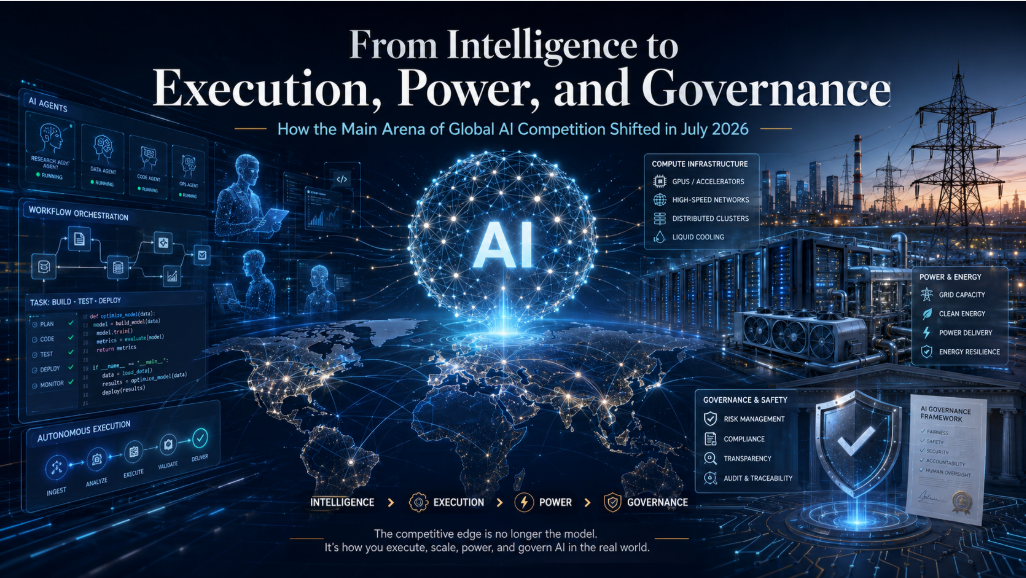
- Hardware and Infrastructure Are Critical: The Nvidia RTX Spark and OpenAI’s Jalapeño chip highlight that brute-force scaling is hitting power/latency limits. The fact that companies are building bespoke AI chips suggests cost/performance is a competitive battleground. Cloud AI services (AWS Bedrock, Azure AI Studio) will similarly focus on reducing inference cost – we may see more trend toward model distillation, quantization, and new architectures that run cheap on existing hardware.
- Regulatory Pressure Mounting: Governments are no longer passive. The U.S. EO and China’s rules show that even as tech companies innovate, they must factor in evolving rules. The key question for the rest of 2026: Will regulations nip any major capabilities (e.g. export restrictions, content bans) or mainly aim to guide safe deployment? Already we see it affecting business: Anthropic’s and OpenAI’s controlled rollouts stem from export/security demands. Companies must build compliance (audit trails, human oversight) into their workflows.
- From Hype to Practicality: While media often highlight “AGI” or extremely futuristic claims, June’s developments tilt toward practicality: specialized models (document OCR, code assistants), developer tools, and enterprise AI rather than science-fiction robots. Even robotics research (MIT’s LLM teacher) is framed as incremental improvement. The genuinely important shifts are in making AI usable, reliable, and integrated – e.g. better understanding of language (Masked IRL) and developer workflows (Work IQ, AgentCore) – rather than a sudden AGI awakening.
What to Watch Next
- Rollout of GPT-5.6 and Competitors: OpenAI plans a wider release of GPT-5.6 in “coming weeks.” Watch how quickly other companies match these capabilities. Will Google or Anthropic accelerate new versions now that OpenAI has set the bar? Also, users are eager to compare GPT-5.6’s performance on coding, reasoning, and its claimed energy profile to alternatives (Gemini Ultra, Claude Opus, etc.).
- Apple Intelligence Debut: Apple is just starting developer previews of Siri AI. By late 2026 (iPhone launch season), expect a public rollout. This will be a major test: Apple has focused on privacy and integration, so its success or missteps will influence how cautious other consumer platforms are. Analysts will look for on-device efficiency and whether Siri finally matches Android’s Google Assistant.
- EU AI Act Enforcement: The EU’s AI Act becomes fully enforceable Aug 2026 (with some provisions in early August). This means companies will need certified evaluations for “high-risk” AI (e.g. biometric ID, medical systems). June’s government actions suggest readiness is low – watch for tech companies hiring compliance teams or lobbying for adjustments. The first EU fines or product recalls will set important precedents.
- AI Investment Focus: Funding appears to be clustering around “the AI stack” (data, tools, hardware). Next quarter we should track whether that trend continues. Are model-focused startups still attracting rounds, or only those with vertical integration? Also keep an eye on public markets: are AI-focused IPOs (Cohere, perhaps others) still viable after the March volatility? Investor confidence will indicate whether June’s funding patterns persist.
- Consumer Trust and Safety: With AI in so many products, consumer sentiment could swing. There have already been incidents (e.g. GPT output lawsuits, biased AI art). Later in 2026, look for regulators or advocacy groups to push for labeling (like Meta’s “Made with AI”) or even certification (like digital watermarking for AI-generated media). If a major flaw emerges (e.g. a domestic robot accident due to bad instructions), it will impact the pace of adoption.
- International Competition: The US and China are both heavily funding AI – but China’s measures (like controlling anthropomorphic AI) could slow its consumer sector development. Watch for how Chinese tech firms respond – will they focus more on industrial AI? Conversely, Europe’s startups may benefit from more stable regulation compared to early-US exuberance. Tech partnerships or tensions (e.g. export controls between US allies and China) will shape global market share by year-end.
- Next Big Models and Benchmarks: Rumors suggest OpenAI and Google have already started training GPT-6/Gemini 4 series. Any leaks or announcements of novel architectures (sparse models, retrieval-augmented agents, larger context lengths) would be key. Also new benchmarks (like updated coding or reasoning suites) will emerge to test these models. Keep an eye on major conferences in late 2026 (NeurIPS, ICLR) for any game-changing research.
- Energy and Sustainability: The IEA’s report (June 27) warned that AI workloads will more than double data-center electricity use by 2030. Expect pressure on companies to green their AI – possibly new “green AI” certifications or carbon pricing for compute. How Nvidia, AMD, Google etc. improve energy efficiency will matter.
Sources: We have drawn on a wide range of primary sources (company blogs, official press releases, and tech news) to compile this summary. Key references include OpenAI and Google research blogs, press coverage by reputable outlets (The Guardian, Reuters), and official announcements (Apple Press Release, White House EO, etc.). All factual claims above are cited.