

Google Achieves Quantum Computing Milestone with “Willow” Quantum Chip

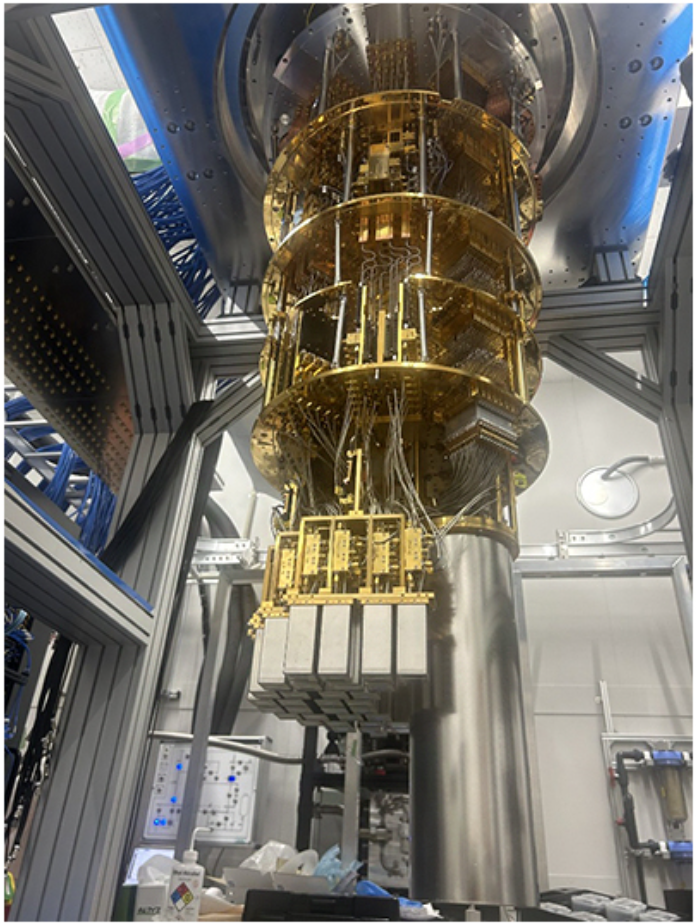
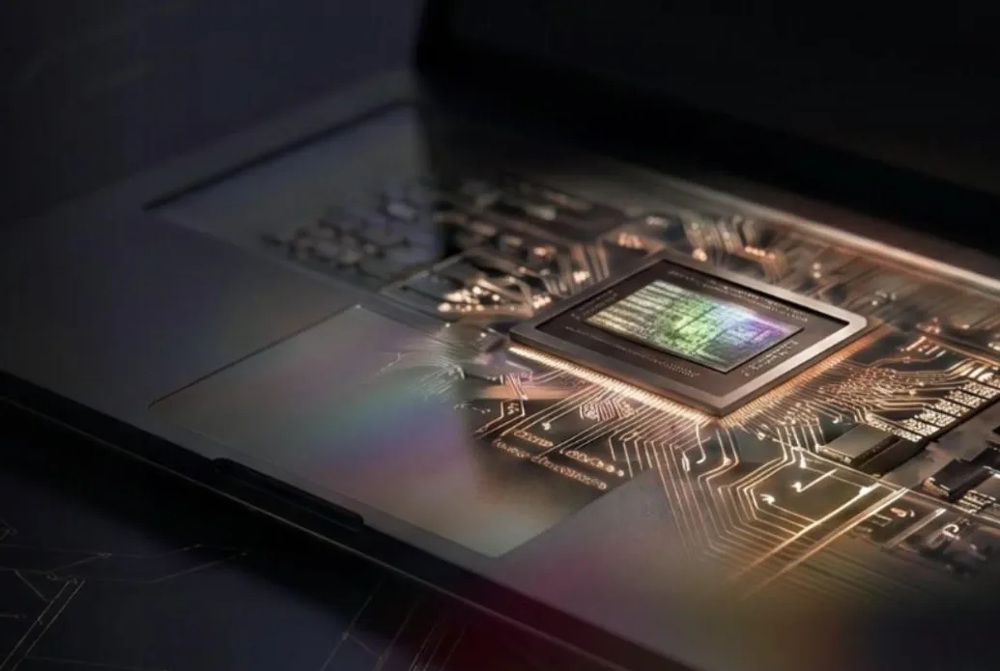
In a groundbreaking announcement on December 9, 2024, Google has unveiled its latest achievement in quantum computing: the “Willow” quantum chip. This advanced chip represents a significant leap forward, bringing us closer to the realization of practical quantum computing and its transformative potential for industries worldwide.

A Quantum Leap in Computing

Google’s Willow chip has demonstrated its ability to perform computations in under five minutes—tasks that would require classical supercomputers billions of years to complete. This incredible feat highlights the immense power of quantum computing and sets a new benchmark for what is achievable in the field.

Tackling Error Rates: A Key Breakthrough

One of the major challenges in quantum computing is error correction. Traditional quantum systems face increased error rates as the number of qubits grows, making scalability difficult. However, the Willow chip, equipped with 105 qubits, leverages advanced error-correction techniques that actually reduce error rates as qubit numbers increase. This innovation marks a pivotal step toward creating a fully functional, error-corrected quantum computer.

Roadmap to the Future

Willow is a milestone in Google’s six-step quantum computing roadmap, which aims to build a large-scale, error-corrected quantum computer capable of solving real-world problems. Sundar Pichai, CEO of Alphabet (Google’s parent company), emphasized the chip’s potential applications in fields such as:

  • Drug Discovery: Accelerating the identification of effective treatments and new medicines.
  • Fusion Energy: Advancing research toward clean and limitless energy sources.
  • Battery Design: Enabling the development of next-generation batteries with improved efficiency and capacity.

Collaboration with NVIDIA

To accelerate the development of its next-generation quantum devices, Google Quantum AI has partnered with NVIDIA. Using NVIDIA’s CUDA-Q platform and the Eos supercomputer, Google is simulating quantum device physics to address challenges such as noise and instability in quantum hardware. This collaboration underscores the importance of partnerships in pushing the boundaries of technology.

Market and Industry Impact

Following the announcement of Willow, Alphabet’s stock surged by over 5%, reaching its highest levels since July 2024. This uptick reflects growing investor confidence in Google’s ability to lead the quantum revolution and deliver on its promise of transformative computing solutions.

A Promising Horizon

The unveiling of the Willow chip is more than just a technological achievement; it’s a glimpse into a future where quantum computing solves problems once thought insurmountable. From revolutionizing industries to tackling global challenges, Google’s advancements bring us closer to realizing the full potential of quantum technology.

Related Posts

Google’s Quantum Chip Is REWRITING the Laws of Physics

In a monumental leap for technology and science, Google has unveiled its latest quantum computer chip, Willow, a breakthrough that is poised to redefine the future of computing and potentially our understanding of the universe itself. This isn’t science fiction…

Fujitsu–RIKEN 256-Qubit Superconducting Quantum Computer: A Comprehensive Analysis

Technological Advancements Scalable 3D Connection Structure Fujitsu and RIKEN’s 256-qubit superconducting quantum processor introduces a scalable three-dimensional (3D) connection structure to efficiently integrate more qubits without a complete redesign of the chip architecture. In practice, the design arranges repeating 4-qubit…

Leave a Reply

Your email address will not be published. Required fields are marked *

You Missed

Data Science and Buddhism: The Ugly Duckling Theorem and the Middle Way

Data Science and Buddhism: The Ugly Duckling Theorem and the Middle Way

Google’s Gemini 3: Launch and Early Reception

Google’s Gemini 3: Launch and Early Reception

AI Governance in Corporate AI Utilization: Frameworks and Best Practices

AI Governance in Corporate AI Utilization: Frameworks and Best Practices

AI Mentor and the Problem of Free Will

AI Mentor and the Problem of Free Will

The AI Bubble Collapse Is Not the The End — It Is the Beginning of Selection

The AI Bubble Collapse Is Not the The End — It Is the Beginning of Selection

Notable AI News Roundup: ChatGPT Atlas, Company Knowledge, Claude Code Web, Pet Cameo, Copilot 12 Features, NTT Tsuzumi 2 and 22 More Developments

Notable AI News Roundup: ChatGPT Atlas, Company Knowledge, Claude Code Web, Pet Cameo, Copilot 12 Features, NTT Tsuzumi 2 and 22 More Developments

KJ Method Resurfaces in AI Workslop Problem

KJ Method Resurfaces in AI Workslop Problem

AI Work Slop and the Productivity Paradox in Business

AI Work Slop and the Productivity Paradox in Business

OpenAI’s “Sora 2” and its impact on Japanese anime and video game copyrights

OpenAI’s “Sora 2” and its impact on Japanese anime and video game copyrights

Claude Sonnet 4.5: Technical Evolution and Practical Applications of Next-Generation AI

Claude Sonnet 4.5: Technical Evolution and Practical Applications of Next-Generation AI

Global AI Development Summary — September 2025

Global AI Development Summary — September 2025

Comparison : GPT-5-Codex V.S. Claude Code

Comparison : GPT-5-Codex V.S. Claude Code

【HRM】How a Tiny Hierarchical Reasoning Model Outperformed GPT-Scale Systems: A Clear Explanation of the Hierarchical Reasoning Model

【HRM】How a Tiny Hierarchical Reasoning Model Outperformed GPT-Scale Systems: A Clear Explanation of the Hierarchical Reasoning Model

GPT‑5‑Codex: OpenAI’s Agentic Coding Model

GPT‑5‑Codex: OpenAI’s Agentic Coding Model

AI Adoption Slowdown: Data Analysis and Implications

AI Adoption Slowdown: Data Analysis and Implications

Grokking in Large Language Models: Concepts, Models, and Applications

Grokking in Large Language Models: Concepts, Models, and Applications

AI Development — August 2025

AI Development — August 2025

Agent-Based Personal AI on Edge Devices (2025)

Agent-Based Personal AI on Edge Devices (2025)

Ambient AI and Ambient Intelligence: Current Trends and Future Outlook

Ambient AI and Ambient Intelligence: Current Trends and Future Outlook

Comparison of Auto-Coding Tools and Integration Patterns

Comparison of Auto-Coding Tools and Integration Patterns

Comparing the Coding Capabilities of OpenAI Codex vs GPT-5

Comparing the Coding Capabilities of OpenAI Codex vs GPT-5

Comprehensive Report: GPT-5 – Features, Announcements, Reviews, Reactions, and Impact

Comprehensive Report: GPT-5 – Features, Announcements, Reviews, Reactions, and Impact

July 2025 – AI Development Highlights

July 2025 – AI Development Highlights

ConceptMiner -Creativity Support System, Integrating qualitative and quantitative data to create a foundation for collaboration between humans and AI

ConceptMiner -Creativity Support System, Integrating qualitative and quantitative data to create a foundation for collaboration between humans and AI

ChatGPT Agent (Agent Mode) – Capabilities, Performance, and Security

ChatGPT Agent (Agent Mode) – Capabilities, Performance, and Security