
 Perplexity
1. Introduction
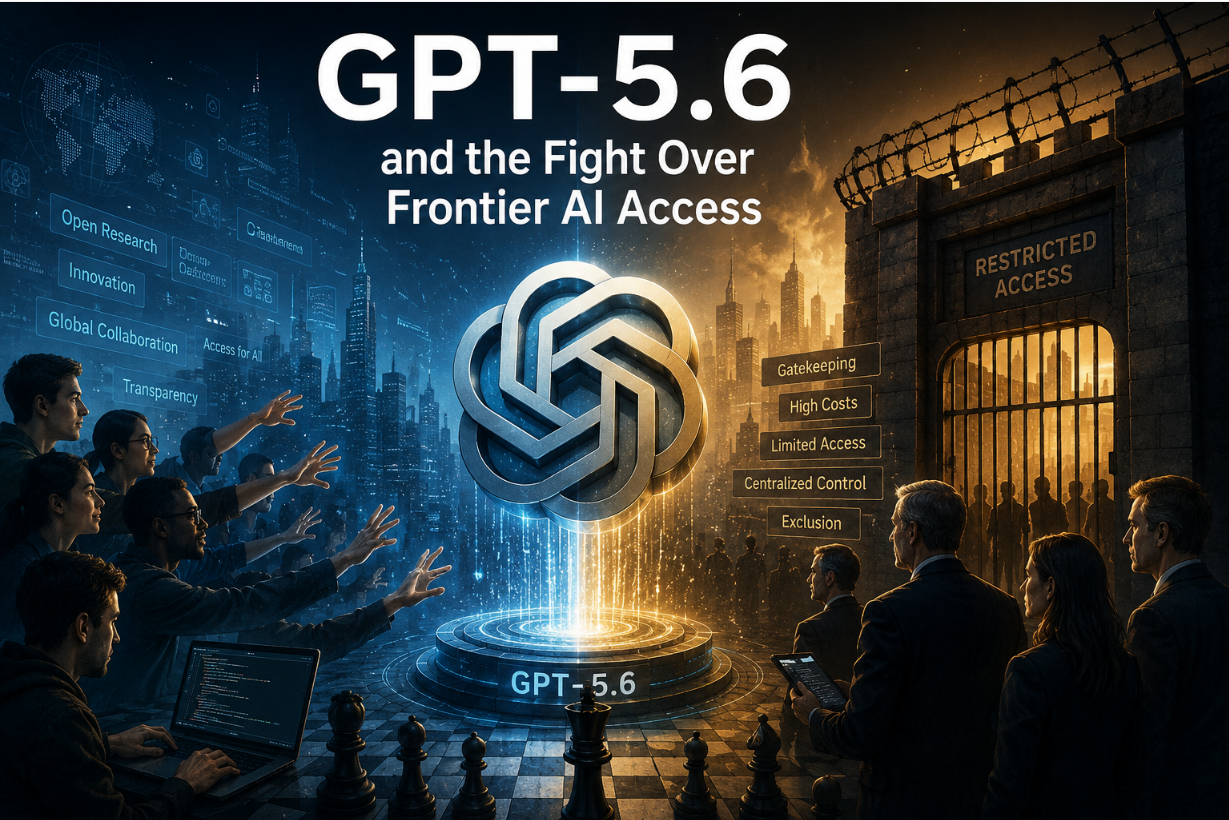
GPT-5, OpenAI’s latest large language model, was officially launched in August 2025. Marking a leap in artificial intelligence capabilities, GPT-5 powers ChatGPT and is being rapidly integrated into products and services across the tech industry. This report provides a well-sourced overview of new features, official roadmaps, expert evaluations, user feedback, industry responses, comparisons with predecessors and competitors, and the broader societal, ethical, and regulatory landscape.
2. New Features and Technological Advancements
Significant Upgrades in GPT-5:
- Advanced Reasoning & Accuracy: GPT-5 demonstrates “PhD-level” expertise in complex fields—programming, finance, science, and law—delivering more nuanced, accurate, and context-aware responses than ever before.
- Fewer Hallucinations: OpenAI reports a substantial reduction in hallucinated (fabricated) responses, with GPT-5 trained to recognize its limits and avoid unsupported speculation.
- New “Safe Completions”: Rather than just outright refusing risky prompts, GPT-5 offers high-level, non-dangerous responses, especially in “dual-use” domains (e.g., biology, cybersecurity), with transparent explanations when a full answer cannot be given.
- Enhanced Coding Abilities: Both OpenAI and expert reviewers note that GPT-5 is currently the most capable AI for coding—able to generate, debug, and explain entire software projects. Microsoft has already integrated it into Copilot and Visual Studio Code.
- Dynamic Personalities and User Controls: New settings allow users to adjust the model’s verbosity, choose creative “personalities,” and fine-tune output for their needs.
- Multimodal Expansion and Efficiency: GPT-5 is more efficient and resource-light, with even wider language support, improved multimodal understanding (text, code, etc.), and faster outputs—making it suitable for both enterprise and real-time consumer applications.
3. Official Statements and Industry Roadmaps
OpenAI’s Position:
- Universal Rollout: OpenAI has made GPT-5 available to all ChatGPT users, including the free tier, citing its superior performance and overall safety.
- Microsoft Partnership: Microsoft is embedding GPT-5 across its suite—including 365 Copilot, Azure AI, and GitHub Copilot—highlighting advances in reasoning and reliability.
- Safety and Transparency: OpenAI leaders emphasize new safety frameworks, including 5,000+ hours of comprehensive risk testing and improved transparency for refusals.
Model Variants:
OpenAI now offers GPT-5, GPT-5 Mini, and GPT-5 Nano via API, enabling flexible use based on complexity, cost, and latency.
4. Technical Evaluations and Expert Critiques
Expert Reviews:
- Coding and Problem Solving: Early expert hands-on testers describe GPT-5 as “unequivocally the best coding model in the world.” Its expanded context window and improved problem-solving allow for end-to-end software automation beyond previous capabilities.
- Reasoning and Safety: Security researchers and the Microsoft AI Red Team independently verified GPT-5’s stronger safety profile against prompt attacks (e.g., malware generation, misuse of information), though some remain skeptical of true “general intelligence” claims.
- Limitations Remain: Despite advancements, experts caution that GPT-5 still makes occasional reasoning errors and is not achieving artificial general intelligence (AGI). Some found it less creative in freeform tasks or slower for extremely large queries.
5. User and Developer Feedback
Key Strengths:
- Speed, Usefulness, and Utility: Most users note immediate gains in answer quality, relevance, and speed for both everyday and technical tasks.
- Better Refusals & Safety: Users report more meaningful feedback when GPT-5 can’t answer, with less frustrating refusals compared to GPT-4.
Weaknesses & Criticisms:
- Legacy Model Access: Some power users have complained about the loss of easy access to prior models (GPT-4, legacy) when using Plus or Team subscriptions.
- Cost/Latency Tradeoffs: For simple tasks, the full power of GPT-5 may introduce unnecessary latency or cost, which is why OpenAI and partners route to lighter models as needed.
6. Comparisons: GPT-5 vs. GPT-4 and Competitors
Against competitors:
GPT-5’s closest challengers are Google’s Gemini Ultra, Anthropic’s Claude-3 Code, and Elon Musk’s Grok, each touting PhD-level reasoning. However, OpenAI is viewed as regaining the leadership with this release, particularly in coding, safety, and multimodal versatility.
7. Industry, Media, and International Reactions
- Industry Adoption: Major platforms (Microsoft, Box, enterprise SaaS) began using GPT-5 on launch day, describing it as a “game changer” for reasoning and automation in business.
- Media Reports: International news agencies highlight OpenAI’s return to top form, but also note that AGI—“true general intelligence”—remains elusive. Some prediction markets now view Google as more likely to win long-term AI leadership, suggesting competition is far from over.
- Economic and Societal Analysis: Analysts and researchers forecast that GPT-5 will accelerate productivity gains, enable automation of advanced knowledge work, and drive demand for new roles (e.g., “AI supervisor,” “prompt engineer”). At the same time, they warn of job displacement and the importance of broad, equitable access to AI benefits.
8. Social, Economic, Security, and Ethical Considerations
- Societal Impact: Increased automation is expected in fields ranging from legal research and finance to creative industries and customer support. While this boosts productivity, it can also displace traditional roles—requiring adaptation by workers, educators, and policymakers.
- Security and Risk Management: GPT-5’s “safe completion” paradigm represents a step forward in output-based AI safety, handling ambiguous or dual-use queries with more nuance. However, ongoing adversarial testing is needed to address evolving misuse and risk scenarios.
- Ethics and Regulation: As the model approaches “human-level proficiency” on some tasks, calls for updated regulation, usage policies, and transparent auditing intensify. OpenAI reiterates its policy against weaponization or self-harm applications, with additional guardrails added at the API level.
9. Conclusion
GPT-5 is a landmark AI release, setting new benchmarks in both safety and problem-solving—especially for coding and knowledge-intensive domains. It brings tangible improvements for both regular users and enterprise productivity, while sparking renewed debate about automation, safety, and adaptation in the age of AI. Though competition remains fierce and some limitations persist, OpenAI’s new model pushes the frontier forward, both technically and socially.
 ChatGPT