
 Gemini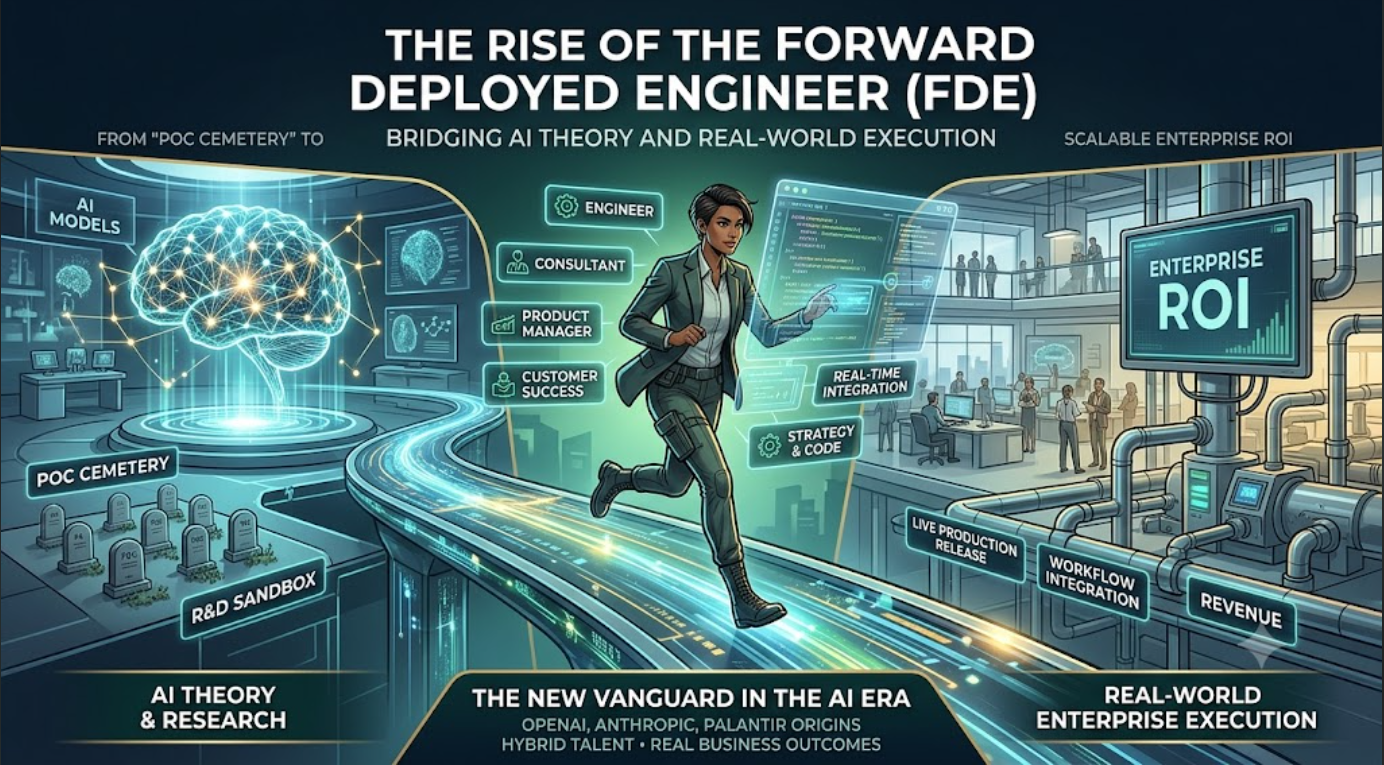
I. Introduction: The New Vanguard of the AI Revolution
Moving Beyond the Model: The Birth of the FDE
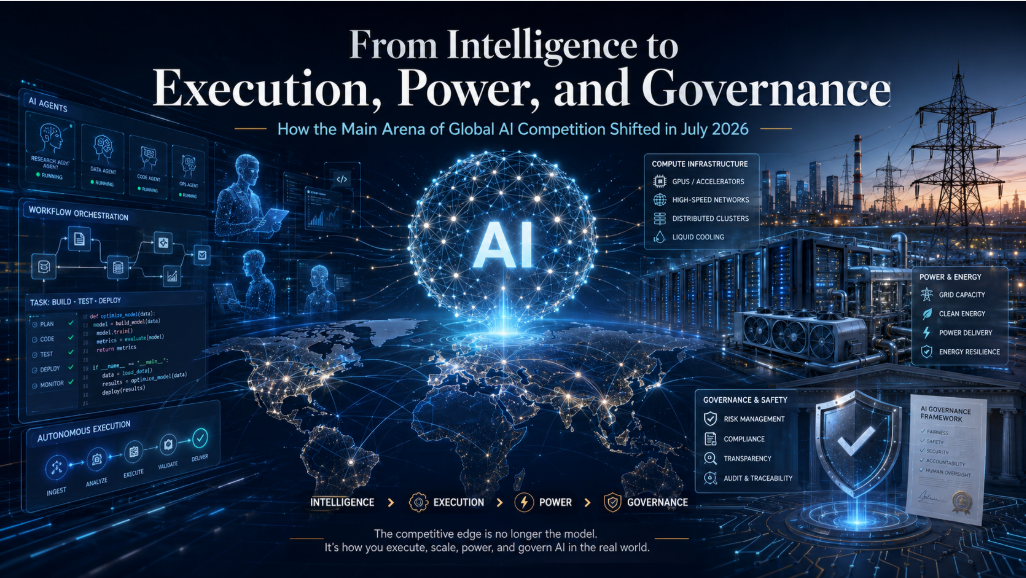
The initial gold rush of the generative AI era focused heavily on scale. Tech giants and well-funded startups raced to build models with more parameters, larger context windows, and unprecedented benchmarks. However, as the dust settles, the industry is confronting a sobering reality: building a powerful AI model is no longer the ultimate competitive advantage. The true bottleneck to enterprise AI growth is deployment.
This operational bottleneck has given rise to an elite class of tech talent operating at the intersection of deep technical wizardry and boots-on-the-ground business execution: The Forward Deployed Engineer (FDE).
From Military Frontlines to Palantir and OpenAI
The term “forward deployed” borrows from military nomenclature, referring to specialists sent directly to the front lines to execute critical missions. In the technology sector, the model was pioneered by Palantir, which famously sent engineers to live alongside defense intelligence officers and corporate executives to customize data systems on the fly.
Today, as organizations scramble to integrate complex Large Language Models (LLMs) into legacy infrastructures, companies like OpenAI, Anthropic, and top-tier AI consultancies are aggressively scaling their own FDE cohorts. The FDE is not a traditional software engineer who sits safely behind a corporate firewall; they are tech’s tactical vanguard, dispatched directly into the chaotic ecosystems of clients to turn raw algorithmic potential into operational reality.
II. The Crisis Driving the Boom: Why Tech’s Elite Are Leaving Headquarters
Surviving the “PoC Cemetery”
Corporate America is littered with the ghosts of forgotten AI pilots. Organizations eagerly fund shiny experimental use cases, only to watch them quietly wither away. This phenomenon—the “Proof-of-Concept (PoC) Cemetery”—occurs because moving an AI application from a controlled sandbox to a production-grade enterprise environment introduces friction that standard software development cycles are ill-equipped to handle.
[ AI Research & Models ] ──> [ The PoC Cemetery ] <── [ Messy Enterprise Reality ]
                                     │
                         (Enter the FDE Pipeline)
                                     │
                                     ▼
                        [ Tangible Corporate Profit ]
The Infrastructure Mismatch: Why Beautiful Models Fail in Messy Environments
The disconnect lies in the environment. A model performs beautifully when fed clean, curated data in a isolated Jupyter notebook. But drop that same model into a fortune 500 enterprise, and it suddenly faces:
- Fragmented legacy data silos (spanning decades of COBOL, chaotic SQL databases, and unstructured PDFs).
- Stringent, unyielding data governance and compliance mandates.
- Unpredictable user behavior and latency constraints.
When billions of dollars in AI investments stall out due to these real-world mismatches, standard engineering teams at headquarters remain disconnected from the client’s pain. FDEs serve as the vital operational link, diagnosing infrastructure friction in real time and transforming speculative AI hype into tangible, bottom-line corporate profits.
III. Inside the Mind of a Corporate Chameleon
Code, Capital, and Clients: The Hybrid FDE Blueprint
The effective Forward Deployed Engineer possesses a rare, highly valued psychological and technical profile. They are corporate chameleons, capable of talking API architecture with infrastructure leads in the morning, translating token-optimization strategies to data scientists over lunch, and quantifying business ROI for the CFO by the afternoon.
           ┌────────────────────────────────────────┐
           │          THE HYBRID FDE BLUEPRINT      │
           └───────────────────┬────────────────────┘
                               │
         ┌─────────────────────┼─────────────────────┐
         ▼                     ▼                     ▼
   [ Hard Coding ]     [ Capital & ROI ]     [ Client Diplomacy ]
  Bespoke pipelines,    Quantifying impact    Managing executive
  system integration,    for stakeholders     expectations, driving
   & latency tuning       and executive leadership    workflow adoption
Why Standard Software Engineering and IT Consulting Fall Short
Traditional tech roles generally operate on opposite sides of a widening chasm:
The Standard Software Engineer (SWE): Masterful at writing clean, scalable, abstract code. However, they are typically isolated from the customer, optimized for internal roadmaps, and lack the business empathy required to navigate messy corporate politics.
The IT Consultant: Highly skilled at building slide decks, gathering requirements, and delivering high-level strategies. However, they cannot write bespoke code to fix a broken data pipeline at 2:00 AM.
The FDE renders this division obsolete. They don’t just hand over a strategy deck or point to a generic API documentation block. They sit on-site, write customized integration code, refactor data pipelines, and stay in the trenches until the solution drives measurable workflow adoption.
IV. Navigating the FDE Career Path: Skills, Pivots, and Jaw-Dropping Valuations
Blueprint of an Elite FDE: Hard Coding Meets Soft Diplomacy
Breaking into this elite tier requires a dual-engine skillset. It is a demanding career path that rewards versatile thinkers who thrive under pressure.
- The Technical Stack: Deep proficiency in full-stack engineering, system architecture, data engineering (Spark, Kafka), containerization (Kubernetes, Docker), and modern AI orchestration tools (LangChain, vector databases, and fine-tuning frameworks).
- The Behavioral Stack: Exceptional stakeholder management, active listening, rapid problem-solving, and a high tolerance for ambiguity.
For traditional backend engineers, transitioning to an FDE role means stepping away from predictable sprint cycles and building a muscle for client diplomacy. For technical product managers or solutions architects, it requires deepening their hands-on coding capabilities.
The Half-Million Dollar Compensation Reality
Because finding individuals who excel at both deep engineering and executive-level communication is akin to finding a needle in a haystack, the market has responded with astonishing valuations.
A severe talent-supply mismatch has made the FDE role one of the highest-paying positions in the global tech ecosystem. Total compensation packages for elite FDEs at premier AI labs and enterprise software firms frequently scale past $500,000, heavily weighted with lucrative equity structures. For engineers possessing genuine business empathy, or for technical architects who crave hands-on execution, forward deployment has become the ultimate career destination.
V. Conclusion & Call to Action
The Strategic Imperative for Modern Enterprise
The trajectory of the AI race is clear. Winning does not depend on purchasing the most expensive API tokens or accumulating the highest number of theoretical models. The true victors will be organizations that possess the execution capability to deeply embed intelligence into their core, day-to-day operations. As theory gives way to execution, the Forward Deployed Engineer is no longer just a luxury asset—they are a strategic imperative.
For Business & DX Leaders
Stop funding isolated AI experiments that die in sandboxes. If you are ready to scale production-grade AI that transforms your operations from the ground up, contact our enterprise deployment team today to learn how our Forward Deployed specialists can bridge your execution gap.
For Tech Professionals
Are you ready to step out from behind the back-room codebase and drive multi-million dollar business outcomes on the front lines? Explore our open Forward Deployed Engineering roles and pivot into the most coveted career track in modern technology.
 ChatGPT
 tada@aicritique.org