
 Gemini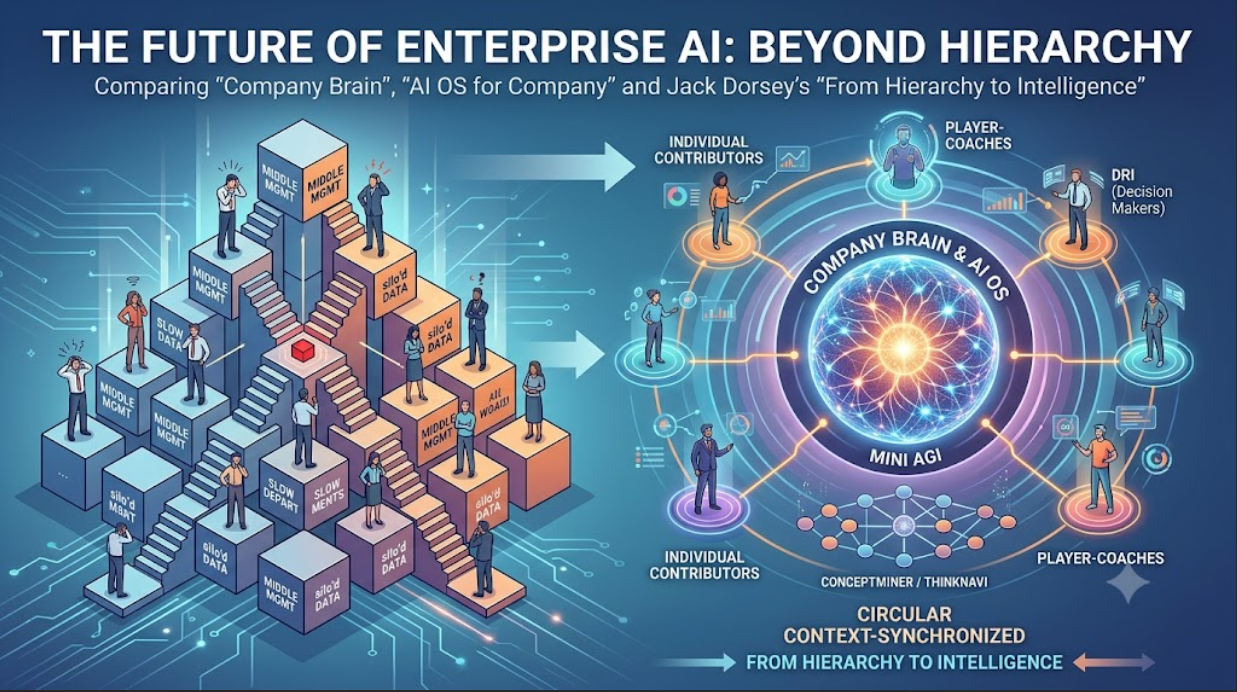
The evolution of AI is no longer just about boosting individual productivity. We are witnessing a fundamental redesign of the very architecture of the enterprise.
Tech leaders and management theorists in Silicon Valley and beyond are actively debating three revolutionary concepts. Together, they signal a profound transformation in how organizations function, collaborate, and make decisions.
1. Three Core Concepts Shaping Modern Enterprise AI
These three emerging concepts represent breakthroughs in enterprise memory, execution, and structure.
Company Brain: Synchronizing Collective Cognition
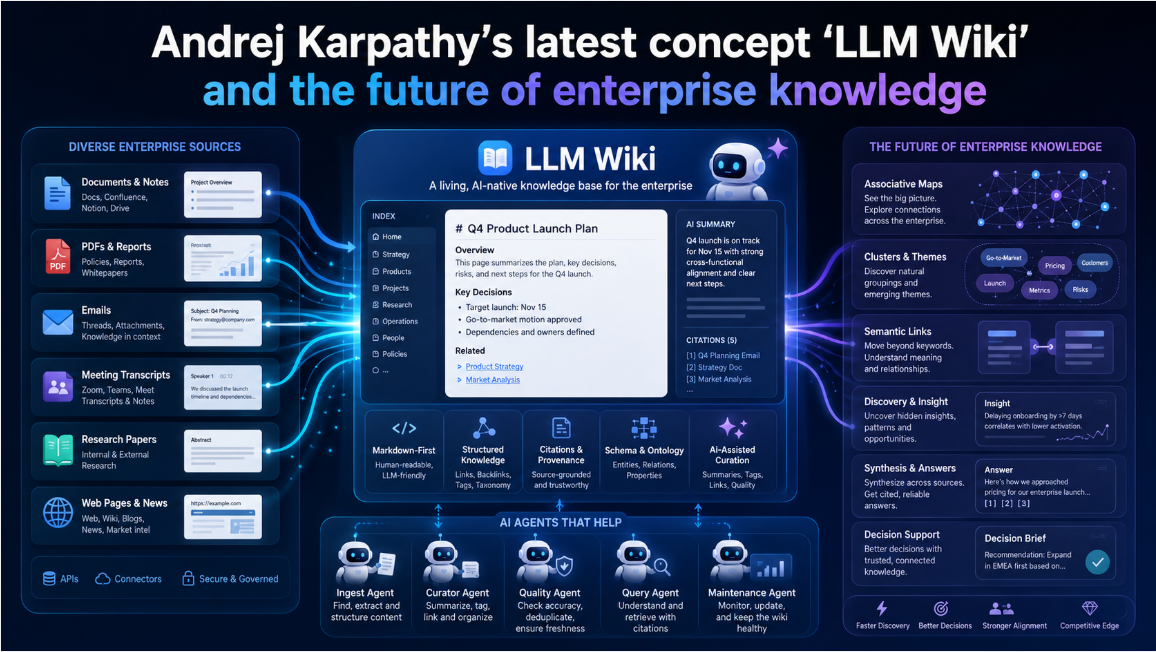
The “Company Brain” is not just an AI-powered search tool or a highly advanced internal wiki. It is a central nervous system that aggregates and integrates dynamic data from every corner of an organization in real time.
- Integrating Dynamic Context: Traditional databases are static repositories where humans must actively go to find files. The Company Brain, however, continuously absorbs the “blood flow” of the company—daily Slack or Teams chats, Zoom meeting recordings, GitHub commit logs, Salesforce customer data, and financial trends.
- The “Right Hand Knows What the Left Is Doing” State: This creates total synchronization of organizational cognition. For example, a subtle piece of customer feedback received by a sales rep instantly connects to the product development team’s roadmap context and is simultaneously shared as background for executive decision-making.
AI OS for Company: The Infrastructure for Autonomous Execution
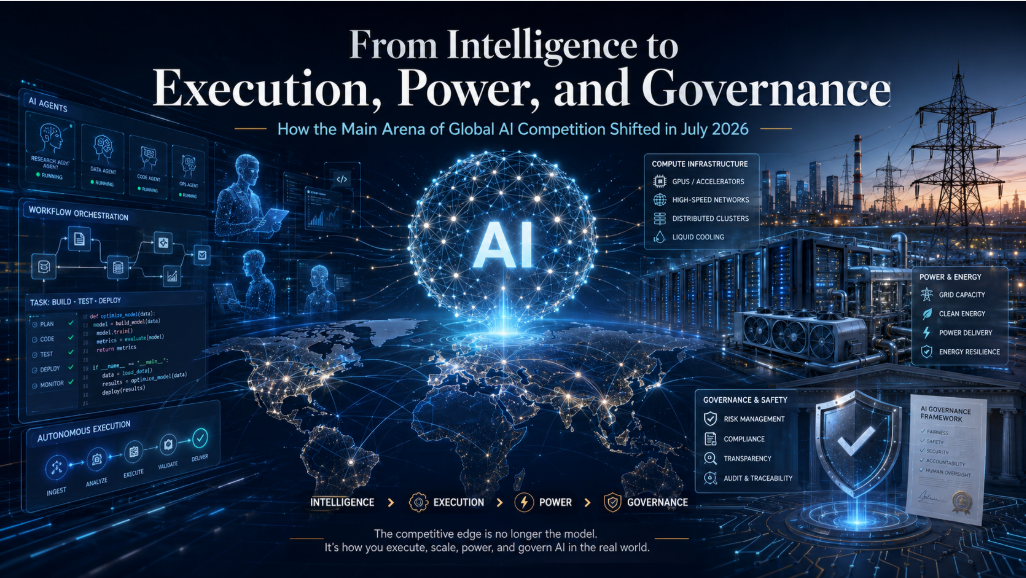
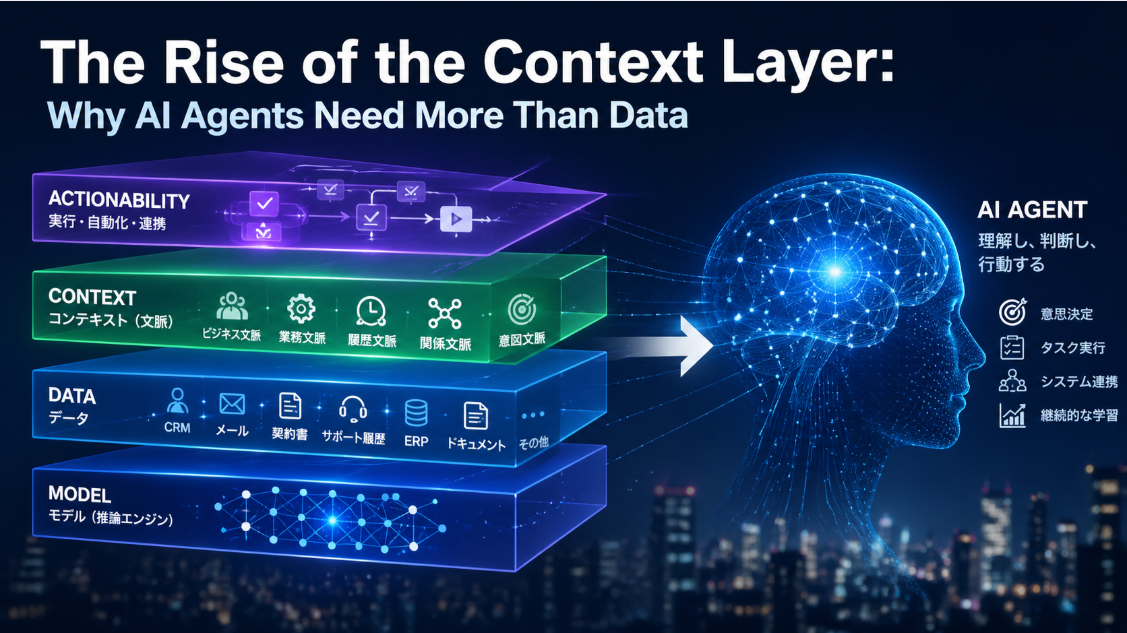
While the Company Brain represents the integration of memory and perception, the AI OS is the core software layer that drives that memory into action, automating actual workflows.
- Orchestrating Multi-Agent Systems: Just as a PC operating system (Windows or macOS) manages file systems, memory, and various applications in the background, an AI OS governs all software and specialized AI agents within a company. Marketing agents, legal compliance agents, and financial analysis agents communicate and collaborate autonomously on top of this single OS.
- Persistent Context: The definitive difference between an AI OS and standard AI chat tools is that context is never reset. A typical AI tool forgets your company’s domain knowledge the moment you close the browser session. Under an AI OS, the system constantly tracks the current org chart, quarterly KPIs, and recent project bottlenecks. This allows users to skip long introductions and trigger complex, multi-step operations with a single, brief prompt like, “Proceed with that project.”
Jack Dorsey’s “From Hierarchy to Intelligence”: A Paradigm Shift in Org Design
The organizational theory put forward by Jack Dorsey, CEO of Block and co-founder of Twitter (now X), vividly illustrates the inevitable deconstruction and rebuilding of corporate structures.
- Moving Beyond Roman Army Protocols: Dorsey argues that the traditional pyramidal hierarchy is an obsolete communication protocol that hasn’t changed since the days of the Roman army 2,000 years ago. Humans originally built hierarchies to bypass two bugs: the cognitive limitations of the human brain (span of control) and the delay or degradation of information in a game of telephone.
- The Circular Organization Centered on Intelligence: With a Company Brain and an AI OS synchronizing all information accurately and in real time, intermediate management layers become redundant. Organizations shift from a pyramid to a circular structure where an AI “intelligence layer” sits at the center, surrounded by humans.
- Radical Simplification of Human Roles: In this vision, Dorsey suggests human roles shrink to just three categories:
- IC (Individual Contributor): The craftspeople who write code, design products, and build raw outputs.
- DRI (Directly Responsible Individual): The person holding ultimate accountability, taste, and decision-making power for a specific project.
- Player-Coach: A leader who removes roadblocks and maximizes team performance, rather than managing for the sake of management.
2. A Multidirectional Approach: Associative Memory via Conceptual Structure Models
Building a reliable Company Brain or AI OS context layer comes with a distinct hurdle when relying solely on mainstream Large Language Models (LLMs). Because LLMs are inherently probabilistic text generators, they can hallucinate or struggle to maintain a strictly structured knowledge base.
To complement these weaknesses, a unique approach developed by the Mindware Research Institute offers a glimpse into how knowledge can be structured to mirror human thought processes.
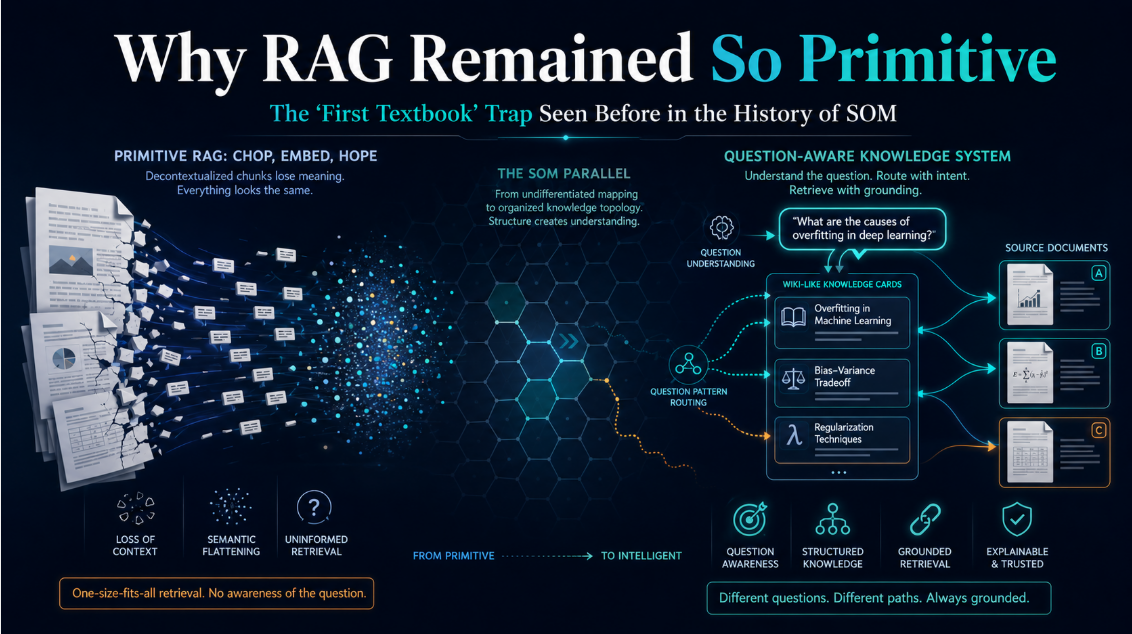
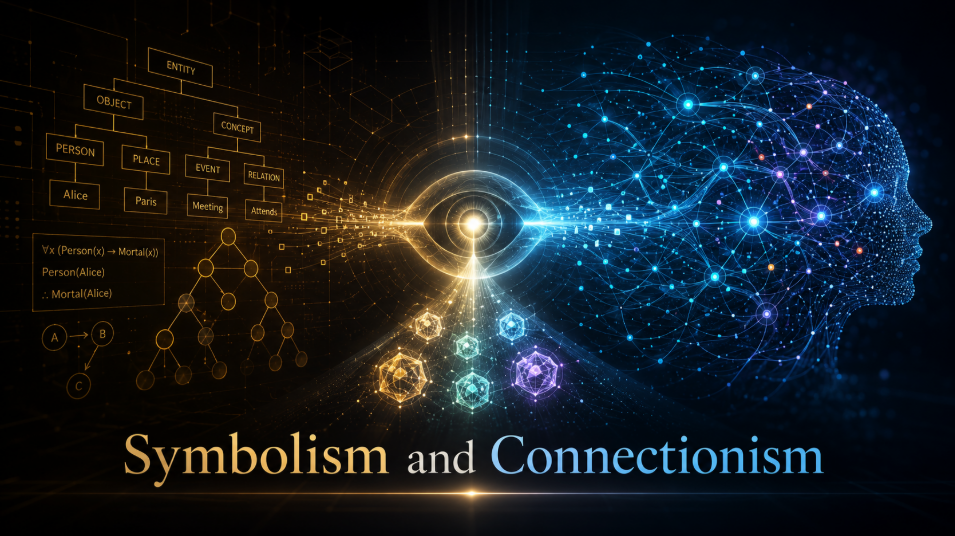
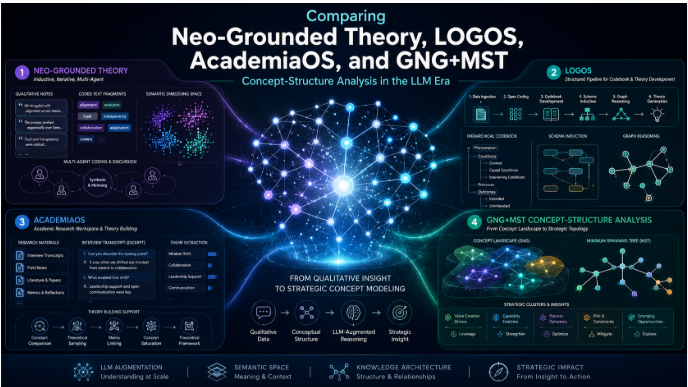
ConceptMiner and ThinkNavi The institute utilizes proprietary mathematical algorithms—combining Fuzzy Growing Batch Neural Gas (GNG) and Minimum Spanning Trees (MST)—to extract “concepts” from massive textual data and organize their geometric connections into a topological network.
- Replicating Associative Memory: When humans think of a keyword, our minds naturally trigger a cascade of related memories and episodes through association. This technology goes beyond mere keyword matching or vector similarity scores, building a robust conceptual structure model that maps how ideas truly interconnect.
- Evolution into an Exploratory Interface: This structured network of knowledge is made accessible via “ThinkNavi,” a conversational user interface layer. By pairing the fluent conversational ability of LLMs with this rigid, organic skeletal framework of concepts, users can navigate a company’s collective intelligence as if tracing the pathways of a human brain.
This framework represents a compelling, deterministic approach to optimizing an AI OS’s context layer for highly specific corporate domain knowledge.
Conclusion: What Kind of Organizations Will We Inhabit?
When the Company Brain unifies knowledge, the AI OS automates execution, and the hierarchy dissolves into centralized intelligence, we arrive at a world where the cost of management and information transmission drops to zero.
When we delegate the processing of data and context to an AI infrastructure, what remains for human leaders? Ultimately, it may be the elements that cannot be automated: aesthetic taste, ethics, intuition, and the courage to make final decisions.
 ChatGPT