
 Editor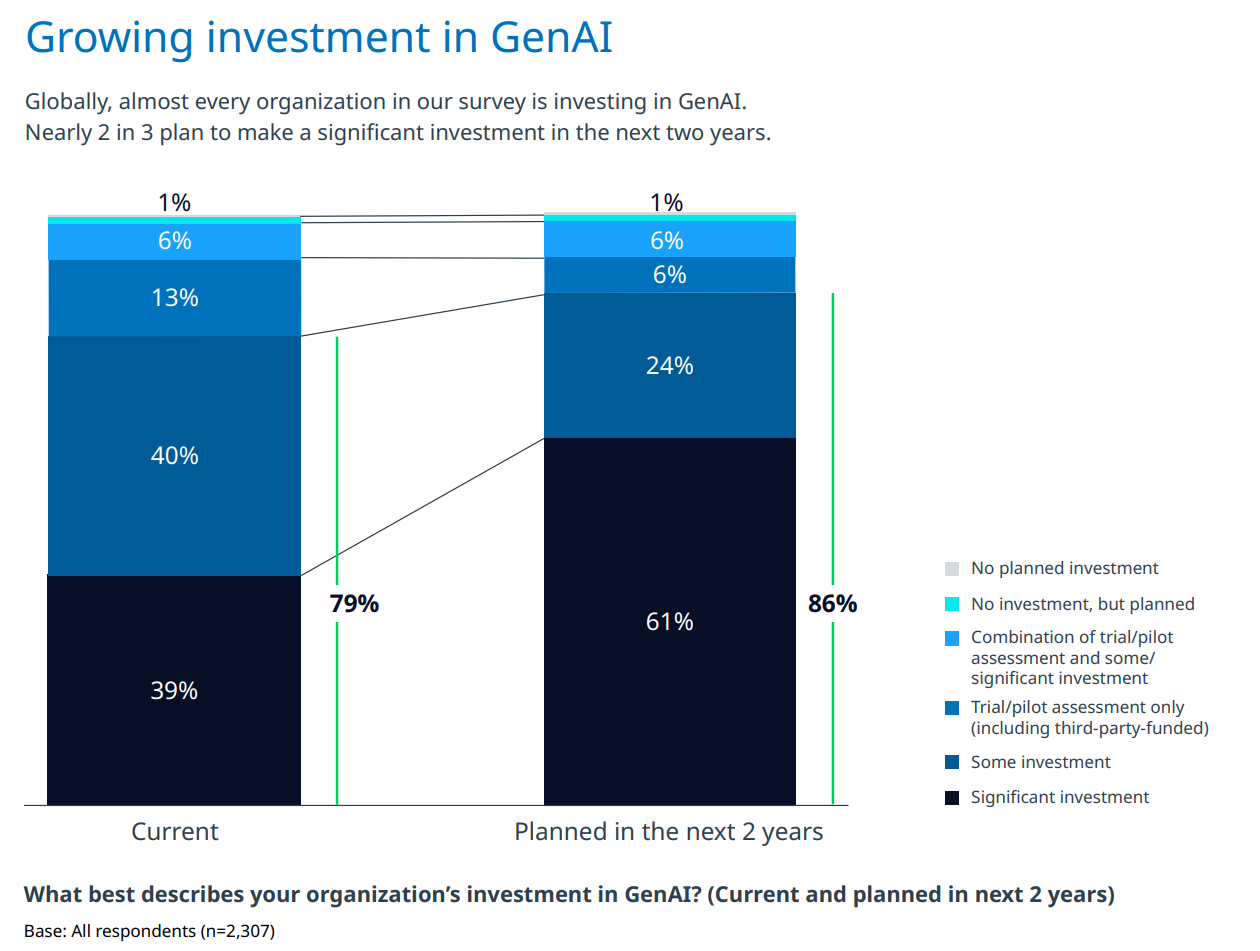
November 18, 2024
Summary
Generative AI (GenAI) has emerged as a pivotal force in reshaping business strategies, operations, and innovation. Based on insights from over 2,300 decision-makers across 12 industries globally, this report explores GenAI’s impact on strategy, technology, workforce culture, and ethics.
Strategic Alignment and Investment
Organizations are increasingly integrating GenAI into their core business strategies rather than treating it as a standalone initiative. Currently, 83% of organizations have a GenAI strategy, but only 49% have fully aligned it with broader business goals. Significant investment is underway, with nearly two-thirds planning substantial GenAI spending within two years. Top-performing organizations, those with high revenue and profit growth, lead in implementing GenAI in over half of their processes by 2025.
Innovation and Technology
GenAI’s ability to generate creative content and drive innovation makes it central to digital transformation. Its applications range from R&D and process automation to customer experience (CX) enhancements. Cloud computing is the backbone of GenAI deployments, offering scalable and cost-effective infrastructure. However, legacy IT systems pose a challenge, with 90% of organizations citing them as barriers to effective GenAI integration. Industry-specific GenAI models tailored to unique use cases are emerging as critical tools.
Workforce and Cultural Impact
GenAI is democratizing access to AI-powered tools, enabling non-technical users to contribute to creativity and innovation. It is also automating repetitive tasks, allowing employees to focus on higher-value work. Establishing expert GenAI teams is a key success factor; organizations with such teams are three times more likely to report satisfaction with their GenAI initiatives. However, security concerns and skill gaps remain significant hurdles.
Ethical and Sustainable Deployment
Ethics, safety, and sustainability are central to GenAI strategies. Despite its transformative potential, nearly 80% of respondents are uncertain about GenAI’s tangible benefits to operations, and 74% acknowledge conflicts between GenAI ambitions and sustainability goals. Security challenges are pronounced, particularly among Chief Information Security Officers (CISOs), who report feeling overwhelmed by the risks posed by GenAI.
Industry Trends and Use Cases
GenAI adoption varies by sector:
- Healthcare and Insurance: Streamlining claims and improving CX.
- Manufacturing: Enhancing quality control and process automation.
- Retail and Logistics: Optimizing supply chains and personalizing services.
- Public Sector: Slower adoption but steady investment.
Across industries, top use cases include personalized service recommendations, R&D, fraud detection, and customer sentiment analysis.
Measuring Success and Overcoming Challenges
Measuring the ROI of GenAI projects remains complex. Organizations often rely on metrics like improved CX and productivity rather than direct cost savings. Key lessons from deployments emphasize the importance of clean data, focused pilot projects, and cross-functional collaboration. Challenges include infrastructure complexity, skill shortages, and the need for robust ethical frameworks.
Recommendations for GenAI Success
- Strategic Integration: Align GenAI initiatives with overall business goals to maximize ROI.
- Data Management: Ensure high-quality, diverse data for effective GenAI models.
- Experimentation and Scaling: Begin with focused projects and scale based on proven outcomes.
- Ethics and Security: Establish governance frameworks to address risks and regulatory compliance.
- Partnerships: Collaborate with specialized service providers for expertise and scalability.
Conclusion
GenAI is not just a technology but a strategic enabler poised to redefine industries. While challenges persist, the report underscores the urgency of adopting GenAI to maintain competitiveness and drive innovation. Organizations must prioritize building the right infrastructure, fostering a culture of innovation, and ensuring responsible use to fully realize GenAI’s potential.

 ChatGPT