
 ChatGPT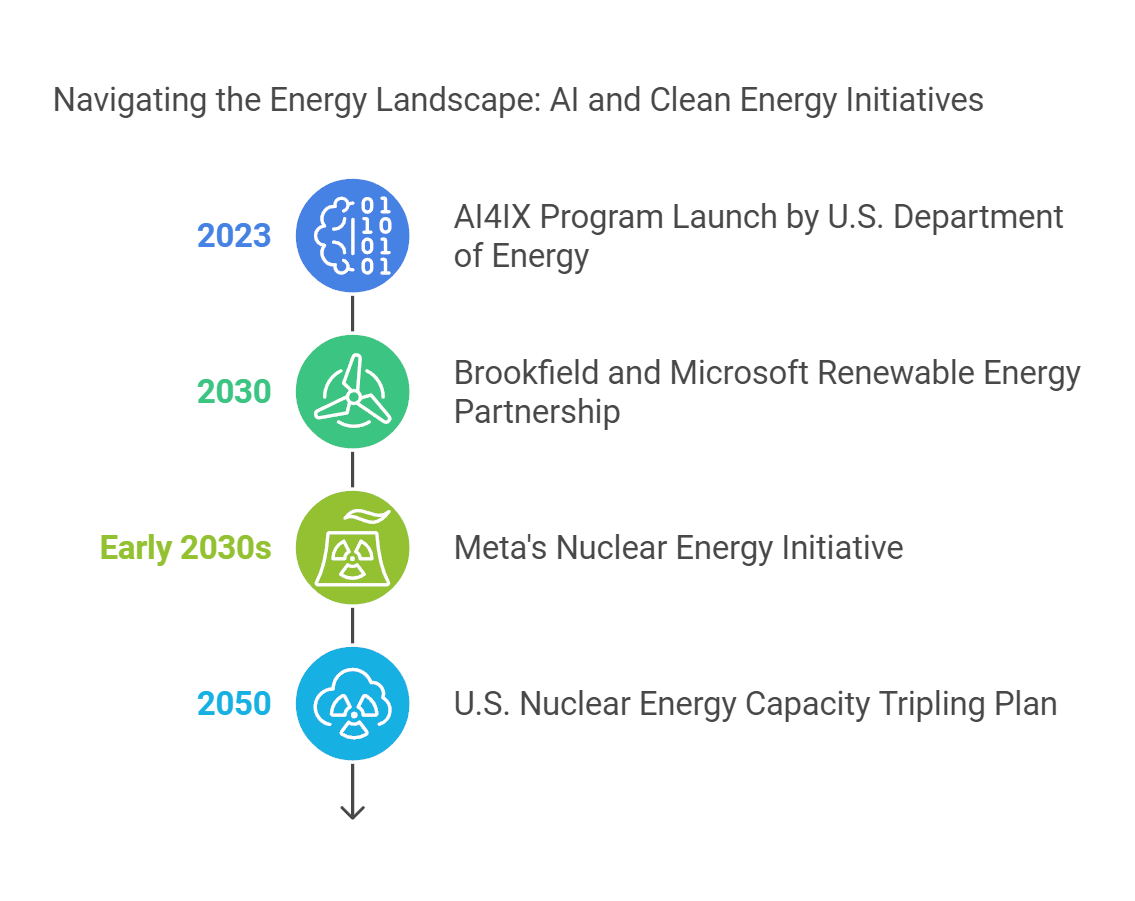
The rapid advancement of artificial intelligence (AI) has significantly influenced investment strategies within the energy sector, prompting both opportunities and challenges.
1. Increased Energy Demand from AI Technologies
- Data Center Expansion: The proliferation of AI applications has led to a surge in data center construction, which are energy-intensive facilities. Projections indicate that data centers could account for up to 12% of total U.S. power demand by the end of the decade, a substantial increase from the current 3-4%. McKinsey & Company
- Shift to Renewable Energy: To meet the escalating energy requirements, technology companies are investing in renewable energy sources. For instance, Brookfield Asset Management partnered with Microsoft to develop 10.5 gigawatts of renewable energy projects across Europe and the U.S. by 2030, aiming to power data centers sustainably. Barron’s
2. AI-Driven Optimization in Energy Production
- Enhancing Renewable Integration: AI is being utilized to forecast energy production from renewable sources, enabling better integration into the power grid. By analyzing vast datasets, AI can predict energy outputs, facilitating efficient load management and grid stability. World Economic Forum
- Predictive Maintenance: Energy companies are employing AI for predictive maintenance of infrastructure, allowing for early detection of potential failures and reducing downtime. This application enhances operational efficiency and extends the lifespan of energy assets. International Energy Agency
3. Strategic Investments in Nuclear Energy
- Tech Giants’ Initiatives: Companies like Meta are exploring nuclear energy to support their AI operations. Meta has issued requests for proposals to partner with nuclear energy developers, aiming to add 1-4 gigawatts of nuclear generation capacity in the U.S. by the early 2030s. The Verge
- Regulatory Support: The U.S. government is promoting nuclear energy expansion, with plans to triple capacity by 2050. This policy direction aligns with tech companies’ goals to secure reliable, carbon-free energy for their AI-driven data centers. The Verge
4. Challenges in the Transition to Clean Energy
- Dependence on Fossil Fuels: Despite investments in renewables, the immediate energy demands of AI and cloud computing are leading to increased reliance on fossil fuels. Utilities are constructing new gas-fired power plants and delaying the retirement of coal plants to meet the growing electricity needs. Reuters
- Grid Capacity Constraints: The rapid expansion of data centers is straining existing power grids, necessitating infrastructure upgrades. Energy companies are seeking long-term contracts with tech firms to finance these enhancements, ensuring a stable power supply for AI operations. The Wall Street Journal
5. Government Initiatives
- AI for Interconnection (AI4IX) Program: The U.S. Department of Energy has allocated $30 million to leverage AI in expediting the connection of renewable energy sources to the power grid. This initiative aims to reduce the backlog of renewable projects awaiting grid integration, thereby accelerating the transition to clean energy. The Verge
Implications for the Energy Sector
- Investment Realignment: The growing energy demands of AI are prompting energy companies to invest more in renewable and nuclear energy sources to provide sustainable power solutions.
- Policy and Regulatory Adjustments: Governments are enacting policies to support the expansion of clean energy infrastructure, recognizing the dual need to accommodate AI growth and meet climate goals.
- Technological Innovations: The integration of AI in energy management is leading to innovations that enhance efficiency, reliability, and sustainability in energy production and distribution.
In summary, the intersection of AI development and energy sector investments is reshaping the energy landscape, driving a shift towards more sustainable and efficient energy solutions to support the burgeoning AI industry.

 Editor