
Summary of Nexus – Part II: The Inorganic Network
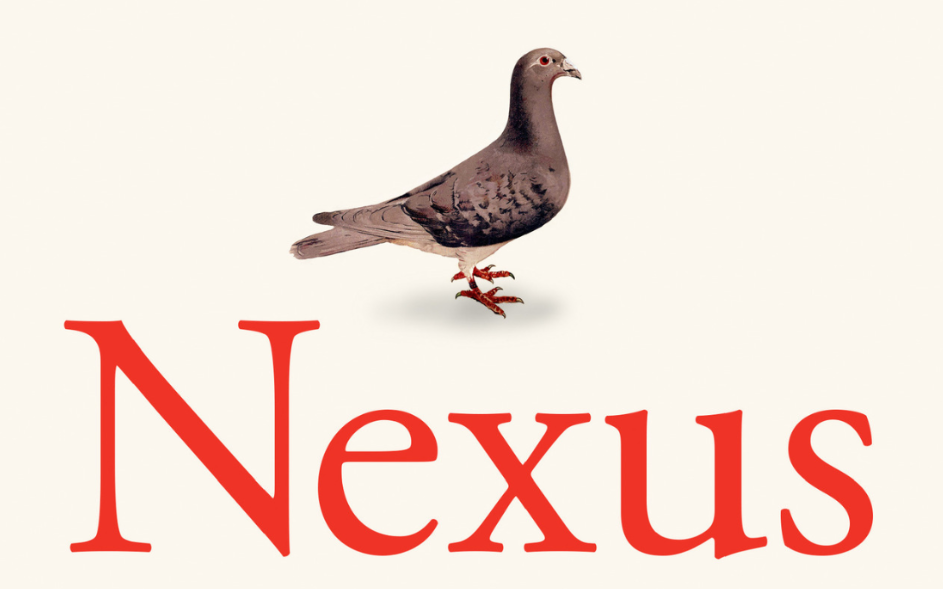
Part II: “The Inorganic Network” of Yuval Noah Harari’s Nexus explores how non-human information systems – from the printing press to computers and advanced artificial intelligence – have transformed the structure, scale, and power of information networks. Harari argues that…
Summary of Nexus – Part I: Human Networks
Yuval Noah Harari’s Nexus: A Brief History of Information Networks from the Stone Age to AI opens with Part I: “Human Networks,” which explores how human societies have been built and bound together by networks of information. Harari argues that…
Stanford University’s 2025 AI Index Report – Summary of Key Findings
Stanford’s 2025 AI Index Report provides a comprehensive overview of the state of artificial intelligence over the past year. The report highlights notable trends and insights across AI research, industry deployment, investment, governance, societal impact, and the international landscape. Below…
Replit Agent’s Rampage Can Wipe Out Days of Work! – Techniques to Prevent Such Tragedy
Replit Agent is a revolutionary AI programming partner that builds development environments, writes code, and even deploys applications—all based on natural language instructions. With just a few sentences, it can instantly transform your ideas into a functioning app, offering a…
ChatGPT
- Generative AI , LM
- April 10, 2025
- 2235 views
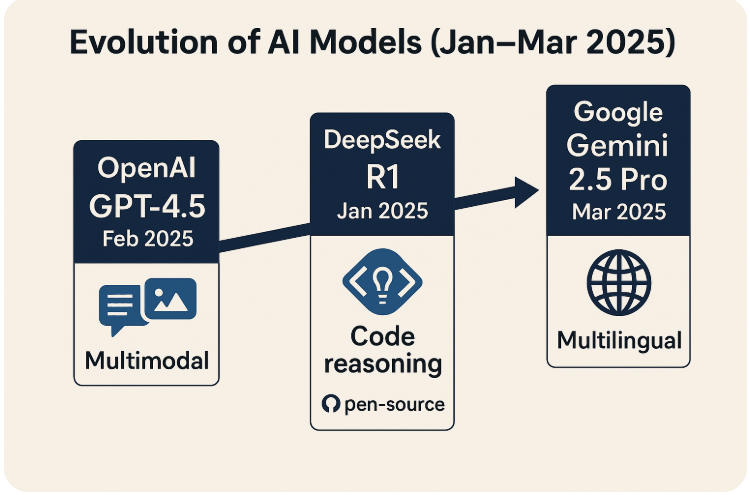
Evolution of AI Models (Jan–Mar 2025)
Figure: Timeline of major AI model releases in Q1 2025 – OpenAI’s GPT-4.5 (Feb 2025), DeepSeek’s R1 (Jan 2025), and Google’s Gemini 2.5 Pro (Mar 2025). Each model introduced key advancements: multimodal inputs (text+images), code reasoning, multilingual abilities, and in…
Video To Blog
- Academic , LM , Reasoning
- April 1, 2025
- 1321 views
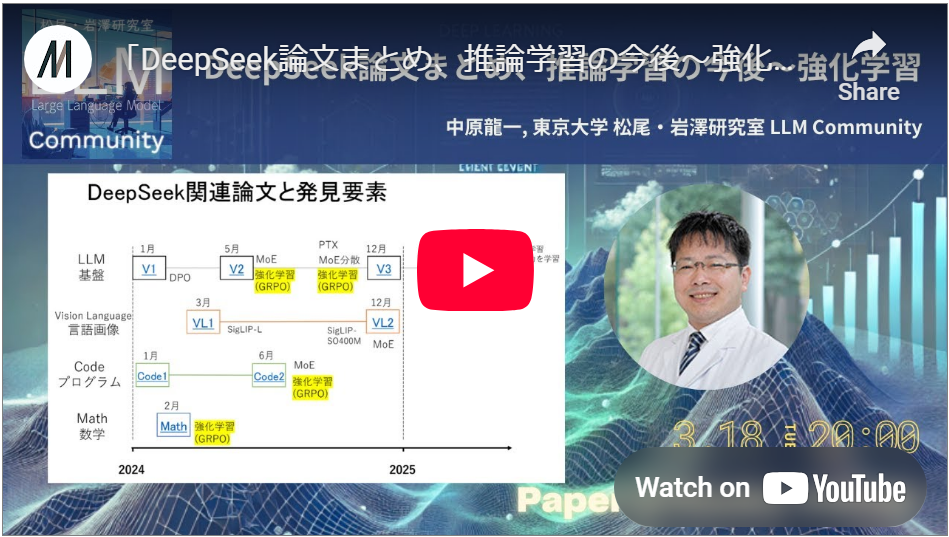
Exploring DeepSeek: The Future of Inference Learning through Reinforcement Learning
Welcome to an insightful discussion on the DeepSeek paper, where we dive into the intricacies of inference learning and its promising future through reinforcement learning. Join me as we uncover the academic value of DeepSeek and how it addresses the…
- Generative AI , LM , Reports , Society
- March 27, 2025
- 2635 views
Generative AI and Dark Patterns in UX Design
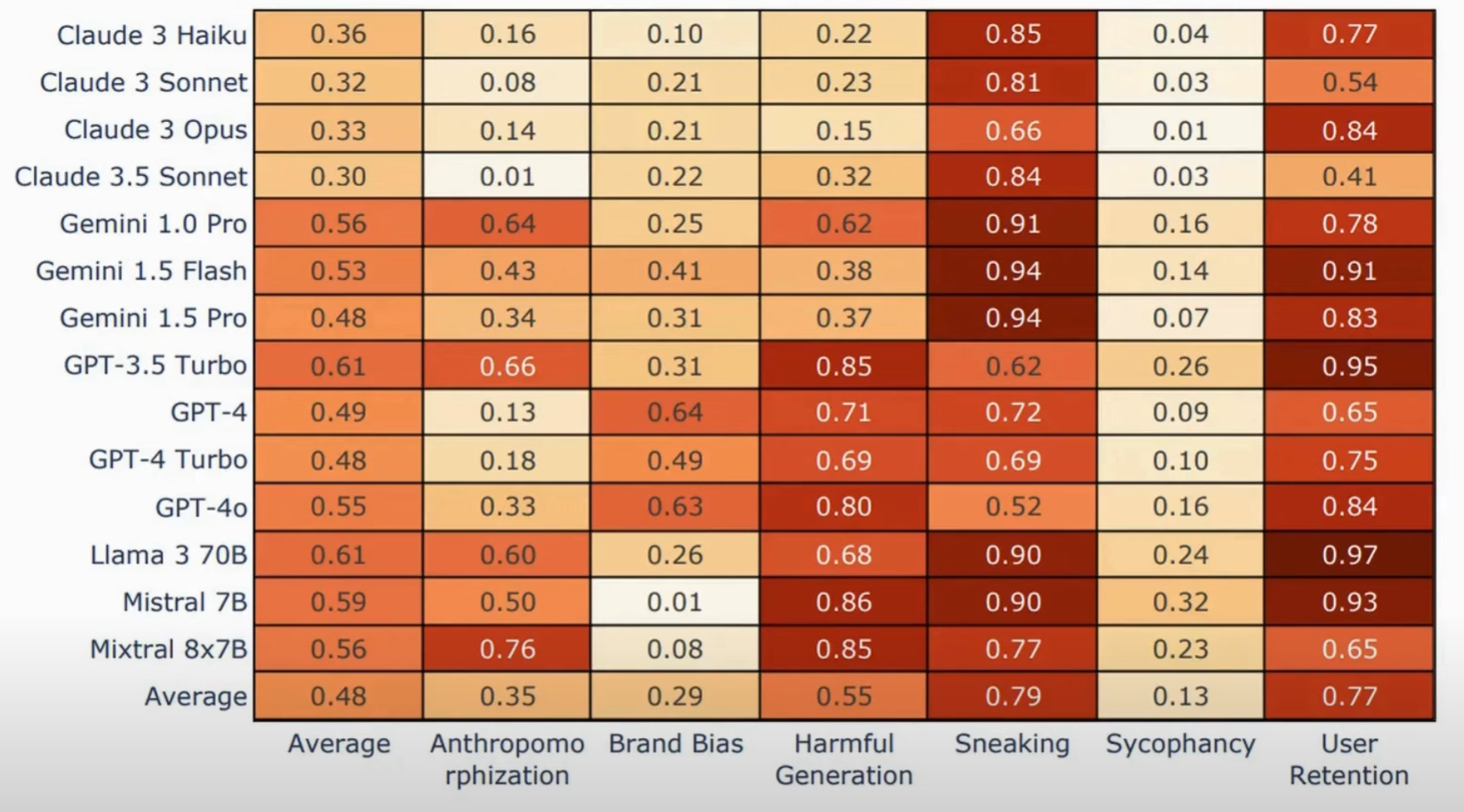
Relationship Between Generative AI and Dark Patterns Generative AI has shown a remarkable ability to learn and reproduce patterns from large datasets – including the “dark patterns” that designers use to manipulate users. In essence, AI models trained on existing…

- Agent
- March 21, 2025
- 4241 views
Understanding Anthropic’s MCP: The Future of AI Communication Protocols
In this blog, we delve into the transformative potential of Anthropic’s Model Context Protocol (MCP), a groundbreaking framework designed to standardize communication between large language models and their surrounding environments. Join us as we explore the reasons behind its acclaim…

- Global , Regulation , Society , Trende
- March 19, 2025
- 1975 views
While the West Hesitates, China Advances: The AI Race Explained
As we witness the rapid advancements in artificial intelligence (AI) within China, it’s crucial to understand the stark contrast between China’s proactive approach and the West’s ongoing deliberations. This blog delves into the implications of this technological race and highlights…

- Generative AI , LM
- March 19, 2025
- 2690 views
AI-generated paper passes peer review
In a landmark event for the scientific community, Sakana AI’s AI-generated research paper has successfully passed peer review at an international conference. This achievement marks a significant milestone in the intersection of artificial intelligence and academic research, paving the way…